
Learn how to prepare for an Indian head massage with simple, practical steps. Discover what to expect, benefits, costs, and where to find authentic sessions in London.
- Created by: Archer Caldwell
- Completed on: 20 Dec 2025
- Categories: Indian Massage
You’ve seen the ads. Maybe you’ve passed a salon in Notting Hill or Covent Garden with a sign that says Indian head massage - and wondered why it’s everywhere. Why do so many people in London swear by it? Why do busy professionals, students, and even celebrities book sessions on their lunch break? It’s not just a trend. There’s real science, centuries of tradition, and a whole lot of relief packed into those 20 to 30 minutes.
Why Indian Head Massage Works
At its core, Indian head massage - or Champissage - isn’t just about rubbing your scalp. It’s a full upper-body release. Practitioners work on your scalp, face, neck, shoulders, and upper arms using rhythmic pressure, circular motions, and gentle stretching. The technique comes from Ayurveda, India’s 5,000-year-old system of holistic healing. But you don’t need to believe in ancient medicine to feel the difference.
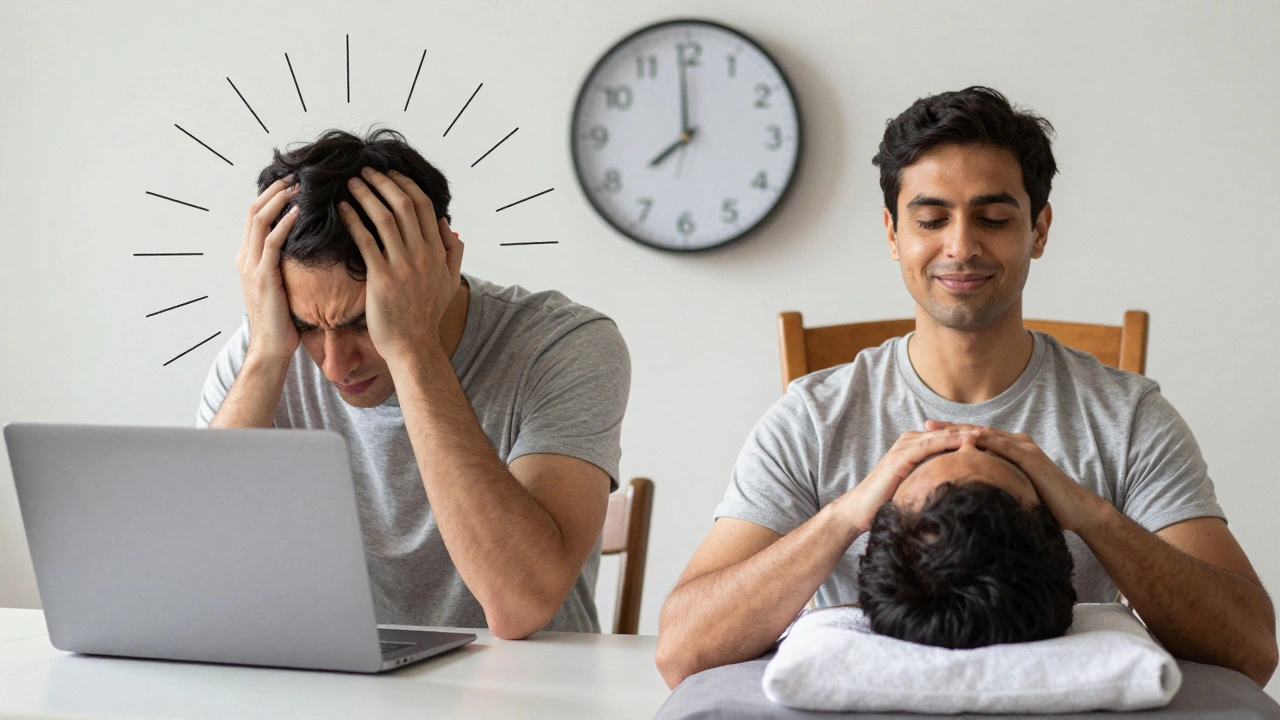
Think of your head and neck as a control center. Every time you stare at a screen, sit at a desk, or stress about deadlines, tension builds there. Your shoulders climb toward your ears. Your jaw clenches. Your scalp tightens. That’s where Indian head massage steps in. Studies show it reduces cortisol - the stress hormone - by up to 30% after just one session. It also boosts serotonin and dopamine. Translation? You feel calmer, clearer, and less wired.
And it’s not just mental. The massage increases blood flow to your scalp, which can support healthier hair growth. A 2017 study in the International Journal of Ayurveda and Pharma Research found participants who received regular head massages saw improved hair thickness and reduced shedding after 12 weeks. No chemicals. No expensive serums. Just hands, pressure, and time.
What Makes It Different From Other Head Massages?
Not all scalp rubs are created equal. A Swedish massage might focus on long strokes across your back. A deep tissue session digs into knots. But Indian head massage is targeted. It uses specific points along the energy channels, or marma points, in Ayurveda. These are pressure points linked to everything from headaches to sleep quality.
For example, pressing gently between your eyebrows can ease sinus pressure. Working the temples helps with migraines. Massaging the base of your skull releases tension that causes neck pain. You’re not just getting a rubdown - you’re getting a targeted reset.
Compare that to a typical spa head massage, which often just uses oil and light stroking. Indian head massage is deeper, more structured, and designed to restore balance - not just soothe.
Why It’s Perfect for London Life
London moves fast. Commutes are long. Workdays are long. Sleep is short. And stress? It’s practically a city currency.
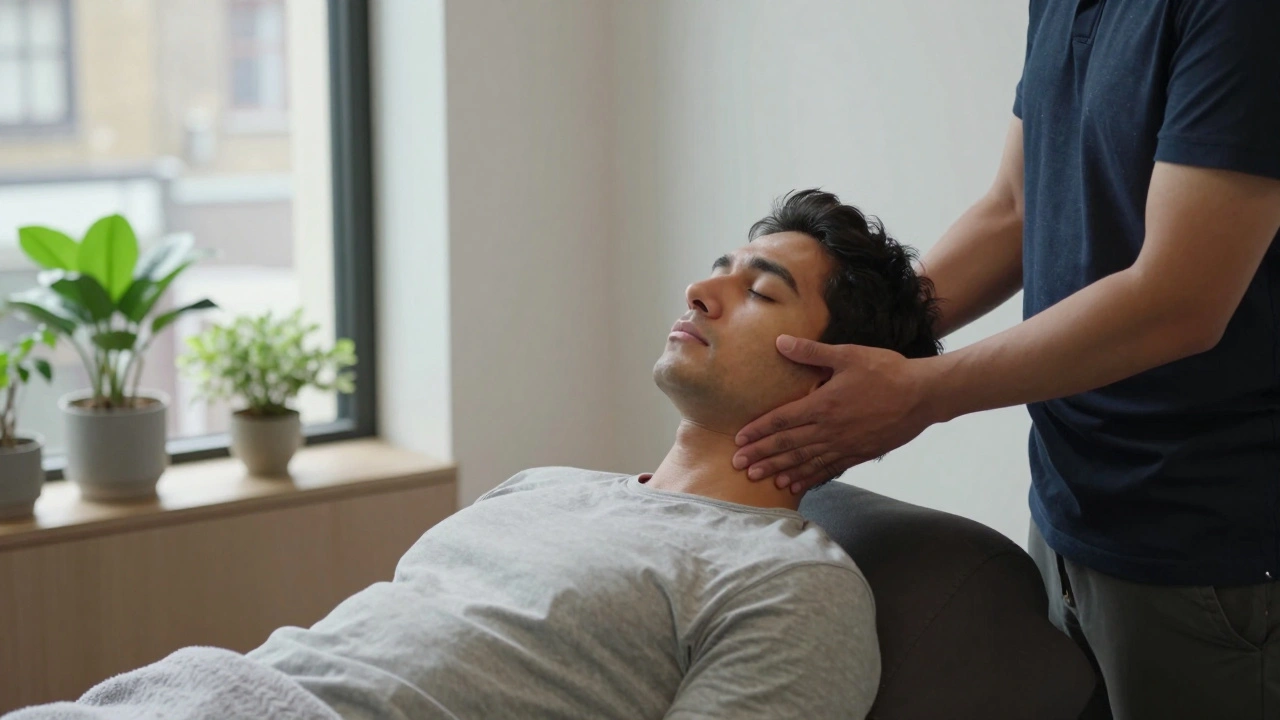
That’s why Indian head massage fits like a glove. You don’t need to strip down. You don’t need to lie on a table. You sit in a chair. You keep your clothes on. In 20 minutes, you can reset your nervous system. No shower. No downtime. Just walk out feeling like you’ve had a nap - but better.
It’s popular in offices, too. Companies like Google, Deloitte, and even the NHS have started offering it as part of employee wellness programs. Why? Because it works. One manager in Canary Wharf told me her team’s productivity jumped after monthly sessions. People were less irritable. Fewer sick days. Better focus.
What Happens During a Session?
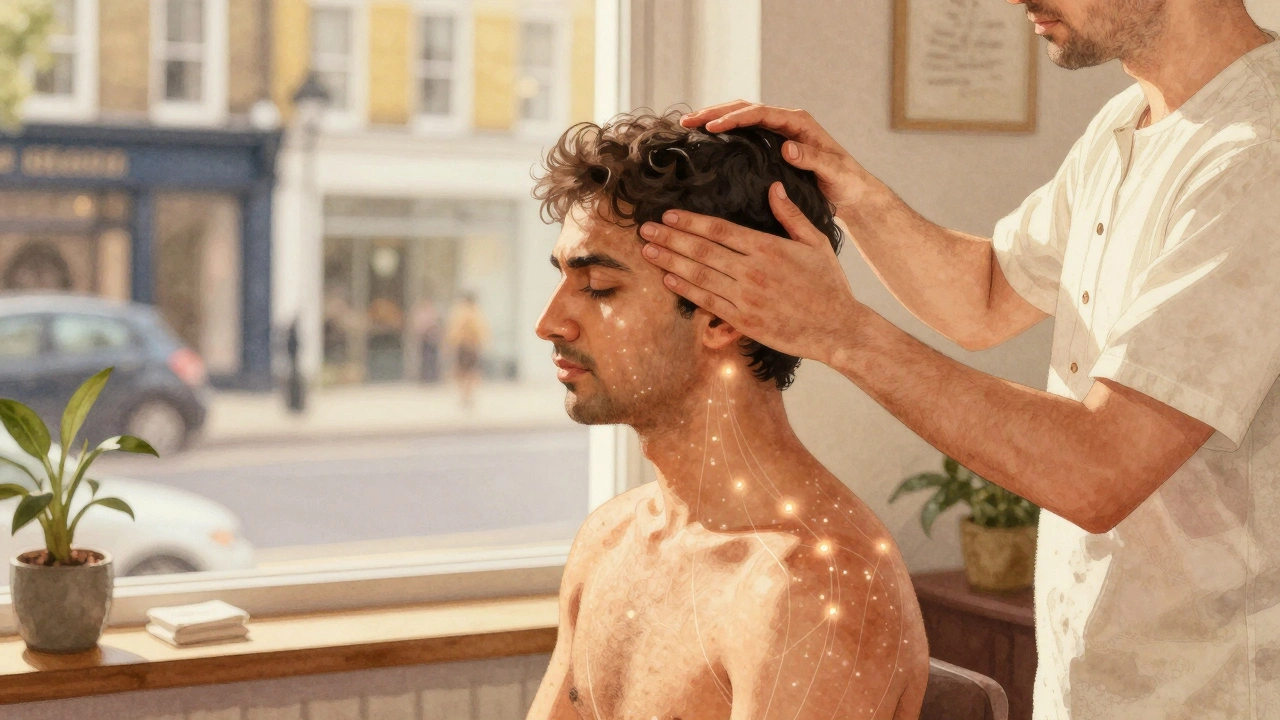
You’ll sit comfortably in a quiet room. Maybe soft music plays. The therapist will ask if you have any pain points - tight neck? Frequent headaches? Then they’ll start. They use their thumbs and fingers to apply pressure along your scalp, moving from your forehead to the back of your head. They’ll gently pull your hair at the roots - not hard, just enough to stimulate circulation.
Next, they’ll work your face: cheeks, jawline, around your eyes. This isn’t just for relaxation - it helps drain fluid buildup that causes puffiness. Then the neck and shoulders. They’ll use kneading, rocking motions, and light stretches. You might hear your neck pop - gently - and feel instant relief.
Most sessions end with you closing your eyes, breathing slowly, and just… being. No phone. No emails. Just stillness. And when you open them? You feel lighter. Like the weight you didn’t even know you were carrying has been lifted.
Where to Find It in London
You don’t need to go to a fancy spa. Indian head massage is available everywhere - from small salons in Camden to wellness centers in Chelsea. Look for places that mention Ayurvedic, traditional, or Champissage in their descriptions.
Some popular spots include:
- Champissage London - The original studio, founded by a direct student of the technique’s modern reviver, Narendra Mehta.
- The Ayurvedic Centre - Notting Hill. Offers full Ayurvedic consultations alongside massage.
- Urban Wellness Co. - Multiple locations. Great for corporate bookings.
- Street-side kiosks - In Covent Garden and Oxford Circus, you’ll find short 10-minute sessions for £10-15. Perfect for a quick reset.
Check Google Maps reviews. Look for mentions of “relaxing,” “not too forceful,” and “left feeling calm.” Avoid places that push expensive oils or add-ons unless you want them.
Pricing and Booking
Here’s what you’ll typically pay in London:
- 15-minute express session: £10-18
- 25-30-minute standard: £25-40
- 45-minute extended (includes shoulders and arms): £45-65
- Corporate or group rates: Often £20 per person for 20-minute sessions
Most places let you book online. Some even offer walk-ins during lunch hours. If you’re new, start with a 25-minute session. You don’t need to commit to a package. Try it once - you’ll know if it’s right for you.
Safety Tips
Indian head massage is safe for almost everyone. But avoid it if you have:
- Recent head or neck injury
- Open wounds or severe scalp conditions (like psoriasis or eczema flare-ups)
- High blood pressure without doctor approval
- Recent surgery near the head or neck
Also, be honest with your therapist. If you’re pregnant, have migraines, or take blood thinners, tell them. A good practitioner will adjust their pressure or avoid certain points.
And skip the oil if you have oily hair or acne-prone skin. Many places offer dry versions - just as effective, no greasy aftermath.
Indian Head Massage vs. Swedish Head Massage in London
| Feature | Indian Head Massage | Swedish Head Massage |
|---|---|---|
| Origin | Ayurvedic tradition (India, 5,000+ years) | European (18th century, Sweden) |
| Focus Areas | Scalp, face, neck, shoulders, upper arms | Scalp and temples only |
| Pressure | Firm, rhythmic, targeted | Light, gliding, soothing |
| Duration | 20-45 minutes | 10-20 minutes |
| Best For | Stress relief, headaches, hair health, posture | Light relaxation, quick break |
| After Effects | Deep calm, reduced tension, clearer mind | Mild relaxation, slight tingling |
| Cost (London) | £25-65 | £15-35 |
Indian head massage isn’t just a head rub. It’s a full-system reset. Swedish is nice - but it’s a sprinkle. Indian head massage is the whole rainstorm.
Frequently Asked Questions
Is Indian head massage good for hair loss?
Yes - but not as a magic cure. Regular massage improves blood flow to hair follicles, which can help reduce shedding and support thicker growth over time. It works best when combined with a healthy diet and stress management. One 2017 study showed participants had measurable improvements in hair thickness after 24 weeks of weekly sessions.
Can I do Indian head massage on myself?
Absolutely. Use your fingertips to make small circles on your scalp for 5-10 minutes. Apply gentle pressure - not digging in. You can also massage your temples and neck. It won’t be as deep as a professional’s touch, but it’s better than nothing. Do it before bed - it helps you fall asleep faster.
Does it hurt?
It shouldn’t. Some pressure is normal - especially on tight spots - but pain means you’re going too hard. A good therapist checks in. If it hurts, speak up. The goal is release, not discomfort.
How often should I get one?
Once a week is ideal if you’re stressed or have chronic tension. Twice a month works for maintenance. Even once a month can make a noticeable difference in sleep and focus. Think of it like brushing your teeth - a small habit with big long-term rewards.
Is it only for women?
No. Men make up nearly half of clients in London. It’s especially popular with those who wear helmets (cyclists, motorbike riders), sit at desks all day, or deal with high-pressure jobs. It’s not gendered - it’s human.
If you’ve been carrying stress in your head and shoulders, Indian head massage isn’t just popular - it’s necessary. It’s the quiet antidote to a noisy world. And in a city like London, where everyone’s rushing, sometimes the most powerful thing you can do is sit still - and let someone else take care of you for half an hour.
Similar Posts


How to Prepare for an Indian Head Massage: A Simple Step-by-Step Guide
Is Indian Head Massage Good for Depression? Benefits for Mental Health in London
Explore if Indian head massage truly helps depression, with a deep dive into its benefits, what to expect, London options and how it supports mental health.
Head Massage London Your Guide to Blissful Relaxation
Discover the tranquil world of head massage in London, offering locals and tourists relaxation and therapeutic benefits. From Indian head massage to regular scalp treatments, learn about types, benefits, and how to find services. This guide will also elucidate what to expect during a session, pricing, and tips for a safe experience.
Gerardo Pineda
December 22, 2025 AT 10:35I got my first Indian head massage last week after work and I swear, I cried a little. Not because it hurt, but because I didn’t realize how much tension I was holding in my jaw. My therapist pressed right between my eyebrows and I just… melted. Like my brain finally hit the pause button. 🥹
Aditya Sinha
December 22, 2025 AT 22:52bro its called champissage not indian head massage 😂 i mean its fine but u know like its from ayurveda and we do it since like forever in india. also why u guys always make it sound like its some new spa trend lmao. also my aunty does it on me since i was 5 and i never paid for it 😎
Bethany Wappler
December 24, 2025 AT 10:51There’s something profoundly spiritual about the simplicity of this practice. You sit. You breathe. You let someone else hold space for your body’s accumulated stress. In a world that glorifies hustle culture, this is radical self-care - not as a luxury, but as a biological necessity. The science backs it, yes - but the soul feels it first. I’ve been doing this monthly for three years. My migraines? Gone. My sleep? Deep. My patience? Infinite. It’s not magic. It’s medicine. And it’s ancient. And it’s yours.
Vinayak Agrawal
December 25, 2025 AT 17:34Listen. If you’re sitting at a desk 8 hours a day staring at a screen, you’re basically begging for this. No fluff. No nonsense. Just 20 minutes of real pressure on your scalp and neck and you’re walking out like a new person. I’ve recommended this to every single one of my coworkers. One guy went from ‘I hate Mondays’ to ‘I booked my next session already.’ That’s the power of touch. No apps. No supplements. Just hands. And time.
Sana Siddiqi
December 26, 2025 AT 05:49Oh sweet merciful god, I thought I was the only one who got the 10-minute kiosk version in Covent Garden while eating a £4 pretzel. I call it ‘stress bailouts.’ My boss thinks I’m just ‘taking a nap’ - little does he know I’m reprogramming my nervous system with thumb pressure and silence. Also, the lady who does it calls me ‘sweetheart’ and I let her because I’m emotionally bankrupt and she’s the only person in London who doesn’t ask me about my ‘mental health journey.’ 💅
Maria Biggs
December 27, 2025 AT 03:09Okay but let’s be real - how much of this is just placebo? Like, you’re sitting in a chair, someone touches your head, and suddenly you’re ‘feeling lighter’? I’ve had massage therapists press my temples for 20 minutes and I still had to finish that presentation. Also, the ‘hair growth’ claims? Bro, I’ve had scalp massages since college and I’m balding. This is just a fancy way to sell oil and vibes. 🤷♂️
Ben Görner
December 28, 2025 AT 13:16Hey Maria - I get where you’re coming from, but I think you’re underestimating the somatic impact. I work in ER and see people with chronic tension headaches every shift. A lot of them don’t respond to meds. But when they get this massage? Their shoulders drop. Their breathing slows. That’s not placebo. That’s neurophysiology. And yeah, it’s not a cure-all - but it’s one of the few things that actually helps without a prescription. If you’re skeptical, try it once. No oil. Just 20 minutes. You don’t have to believe in Ayurveda to feel the difference.
Eddie Valdes
December 29, 2025 AT 20:01Actually, the 2017 study they cited? Tiny sample size. 42 people. No control group. And the journal? Not even indexed in PubMed. Also, cortisol reduction? That’s from *any* relaxation technique - even just closing your eyes for 5 minutes. This isn’t groundbreaking. It’s a nice distraction. And the ‘Champissage’ branding? Pure marketing. It’s scalp massage with a cultural veneer. Don’t get me wrong - I like it. But don’t act like it’s some sacred ritual. It’s not.
Vikram Sinha
December 29, 2025 AT 22:55I grew up in Jaipur. My grandmother used to do this every night before bed - no oil, just fingers, slow circles, pulling hair gently at the roots. We didn’t call it therapy. We called it love. Back then, no one talked about cortisol or serotonin. We just knew it made you sleep. Now, London turned it into a trend. But the hands? Still the same. The silence? Still the same. The relief? Still the same. Maybe we just forgot how to sit still - and now we need a word in Sanskrit to remember.
Jenn Davenport
December 31, 2025 AT 16:24Okay I just had to come back and say - I booked a 45-minute session after reading this and I’m not even kidding… I fell asleep halfway through. Like, full-on snoring. The therapist didn’t wake me. She just kept going. When I opened my eyes, my neck didn’t hurt for the first time in 8 years. I cried again. Not because I’m dramatic - because I forgot what it felt like to be free of tension. If you’ve ever felt like your head is a brick and your shoulders are carrying the whole city - go. Just go. No excuses. No ‘I don’t have time.’ You do. You have 30 minutes. And your body is begging for it. 🙏💖