
Indian head massage is an ancient Ayurvedic practice that relieves stress, improves sleep, and supports hair health through targeted pressure on energy points. Learn how it works, why it’s different from other massages, and where to find it in London.
- Created by: Liam Redgate
- Completed on: 16 Dec 2025
- Categories: Head Massage
You’ve heard about Indian head massage-the soothing pressure on your scalp, the gentle tugs on your hair, the way your shoulders drop after just ten minutes. But if you’ve never had one before, you might be wondering: How do I prepare for an Indian head massage? It’s not like booking a regular spa treatment. There’s no need for fancy outfits or strict fasting. But there are a few simple things you can do to make sure you get the most out of it.
What Is an Indian Head Massage?
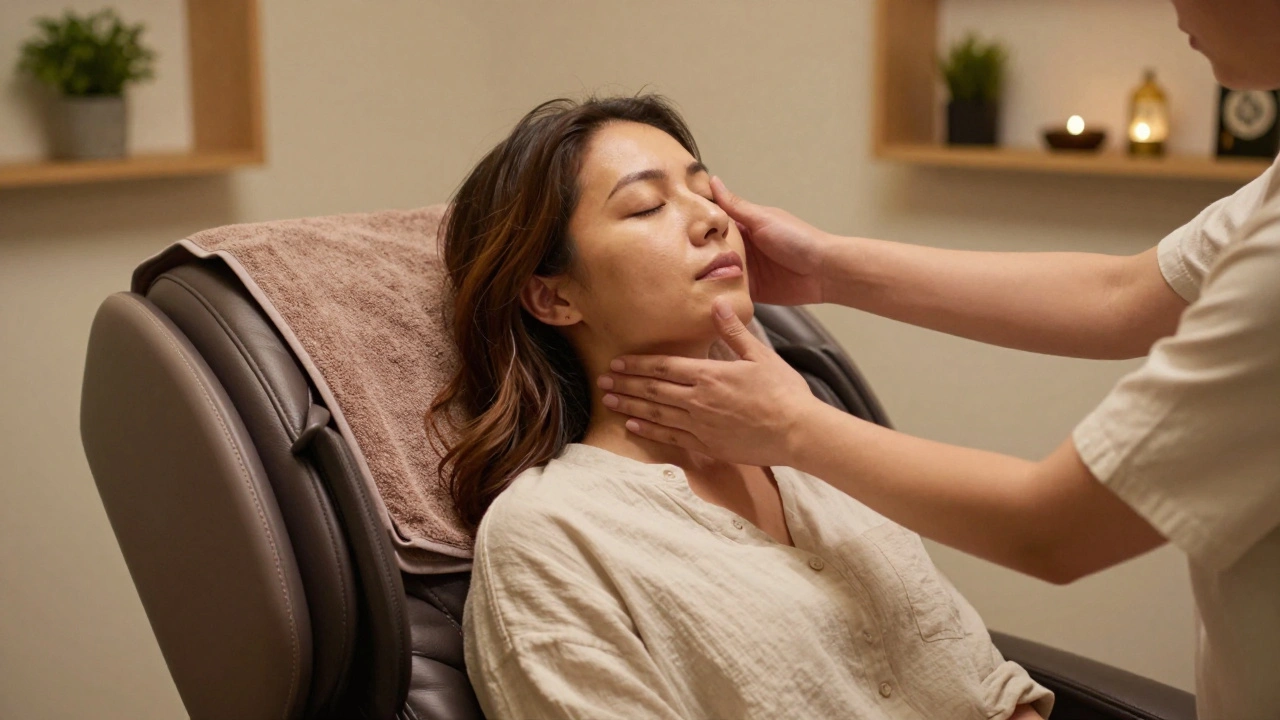
Indian head massage, also called Champissage, comes from ancient Ayurvedic traditions in India. It’s not just about rubbing your scalp. The therapist works on your head, face, neck, and shoulders using thumb pressure, kneading, and gentle pulling motions. It’s designed to release tension, improve circulation, and balance energy flow-what Ayurveda calls prana.
Unlike Swedish or deep tissue massage, you stay fully clothed. No oils are used on your skin, though some therapists apply warm sesame or coconut oil to your scalp. The whole session usually lasts between 20 to 45 minutes. It’s quick, powerful, and surprisingly effective for stress, headaches, and even sleep issues.
Why It Works: The Real Benefits
People don’t just get Indian head massage because it feels good-they come back because it changes how they feel day to day.
- Reduces tension headaches: A 2021 study in the Journal of Alternative and Complementary Medicine found that participants who had weekly head massages for four weeks reported a 40% drop in headache frequency.
- Improves sleep: The massage stimulates the parasympathetic nervous system-the one that says, “You’re safe now.” That’s why many people fall asleep during sessions.
- Boosts hair health: Increased blood flow to the scalp brings more oxygen and nutrients. People with thinning hair or dry scalp often notice improvements after just a few sessions.
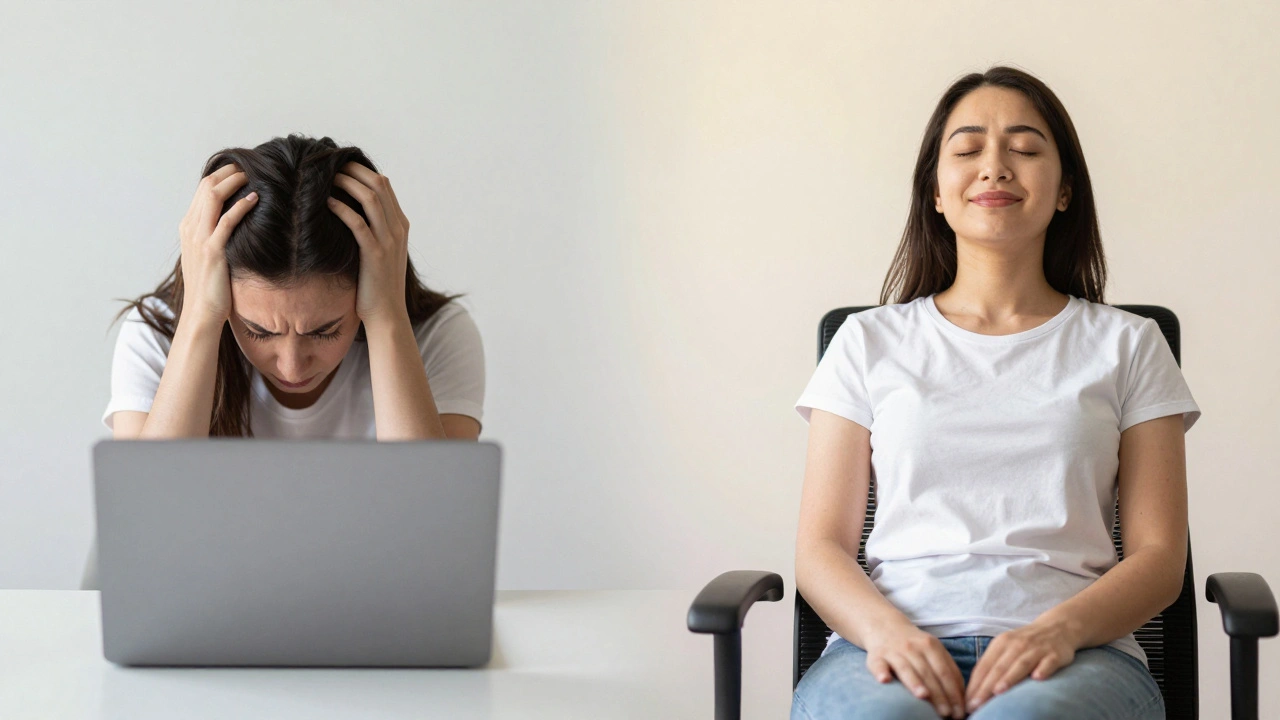
- Relieves eye strain: If you stare at screens all day, the gentle pressure around your temples and eyebrows helps release built-up tension.
- Calms anxiety: The rhythmic motion and focused attention trigger a relaxation response. It’s like a mini meditation you can’t mess up.
One client in Camden told me she started coming after her daughter was born. “I hadn’t slept properly in six months,” she said. “After the first massage, I cried-not from sadness, but because I finally felt like I could breathe again.”
How to Prepare: Simple Steps Before Your Session
You don’t need to overthink this. Here’s what actually matters.
- Don’t wash your hair right before. If your hair is freshly washed, it’s too slippery for the therapist to get a good grip. Wait at least 12-24 hours after shampooing. Natural oils help the hands glide and grip better.
- Wear loose, comfortable clothing. You’ll stay dressed, so avoid tight collars, high necklines, or bulky scarves. A simple T-shirt or loose blouse works best. No need to change into a robe-just roll up your sleeves if you’re cold.
- Leave your hair down. If you wear it in a bun or ponytail, undo it. The therapist needs access to your full scalp and neck. Hair ties, clips, and extensions can get in the way.
- Don’t eat a heavy meal right before. A light snack is fine, but don’t come in right after a big lunch. Lying back with a full stomach can make you feel sluggish or nauseous.
- Turn off your phone. Seriously. Put it on silent. This is your time. No one needs to know you’re getting a head massage unless you want to brag later.
What to Expect During the Session
You’ll sit in a comfortable chair, maybe with a towel draped over your shoulders. The therapist will start at your shoulders, working down into your upper back, then move up to your neck and scalp.
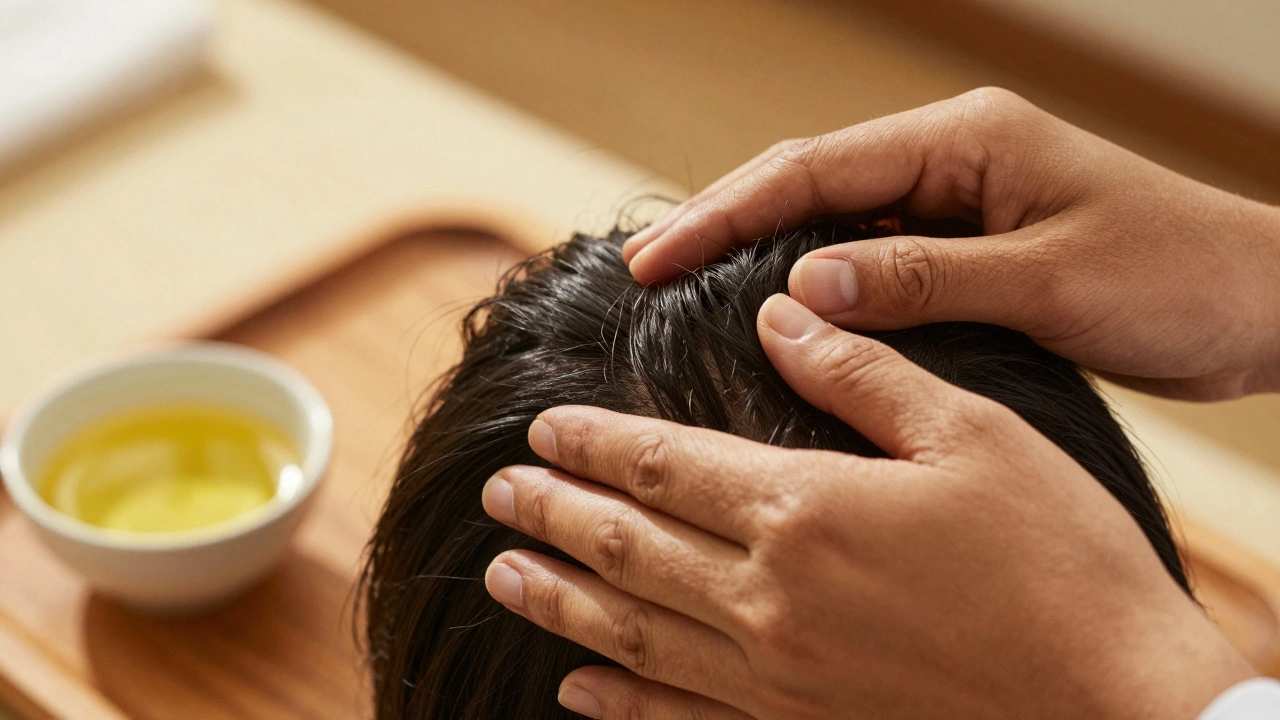
The pressure isn’t deep-it’s firm but never painful. Think of it like a strong handshake, not a punch. They’ll use their thumbs to press along your hairline, circle your temples, and gently tug on your hair roots. Some therapists use warm oil on your scalp; others don’t. Ask if you’re unsure.
They might also massage your forehead, cheeks, and jaw. If you have tightness there, it’ll feel like a release. You might hear your jaw pop. That’s normal. You might feel a little dizzy or lightheaded afterward. That’s your nervous system resetting.
Most people feel deeply relaxed during the massage. Some fall asleep. Others just sit there, eyes closed, thinking about nothing. That’s the goal.
After the Massage: What to Do (and Not Do)
You’ve just given your nervous system a reset. Now don’t undo it.
- Drink water. It helps flush out tension and keeps your head feeling clear.
- Avoid screens for 20 minutes. Give your brain a break. Staring at your phone right after can bring back the stress you just released.
- Don’t rush. Sit quietly for a few minutes. Let your body settle. If you feel a little sleepy, that’s okay. Let it happen.
- Wait before washing your hair. If oil was used, wait at least 4-6 hours before shampooing. That lets the nutrients soak in.
- Don’t plan anything intense. No workouts, no big meetings, no arguments. Give yourself the rest of the day to chill.
Indian Head Massage vs. Regular Head Massage: What’s the Difference?
| Feature | Indian Head Massage | Regular Head Massage |
|---|---|---|
| Origin | Ayurvedic tradition, India | General wellness, Western spas |
| Focus areas | Scalp, neck, shoulders, face, upper back | Scalp only |
| Pressure style | Firm, rhythmic, intentional | Light to medium, soothing |
| Oil use | Often used on scalp | Rarely used |
| Duration | 20-45 minutes | 10-20 minutes |
| Clothing | Stay fully clothed | Usually seated, no undressing |
| Primary benefit | Energy balancing, stress release, long-term tension relief | Immediate relaxation, surface-level comfort |
Where to Find It in London
You don’t need to go to a luxury spa. Indian head massage is widely available across London.
- Camden: Many holistic centers offer it as a standalone service or add-on.
- Notting Hill: Ayurvedic clinics often include it in wellness packages.
- Shoreditch: Some yoga studios and wellness cafes offer 20-minute express sessions during lunch.
- Westminster: Corporate wellness programs sometimes bring therapists in for employees.
Look for therapists trained in Champissage-that’s the trademarked term for authentic Indian head massage. Avoid places that just call it “scalp massage” without mentioning Indian or Ayurvedic roots. The technique matters.
How Much Does It Cost?
Prices vary depending on location and duration.
- 20-minute express: £20-£25 (great for lunch breaks)
- 30-minute standard: £30-£40 (most common)
- 45-minute extended: £45-£60 (includes neck and shoulder work)
- Package deals: Some places offer 5 sessions for £120-£150
Booking online is easy. Most therapists use platforms like Booker or SpaBooker. You can also call local wellness centers directly-many still prefer phone bookings.
Safety Tips: Who Should Avoid It?
Indian head massage is safe for most people. But skip it if you have:
- Recent head or neck injury
- Scalp infection, open sores, or severe psoriasis
- Uncontrolled high blood pressure
- Severe migraines with aura (consult your doctor first)
- Recent surgery on the head or neck
If you’re pregnant, it’s generally safe after the first trimester-but tell your therapist. They’ll adjust pressure and avoid certain points.
Frequently Asked Questions
Do I need to take my hair out of a bun for an Indian head massage?
Yes. Even if it’s just a loose ponytail, undo it. The therapist needs to access your full scalp and hairline. Hair clips, bands, or extensions can interfere with the technique and reduce effectiveness.
Can I do an Indian head massage on myself?
You can try, but it’s not the same. Self-massage helps a little, but you can’t reach all areas properly, and your brain stays in “doing” mode. The real benefit comes when someone else applies pressure-you can fully relax. Still, rubbing your temples and scalp for 5 minutes before bed is better than nothing.
How often should I get an Indian head massage?
Once a week is ideal if you’re stressed or get frequent headaches. For maintenance, every two to four weeks works well. Some people come every month as part of their self-care routine-like a mental tune-up.
Will it make my hair fall out?
No. In fact, it’s the opposite. The massage increases blood flow to hair follicles, which can reduce shedding over time. If you notice hair falling out during the massage, it’s likely just the normal 50-100 hairs you lose daily-it’s being dislodged by the pressure, not caused by it.
Is Indian head massage the same as a scalp massage?
No. A scalp massage usually only targets the top of your head. Indian head massage includes your neck, shoulders, face, and sometimes upper back. It’s a full system reset, not just a surface rub.
Ready to Try It?
You don’t need to be stressed to benefit from an Indian head massage. You just need to be ready to sit still for half an hour. No special skills. No expensive gear. Just you, a quiet room, and someone who knows how to press just right.
Book your first session this week. Pick a time when you don’t have to rush afterward. Let your shoulders drop. Let your mind go quiet. And when it’s over, you’ll realize you didn’t know how heavy you’d been carrying-until it was gone.
Similar Posts


What Is the Theory of Indian Head Massage? Ancient Roots, Modern Benefits
What Happens at an Indian Head Massage: Ultimate Guide & Experience
Curious about Indian head massage? Discover what happens, its unique benefits, session details, pricing, and how to find the best experiences in London.
Indian Massage in London: Boost Your Mood and Wellbeing
Discover how an Indian massage in London can instantly lift your mood. Learn about techniques, benefits, what to expect, and how to book the best session near you.
Aubrie Froisland
December 17, 2025 AT 05:22I got my first Indian head massage last month after working 80-hour weeks. I didn’t believe it would do anything, but after 20 minutes, I cried in the chair. Not because it hurt-because I finally remembered what it felt like to be relaxed. No phone. No noise. Just hands and breath. I go every two weeks now. Life’s better this way.
Fred Lucas
December 18, 2025 AT 12:07Let me be clear: the term 'Champissage' is a registered trademark, and its misuse-particularly by 'wellness influencers' who conflate it with 'scalp massage'-is not merely inaccurate, it’s culturally appropriative. Furthermore, the article's casual tone undermines the sacred Ayurvedic principles underlying this practice. One must, at minimum, acknowledge the lineage: Vedic texts, dosha alignment, and the precise marma point methodology. Otherwise, you're just scalp-scratching with a side of capitalism.
Martha Lorini
December 20, 2025 AT 10:16Study cited? 2021 Journal of Alternative and Complementary Medicine? That journal has a 4.3 impact factor and publishes mostly placebo-controlled trials with n<20. Also, the claim about hair health is biologically implausible without measurable VEGF upregulation. And why no mention of cortisol levels? You can’t just say 'it reduces stress' without biomarkers. This article is dangerously oversimplified. Also, the recommendation to avoid washing hair? That’s just promoting sebum buildup. Bad hygiene advice.
Alan Espinoza
December 21, 2025 AT 13:40Man, I used to think I was a stress monster until I sat in that chair in Shoreditch. The therapist had these hands like warm thunder. She didn’t just massage-she unraveled me. I left feeling like my brain had been unplugged from a faulty outlet and rebooted with fresh firmware. And yeah, I cried. Not the sad kind. The 'oh my god I’ve been living in a vending machine and I just tasted fruit' kind of cry. Don’t sleep on this. It’s not a massage. It’s a spiritual firmware update.
Homer Simpson
December 21, 2025 AT 21:28For real though-this is the kind of thing you wish you’d known when you were in college. I used to get tension headaches every day from staring at a laptop. Now I do 5 minutes of self-massage before bed and I swear, I sleep like a baby. No magic. No expensive oils. Just pressure. And patience. You don’t need a spa. You just need to give yourself five minutes to stop being a machine.
Ed Malaker
December 22, 2025 AT 04:40My mom used to do this for me when I was a kid. She’d sit behind me on the couch and use her thumbs on my temples. I’d fall asleep every time. Didn’t know it had a name back then. Just thought she was good with her hands. Now I get it. It’s not about the technique. It’s about someone else taking care of you for once. That’s the real gift.
Cliff Levert
December 23, 2025 AT 06:41Wait-so you're telling me that a 30-minute session, involving pressure on the scalp, can somehow 'balance prana'-a concept that originated in a pre-scientific, metaphysical cosmology-and yet, we're expected to believe this without a single peer-reviewed, double-blind, placebo-controlled trial that isolates the effect from suggestibility? And yet, we're told not to 'overthink' it? That’s not wisdom. That’s intellectual surrender dressed up as self-care. Also, why is everyone crying? Is this a cult? Or just a very expensive aromatherapy nap?
Chris Hogan
December 23, 2025 AT 12:58Listen here. You think this is about massage? Nah. This is about decolonizing your nervous system. The West took Ayurveda, stripped the mantras, slapped on a spa logo, and sold it back to you for £40. You think you’re relaxing? You’re just buying back your own ancestral wisdom at a premium. Real Champissage? It’s done at dawn. With chanting. With turmeric oil. With silence. Not in Shoreditch with Spotify lo-fi playing. You’re not getting the real thing. You’re getting cultural glitter.