
Discover how authentic Thai massage in London helps reduce stress, release tension, and restore energy. Learn where to find the best sessions, what to expect, and how it compares to other massage types.
- Created by: Liam Redgate
- Completed on: 6 Mar 2026
- Categories: Thai Massage
You’ve had a long week. Your shoulders are tight, your mind is buzzing, and you just need to reset. That’s where Thai massage in London comes in - not just another spa treatment, but a full-body experience that’s been passed down for over 2,500 years. Unlike Swedish or deep tissue, Thai massage doesn’t use oils. No quiet, dimly lit room with soft music. Instead, you’ll be guided through stretches, pressed along energy lines, and moved like a human yoga pose - all while fully clothed. It’s intense, it’s healing, and if you’ve never tried it, you’re missing out on one of the most effective forms of bodywork in the city.
What Exactly Is Thai Massage?
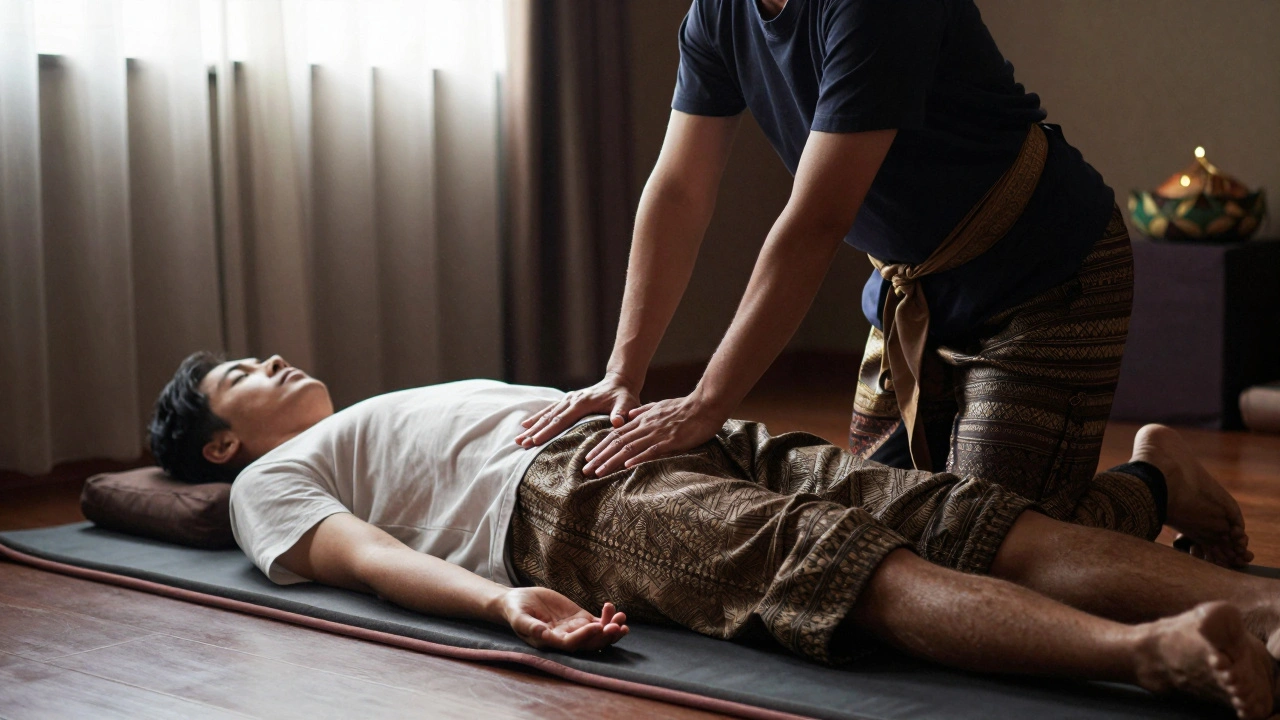
Thai massage, also called Nuad Boran (ancient massage), originated in Thailand and blends elements of yoga, acupressure, and assisted stretching. It’s based on the idea that your body has 10 main energy lines - called sen lines - that, when blocked, cause tension, pain, or fatigue. A skilled therapist uses their hands, thumbs, elbows, knees, and even feet to apply pressure along these lines while guiding your body into stretches. Think of it as passive yoga: you lie there, relax, and let someone else move you into positions your own muscles wouldn’t reach.
This isn’t just relaxation. It’s structural. Studies from the Journal of Bodywork and Movement Therapies show Thai massage significantly reduces muscle stiffness and improves flexibility in just one session. People with chronic lower back pain, tight hips, or shoulder tension report better mobility after just two treatments. And because it’s done on a mat on the floor - not a massage table - your body gets fully supported and aligned.
Why Thai Massage in London Stands Out
London has hundreds of massage studios, but authentic Thai massage is harder to find than you’d think. Many places slap the label on a regular deep tissue session and call it Thai. True Thai massage comes from trained practitioners who’ve studied in Thailand - often at Wat Pho, the birthplace of Thai massage in Bangkok. These therapists don’t just know the moves; they understand the rhythm, the breathing, the intent behind each press.
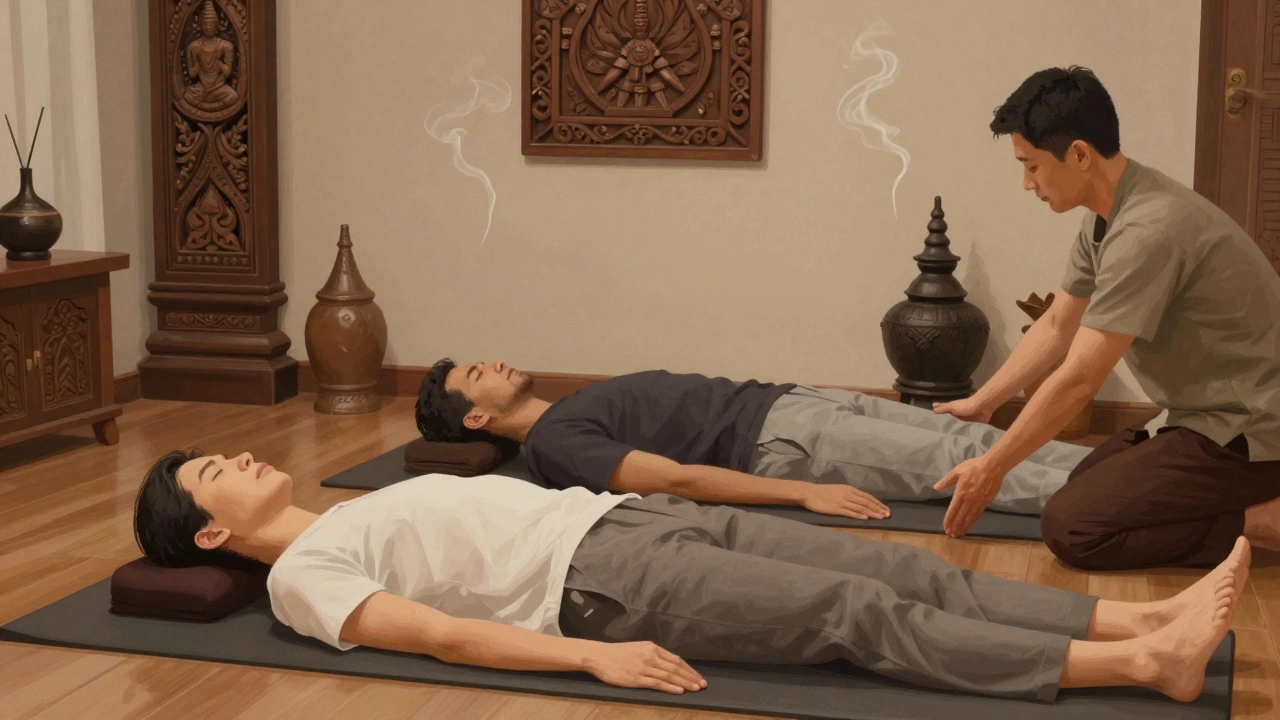
In London, you’ll find two main types: traditional and modern. Traditional Thai massage is done on a floor mat, with no oils, full clothing, and a focus on energy flow. Modern versions might blend in aromatherapy oils, heated pads, or even incorporate elements of Shiatsu. Both work, but if you want the real deal, look for studios that mention Wat Pho certification or therapists who’ve trained in Chiang Mai or Bangkok.
What You’ll Feel During a Session
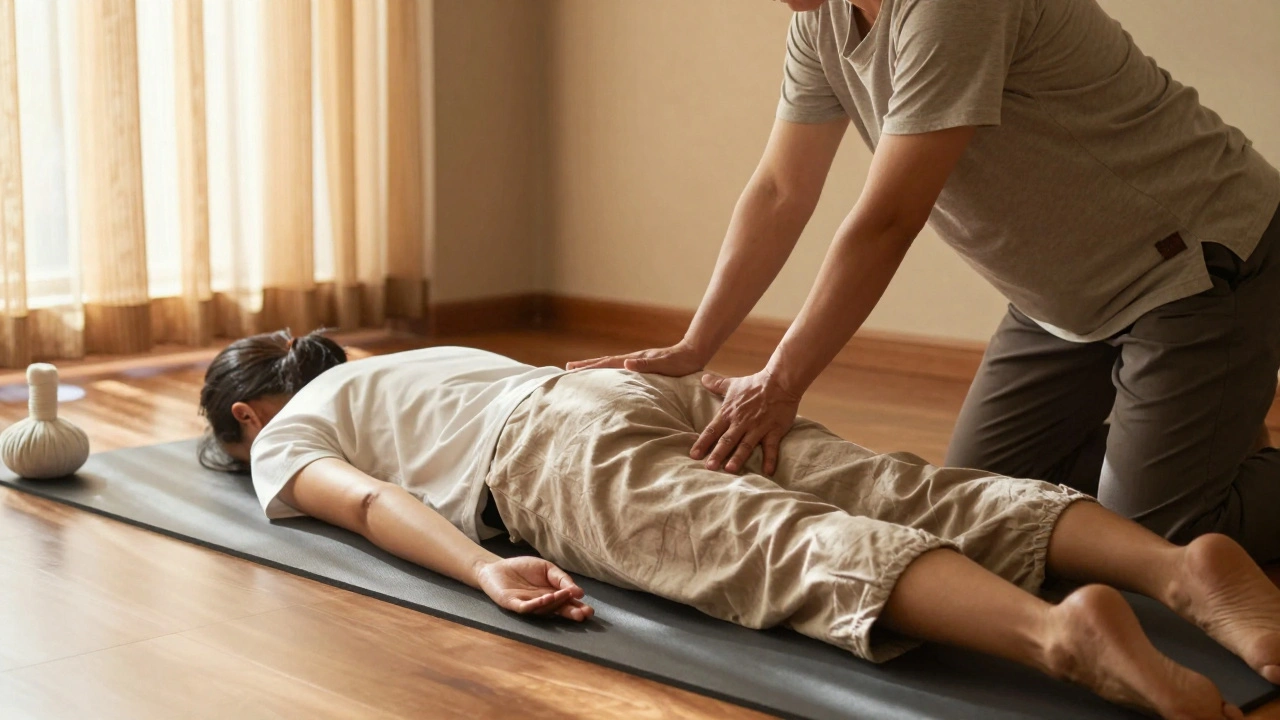
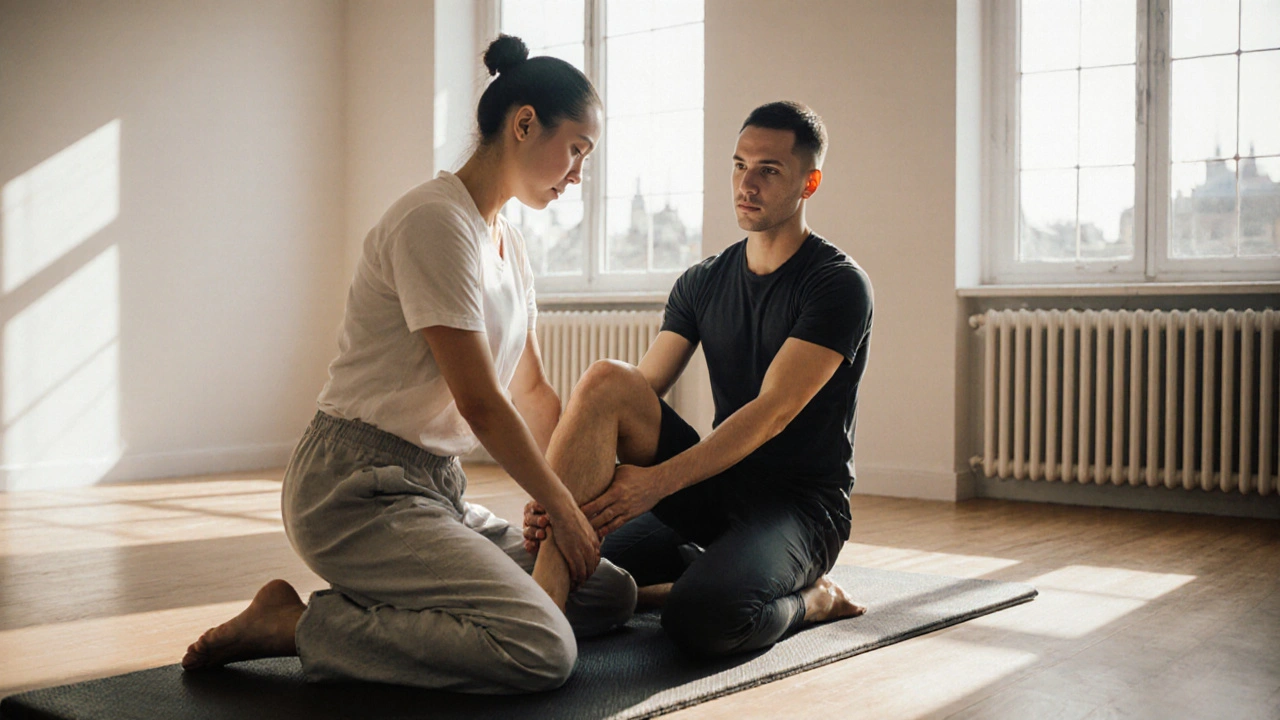
Picture this: you’re lying on a thick mat, wearing loose pants and a T-shirt. The therapist starts at your feet, using their thumbs to trace the arch - slow, deep pressure that makes you exhale without meaning to. Then they move up your calves, using their forearms to roll along your muscles. You’re not just being touched - you’re being rearranged.
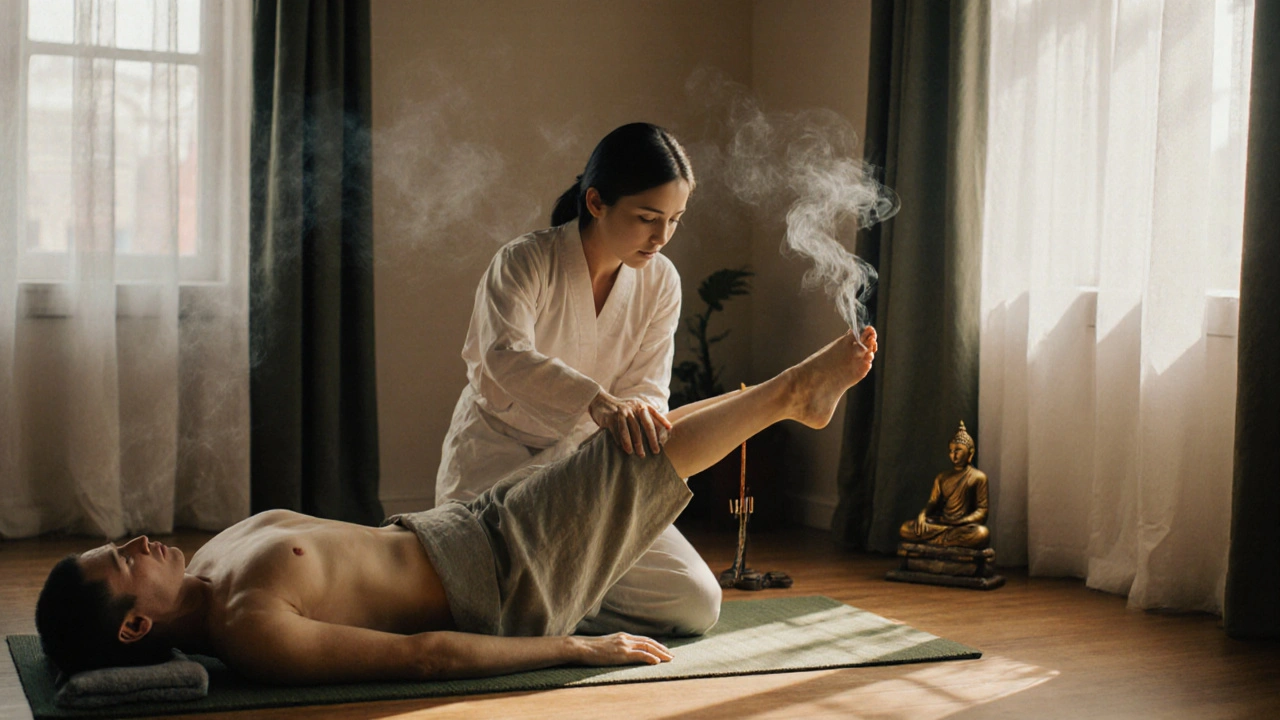
At some point, they’ll take your leg and gently pull it into a hip opener. You might gasp. You might laugh. You definitely won’t be able to do this on your own. Then comes the back work: your therapist stands on the mat beside you, leans their weight onto your spine, and slowly rolls you into a gentle backbend. It’s not painful - it’s release. By the end, you feel like your body has been reset. Your breathing deepens. Your jaw unclenches. You don’t just feel relaxed - you feel reborn.
Most sessions last 60 to 90 minutes. The first 10 minutes are quiet - you’re asked to breathe deeply, center yourself. The last 5 minutes are stillness. No talking. Just you, your breath, and the quiet hum of the studio.
Where to Find Real Thai Massage in London
Not every studio that says "Thai massage" is worth your time. Here’s where to look:
- Chinatown - Home to some of the oldest Thai-run businesses in London. Try Thai Massage London on Wardour Street - their therapists train annually in Bangkok.
- Shoreditch - A hub for holistic wellness. Body & Spirit offers authentic sessions with certified Thai therapists and uses traditional herbal compresses.
- Camden - Lotus Thai Wellness has been operating since 2008. Their founder studied under a master at Wat Pho.
- Notting Hill - The Thai Haven offers private rooms and couples sessions. They use organic cotton linens and no synthetic scents.
Check Google reviews for phrases like "felt like I was in Thailand" or "therapist used their feet" - those are real indicators. Avoid places that use "Thai" as a buzzword for deep pressure or aromatherapy without mentioning energy lines or stretching.
How Much Does It Cost?
Prices vary by location, therapist experience, and session length:
- 60-minute session - £55 to £75
- 90-minute session - £85 to £110
- Couples session - £150 to £200 (for two, side by side)
- Package deals - Many studios offer 5-session packs for £300-£400 (that’s £60-£80 per session)
Booking online is easy - most places let you pick your therapist, time, and even request a male or female practitioner. Walk-ins are rare. If you show up without a booking, you’ll likely wait or be turned away. Plan ahead.
Thai Massage vs. Swedish Massage in London
| Feature | Thai Massage | Swedish Massage |
|---|---|---|
| Setting | Floor mat, no oils | Massage table, oils or lotions |
| Clothing | Fully clothed (loose cotton) | Undressed under towel |
| Technique | Stretching, acupressure, energy lines | Long strokes, kneading, circular motions |
| Intensity | Medium to high - you’ll feel work | Light to medium - designed for relaxation |
| Duration | 60-90 minutes | 60 minutes (standard) |
| Best for | Tight muscles, flexibility, energy blockages | Stress relief, light tension, relaxation |
| After effects | Deep relaxation, slight soreness, improved mobility | Immediate calm, light tiredness |
Swedish is great if you need to unwind after work. Thai is better if you’ve been sitting at a desk all week, your hips are locked, and your spine feels like a coiled spring. One leaves you sleepy. The other leaves you energized.
What to Avoid
Thai massage is powerful - but not for everyone. Skip it if:
- You’re pregnant (unless the therapist is specially trained in prenatal Thai massage)
- You have severe osteoporosis or recent fractures
- You’ve had recent surgery (wait at least 6 weeks)
- You’re on blood thinners - pressure on energy lines can cause bruising
Also, avoid therapists who rush. A real Thai session takes time. If they’re moving too fast, they’re not working with your body - they’re just going through motions. Ask if they’ve trained in Thailand. If they hesitate or say "I learned online," walk out.
How Often Should You Get It?
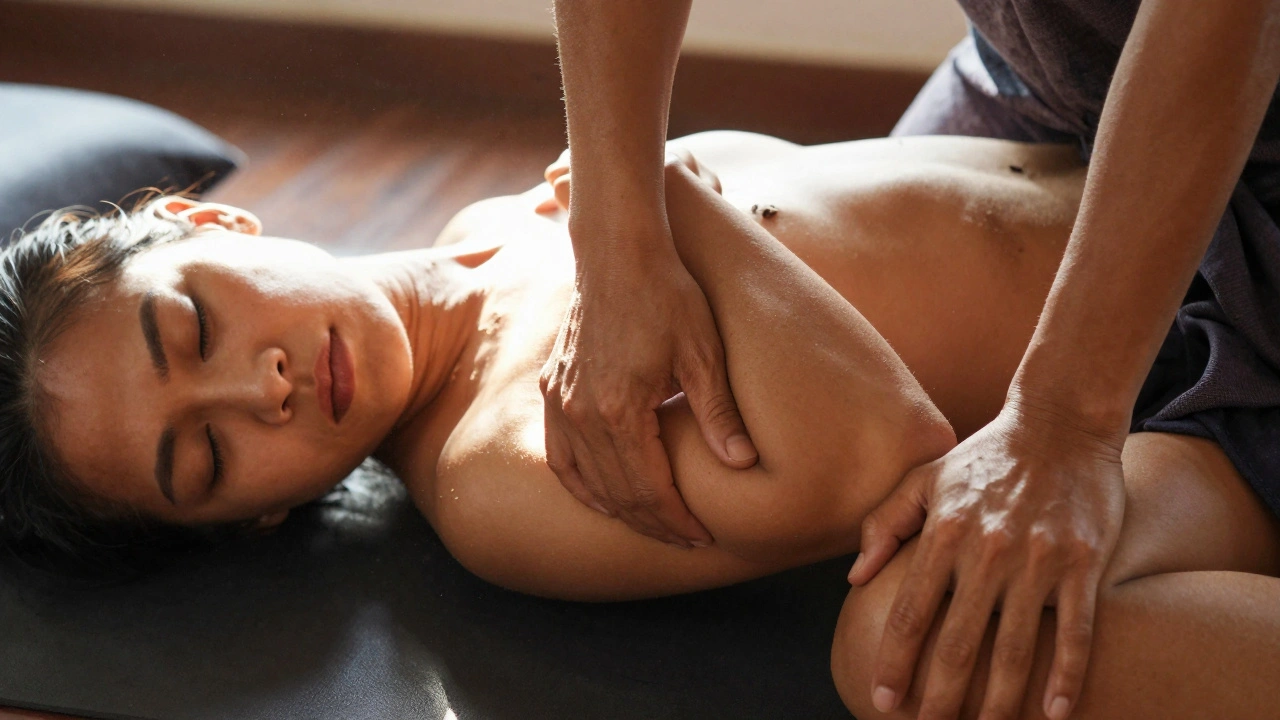
For general wellness: once a month. If you sit at a desk, drive long distances, or have chronic tension: every 2-3 weeks. Athletes and dancers often go weekly. The effects build over time. After three sessions, most people notice their posture improves, their sleep deepens, and their stress response slows down. It’s not magic - it’s biomechanics.
Frequently Asked Questions
Is Thai massage painful?
It shouldn’t be. You’ll feel pressure - deep, sometimes intense - but never sharp or unbearable. If something hurts, say so. A good therapist will adjust. Pain means you’re tensing up, not that they’re working too hard. Think of it as "good hurt," like stretching after a long day.
Do I need to be flexible to try Thai massage?
No. In fact, Thai massage is perfect if you’re stiff. The therapist works with your current range - not your ideal. They’ll use your body’s natural rhythm to guide you into stretches. Over time, you’ll get more flexible. But you don’t need to be now.
Can I get Thai massage if I’m not from Thailand?
Absolutely. Thai massage was never meant to be exclusive. It’s a healing art, not a cultural performance. People from every background in London - office workers, teachers, nurses, athletes - have benefited from it. The technique works the same, no matter where you’re from.
What should I wear?
Loose, comfortable clothing - think sweatpants and a T-shirt. No underwear changes needed. Some studios provide cotton pants and tops. Avoid jeans, tight leggings, or anything with zippers or buttons. You’ll be moving in all directions.
Can I combine Thai massage with other therapies?
Yes. Many studios offer Thai massage followed by herbal compresses or foot reflexology. These add-ons enhance the effects - especially for fatigue or circulation issues. Just don’t do a deep tissue massage the same day. Your body needs time to process the release.
Ready to Reset?
Thai massage in London isn’t just a treatment - it’s a return to balance. If you’ve been stuck in a cycle of stress, poor posture, or tight muscles, this is the reset button you didn’t know you needed. Book a session. Let someone else move you. Breathe. And feel what it’s like to truly unwind - not just relax, but realign.
Similar Posts
Find Peace and Relaxation with Thai Massage in London
The Art of Thai Massage in London: What You Need to Know
Discover the real experience of Thai massage in London-how it works, where to find authentic sessions, pricing, benefits, and what to expect. No fluff, just clear, practical info for first-timers and regulars.
Thai Massage: A Holistic Approach to Wellness
Thai massage is a holistic, full-body therapy combining acupressure, stretching, and energy work to improve flexibility, reduce pain, and restore balance. Learn how it works, where to find it in London, and why it’s different from other massages.
GAURAV JADHAV
March 6, 2026 AT 15:48Thai massage is just a marketing ploy to sell wellness to gullible Westerners. The energy lines? No scientific basis. The stretches? Just yoga with extra steps. Most therapists in London are Thai nationals working on tourist visas, not "certified masters." Wat Pho? That's a temple, not a certification body. They charge £110 for what you can do yourself with a foam roller and YouTube.
Rachel Freed
March 6, 2026 AT 19:45I tried it once after a bad back flare-up. Didn’t expect to cry halfway through. Not from pain - from release. Like my body had been holding its breath for years. I don’t believe in energy lines either, but I believe in results. My hips haven’t felt that loose since college. Sometimes you don’t need to understand how it works to know it helps.
Susan Scott
March 8, 2026 AT 08:50OMG I DID IT AND NOW I’M A NEW PERSON?? Like, I walked out and my posture was different?? My cat even noticed - she stared at me like "who are you and why are you not slumped over like a sad potato"?? Anyway, I got the 90-min with herbal compresses and now I’m basically a zen monk who still drinks cold brew at 11pm. Worth every penny. Also, the therapist used her FOOT. On my spine. I’m not mad. I’m inspired.
Sinclair Madill
March 8, 2026 AT 18:38Just did it last week. Felt like my spine got a reboot. No oils. No music. Just pressure and movement. My legs felt like they were finally talking to my hips again. Booked another one. This time I’m bringing my roommate. He needs it more than I do.
Woo Packaging
March 9, 2026 AT 16:36Just to clarify something - Thai massage isn’t "just yoga". It’s a medical tradition rooted in Ayurveda and Buddhist healing practices. The sen lines are analogous to meridians in TCM. And yes, Wat Pho is the birthplace of formalized Thai massage - they’ve trained therapists for over 200 years. If you’re going to try it, go to a place that respects the lineage. Not the one with the glittery candles and EDM playlists.
Mike Ritchie
March 10, 2026 AT 02:06Look, I’m all for holistic nonsense, but £110 for someone to pull your leg into a pretzel? I’ve seen better stretches in a yoga studio that costs £30. And don’t get me started on the "certified in Chiang Mai" nonsense - most of those certificates are printed on a thermal printer. If you want real bodywork, go to a licensed physio. This is just cultural appropriation with a price tag.
Himanshu Parmekar
March 11, 2026 AT 18:05Of course you all love it. You’re the same people who buy crystals and pay $20 for a "mindfulness" tea. Thai massage is a beautiful tradition - and now it’s been commodified by Londoners who think "authentic" means a Thai guy in a linen shirt saying "breathe deep" while charging you triple what he’d charge in Bangkok. I’ve been to Wat Pho. The real deal costs £10. You’re paying for the ambiance, not the therapy. And don’t even get me started on "couples sessions." That’s not wellness - that’s a date night with a side of delusion.