
Discover authentic Thai massage in London-how it works, where to find it, what to expect, and why it’s one of the most effective ways to release deep tension and restore energy. No fluff. Just real results.
- Created by: Elara Wainwright
- Completed on: 22 Feb 2026
- Categories: Thai Massage
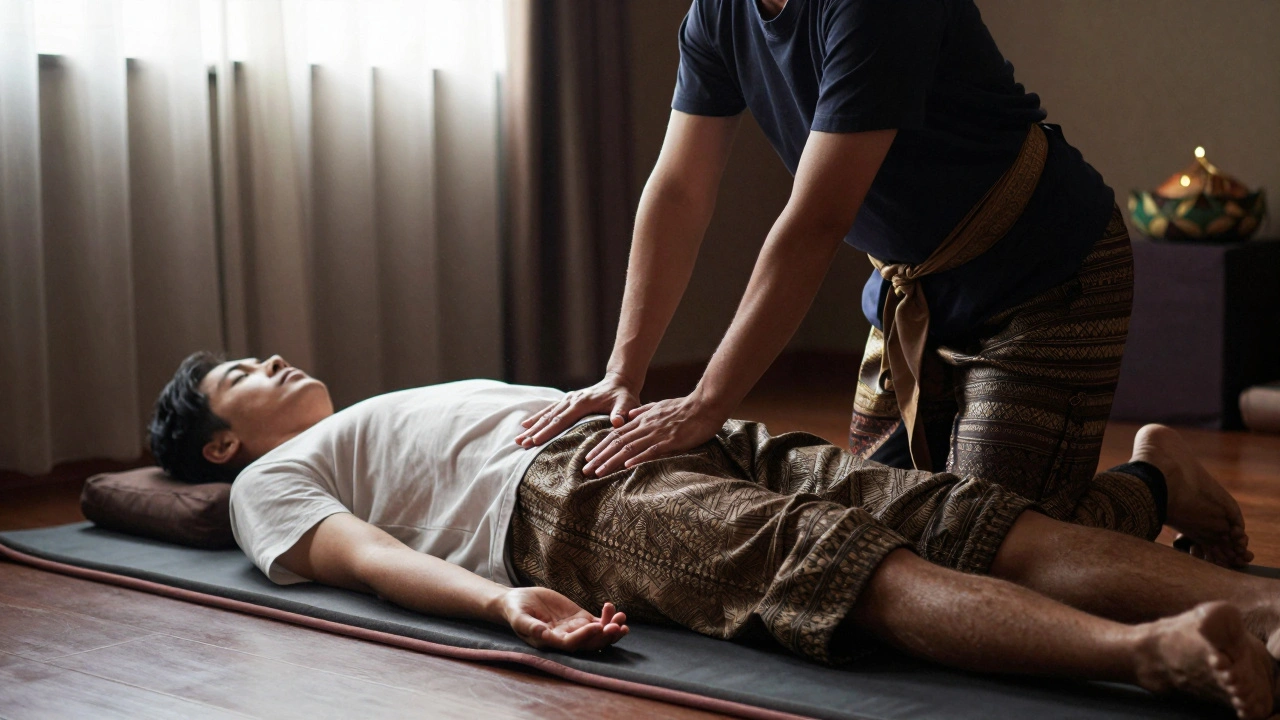
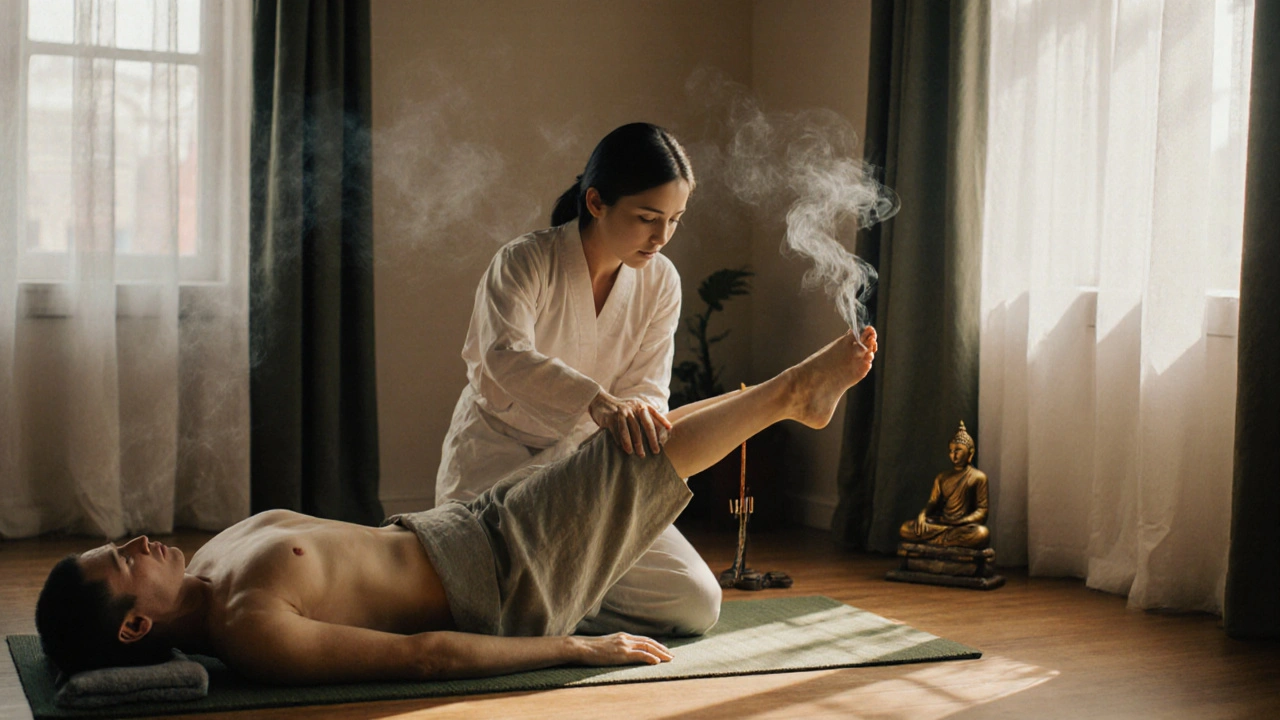
You’ve probably seen it in movies - someone lying on a mat while a therapist moves their body like a human puppet, stretching, pressing, and rocking them with calm precision. That’s Thai massage. And if you’ve ever tried it, you know it’s not just a massage. It’s a full-body reset. No oils. No nudity. Just you, a mat, and someone who knows how to unlock tension you didn’t even know you had.
Unlike Swedish or deep tissue massage, Thai massage doesn’t focus on kneading muscles alone. It’s a blend of acupressure, yoga-like stretching, and energy line work - all rooted in over 2,500 years of traditional medicine from Thailand. It’s not about relaxation alone. It’s about restoring balance.
What Exactly Is Thai Massage?
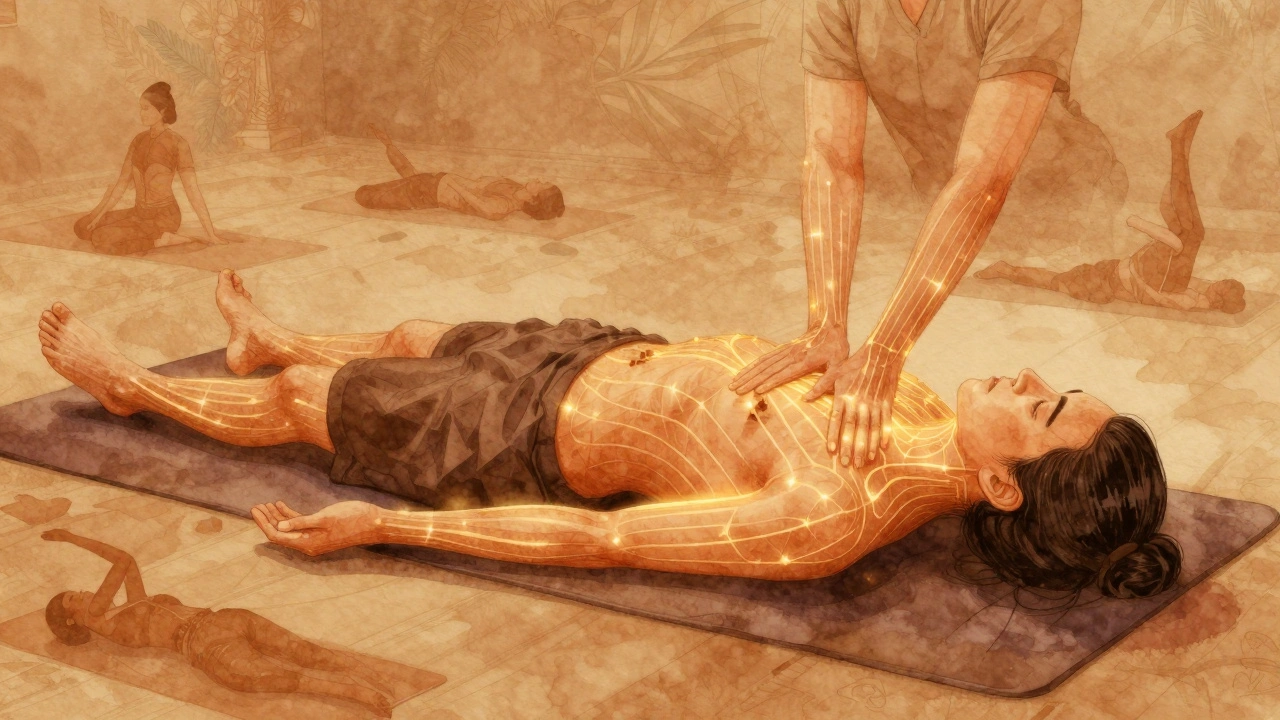
Thai massage, or Nuad Boran - which literally means "ancient massage" - was developed in Thailand and is believed to have been created by Shivago Komarpaj, a physician and contemporary of the Buddha. It’s not just a technique. It’s a healing system that treats the body as a network of energy lines, called sen lines. There are 10 main ones, and practitioners work along them using their thumbs, palms, elbows, knees, and even feet.
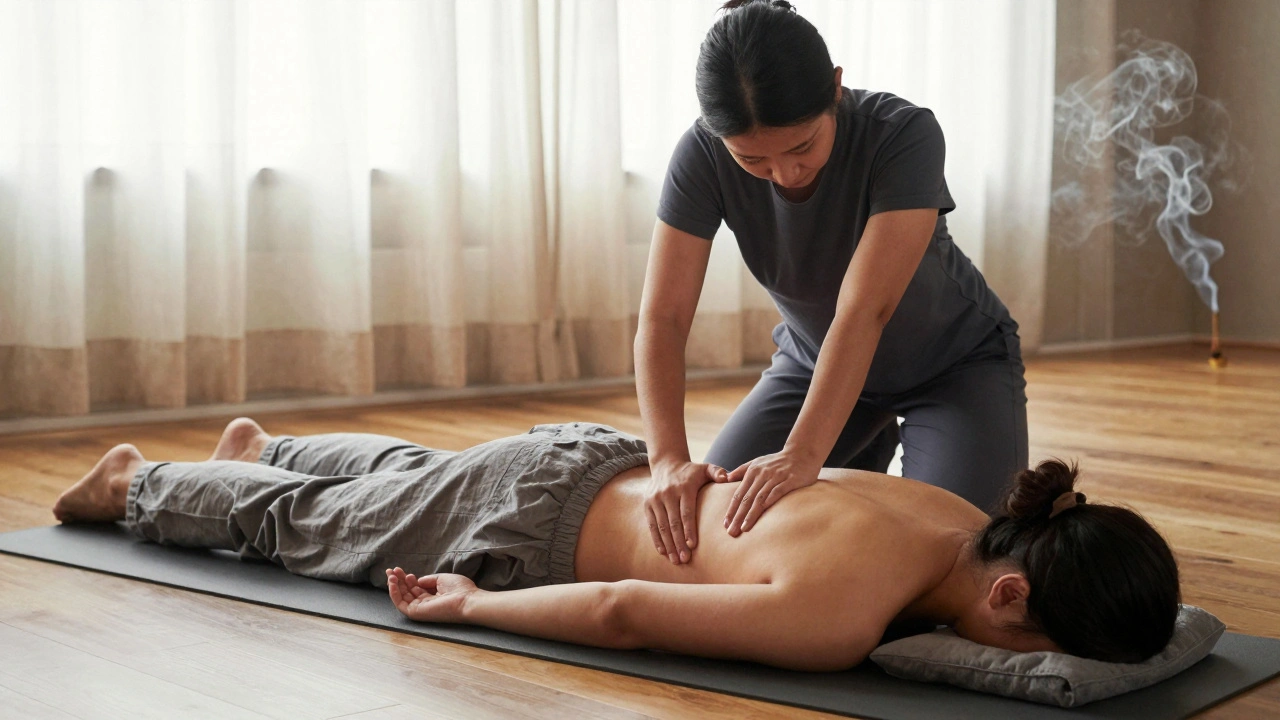
You stay fully clothed, usually in loose, comfortable clothing. No oils. No table. You lie on a thick mat on the floor. The therapist guides you through a series of stretches - sometimes deep, sometimes gentle - while applying rhythmic pressure. It’s like yoga, but someone else is doing the moving for you.
Think of it this way: if Swedish massage is a warm hug, Thai massage is a full-body tune-up. It doesn’t just relax you - it realigns you.
Why Thai Massage Works for Holistic Wellness
Most people think of massage as a luxury. Thai massage turns it into a ritual. Here’s why it’s so effective for long-term wellness:
- Improves flexibility - After one session, you’ll notice you can reach further, twist easier, and bend without clicking. Studies from Chiang Mai University show regular Thai massage increases joint mobility by up to 35% in just six weeks.
- Reduces chronic pain - A 2023 study in the Journal of Bodywork and Movement Therapies found participants with lower back pain reported 60% less discomfort after eight weekly sessions.
- Boosts circulation - The rhythmic compressions and stretches push blood flow through tight areas, helping oxygen and nutrients reach muscles faster.
- Calms the nervous system - Unlike loud spas with booming music, Thai massage happens in quiet, dim rooms. The slow, intentional pressure triggers your parasympathetic nervous system - the one that says, "You’re safe now. Breathe."
- Works on energy flow - While Western medicine doesn’t measure "energy," thousands of years of practice show that releasing blockages along the sen lines reduces fatigue, headaches, and even digestive issues.
One woman in her 50s from Camden told me she started Thai massage after years of sciatica. After three months, she stopped taking painkillers. "It didn’t just ease the pain," she said. "It made me feel like my body remembered how to move properly."
How Thai Massage Differs From Other Types
Let’s cut through the confusion. Not all massages are created equal.
| Feature | Thai Massage | Swedish Massage | Deep Tissue |
|---|---|---|---|
| Position | Mat on floor | Massage table | Massage table |
| Clothing | Fully clothed | Undressed (draped) | Undressed (draped) |
| Technique | Stretching, acupressure, rhythmic compression | Long strokes, kneading, circular motions | Slow, intense pressure on deep muscle layers |
| Oil Used | No | Yes | Yes |
| Focus | Energy lines, flexibility, whole-body balance | Relaxation, surface muscles | Chronic tension, knots |
| After Effect | Light soreness, increased mobility | Deep relaxation | Temporary soreness, improved posture |
Thai massage doesn’t just melt stress - it rebuilds movement. If you sit at a desk all day, it’s the closest thing to a reset button for your spine.
What to Expect During Your First Session
Walking into a Thai massage studio in London for the first time? Here’s what happens:
- You’ll fill out a short form - nothing medical, just activity level and areas of discomfort.
- You’ll change into loose pants and a T-shirt (they usually provide them).
- You’ll lie on a padded mat on the floor. No need to worry about being "on display." The room is private and quiet.
- The therapist will begin at your feet, working up slowly. You’ll feel pressure - not pain, but strong, steady pressure.
- You’ll be guided into stretches: leg lifts, spinal twists, shoulder rotations. You don’t have to do anything. Just breathe.
- It lasts 60 to 90 minutes. No music. Just breathing and the soft sound of hands moving.
- You’ll feel a little sore the next day - like after a good workout. That’s normal.
Most people leave feeling taller. Like their spine remembered how to stand straight.
Where to Find Authentic Thai Massage in London
London has dozens of places offering "Thai massage," but not all are traditional. Here’s how to find the real thing:
- Look for certified Thai therapists - Ask if they trained in Thailand. Many top therapists studied at Wat Po Temple in Bangkok, the oldest massage school in the world.
- Check the space - Real Thai massage happens on mats, not tables. If they use a massage table with oils, it’s probably Thai-inspired, not authentic.
- Read reviews - Look for mentions of "stretching," "no oil," "floor mat," or "energy work." Those are clues.
- Try these trusted spots in London:
- Wat Po London (Camden) - Run by Thai-certified therapists from Wat Po Temple.
- Chiang Mai Massage (Soho) - Offers 90-minute traditional sessions.
- Thai Wellness Centre (Brixton) - Focuses on therapeutic outcomes, not just relaxation.
Don’t be fooled by spas that call themselves "Thai" but use Swedish techniques. Authentic Thai massage is intense, structured, and leaves you feeling rearranged - in a good way.
Pricing and Booking
Expect to pay between £55 and £95 for a session in London. Here’s the breakdown:
- 60 minutes - £55-£70 (good for first-timers)
- 90 minutes - £75-£95 (recommended for chronic tension or full-body reset)
- 120 minutes - £110-£140 (rare, usually for retreats or deep therapeutic work)
Most places offer package deals: 5 sessions for the price of 4. If you’re serious about wellness, this is worth it. Thai massage isn’t a one-off treat - it’s a practice.
Book online. Most studios let you choose your therapist and session length. Don’t be afraid to ask: "Is this a traditional Thai massage?" If they hesitate, walk away.
Safety and What to Avoid
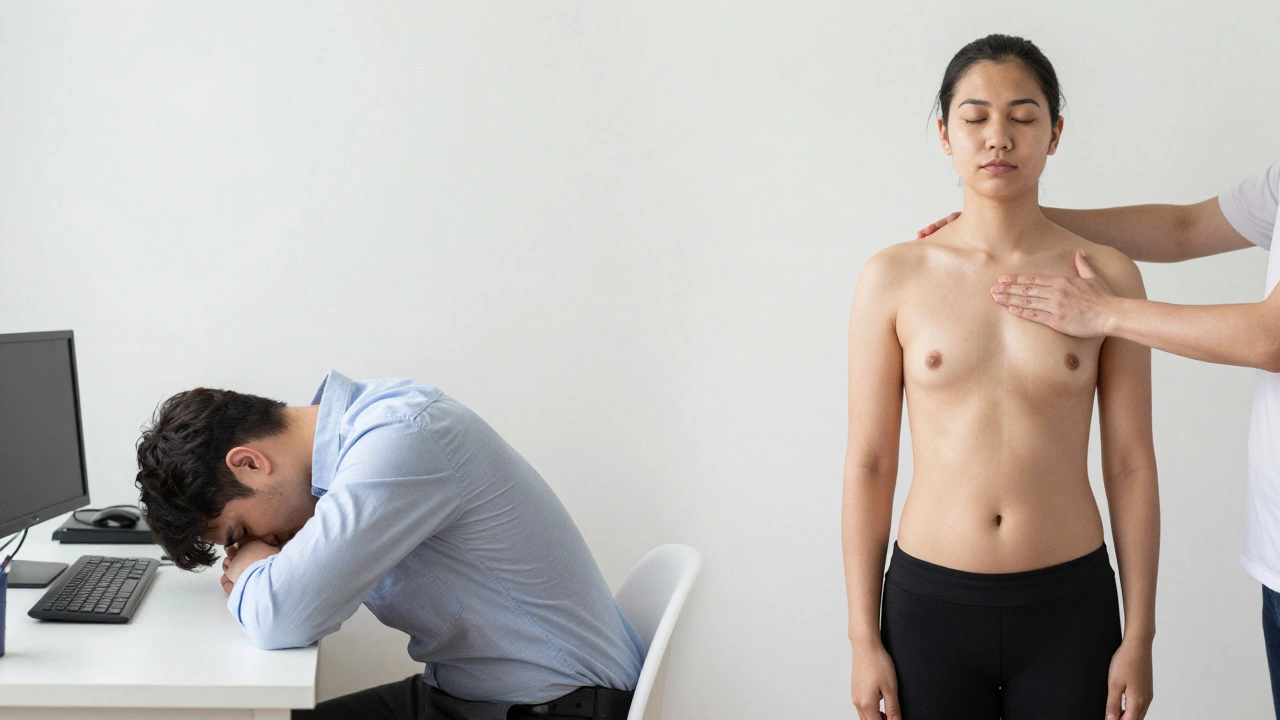
Thai massage is safe for most people - but not everyone.
- Avoid if you have: Recent fractures, open wounds, severe osteoporosis, or are in the first trimester of pregnancy.
- Use caution if you have: High blood pressure, blood clots, or recent surgery. Talk to your doctor first.
- Speak up during the session. If something hurts, say so. Thai massage should feel intense, not painful. You’re not being "strong" - you’re being smart.
- Hydrate after. Your body releases toxins. Drink water. Don’t skip this.
One man in his 60s from Bayswater came in after a knee replacement. His physiotherapist recommended Thai massage to regain mobility. After four sessions, he walked without a cane. "I didn’t know massage could do that," he said.
Who Benefits Most From Thai Massage?
It’s not just for yogis or athletes. Thai massage helps:
- Office workers - Who sit all day and feel stiff from the neck down.
- Runners and cyclists - Who need flexibility and recovery.
- People with chronic pain - Especially lower back, neck, or shoulder tension.
- Stressed-out professionals - Who need more than a bubble bath.
- Anyone feeling "out of sync" - Like your body’s forgotten how to move naturally.
If you’ve tried yoga, Pilates, or physical therapy and still feel tight, Thai massage might be the missing piece.
Frequently Asked Questions
Is Thai massage painful?
It shouldn’t be. You’ll feel deep pressure, especially around the hips, shoulders, and lower back - but pain means you’re tensing up. A good therapist adjusts to your comfort. If it hurts, say so. You’re not being weak - you’re being smart.
Do I need to be flexible to try Thai massage?
Not at all. In fact, if you’re stiff, you’re the perfect candidate. The therapist moves you gently into stretches you can’t do yourself. Over time, you’ll get more flexible - but you don’t need to be now.
How often should I get Thai massage?
For general wellness, once every 2-4 weeks works well. If you’re recovering from injury or have chronic pain, weekly for 4-6 weeks, then taper off. Think of it like brushing your teeth - maintenance keeps things running.
Can I do Thai massage at home?
You can stretch on your own, but you can’t replicate a Thai massage alone. The technique requires precise pressure and alignment that only a trained therapist can deliver. Think of it like yoga - you can practice alone, but a teacher transforms it.
Is Thai massage only for men?
Absolutely not. In Thailand, women make up over 70% of Thai massage clients. It’s especially popular with women who deal with stress, posture issues, or menstrual discomfort. Many therapists are women too.
Thai massage isn’t a trend. It’s a tradition that’s stood the test of time because it works. If you’re tired of treatments that just make you feel temporarily relaxed - and want something that actually changes how your body moves - give it a try. Your spine will thank you.
Similar Posts
The Healing Touch of Thai Massage in London: What You Need to Know
Find Peace and Relaxation with Thai Massage in London
Discover how authentic Thai massage in London helps reduce stress, release tension, and restore energy. Learn where to find the best sessions, what to expect, and how it compares to other massage types.
Unlock the Benefits of Thai Massage in London Today
Discover the real benefits of Thai massage in London-from pain relief to improved flexibility. Learn where to find authentic sessions, what to expect, and how it compares to Swedish massage.