
Curious about Thai massage in London? Get a real look at what makes this ancient practice so popular in the city, from its cultural roots to the relaxing benefits you can expect. Find out how modern Londoners are mixing tradition and wellness, what types of Thai massage are available, and how to choose the right spot for your next session. We’ll also break down what actually happens during a visit and what you’ll pay—no hidden surprises. Whether you’re looking for stress relief or just a new way to unwind, there’s something here for everyone.
- Created by: Elara Wainwright
- Completed on: 28 Jan 2026
- Categories: Thai Massage
Ever felt like your body is holding onto stress you didn’t even know you had?
You’re not alone. In London, where the pace never slows and the noise never stops, your muscles start to scream for relief. That’s where Thai massage comes in-not just as another spa treatment, but as a full-body reset that’s been practiced for over 2,500 years. Unlike Swedish or deep tissue, Thai massage doesn’t just rub your back. It moves you. It stretches you. It wakes up your energy like a morning cup of strong Thai tea.
What Exactly Is Thai Massage?
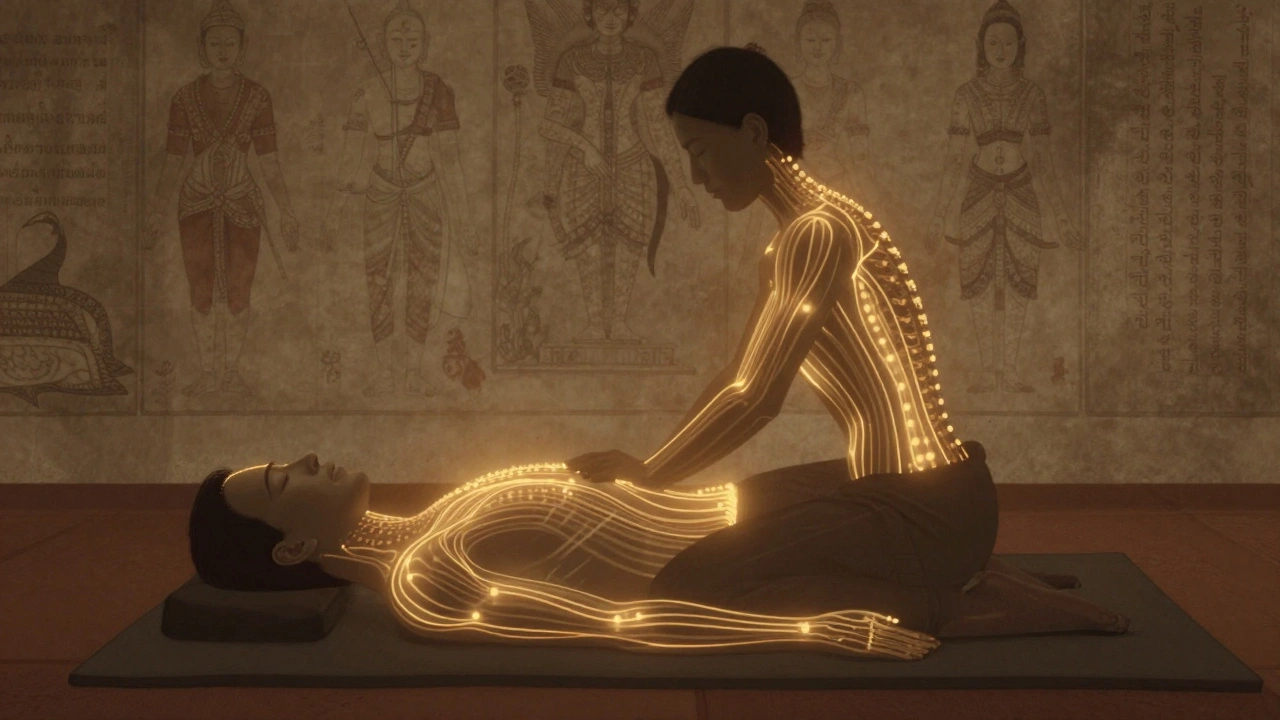
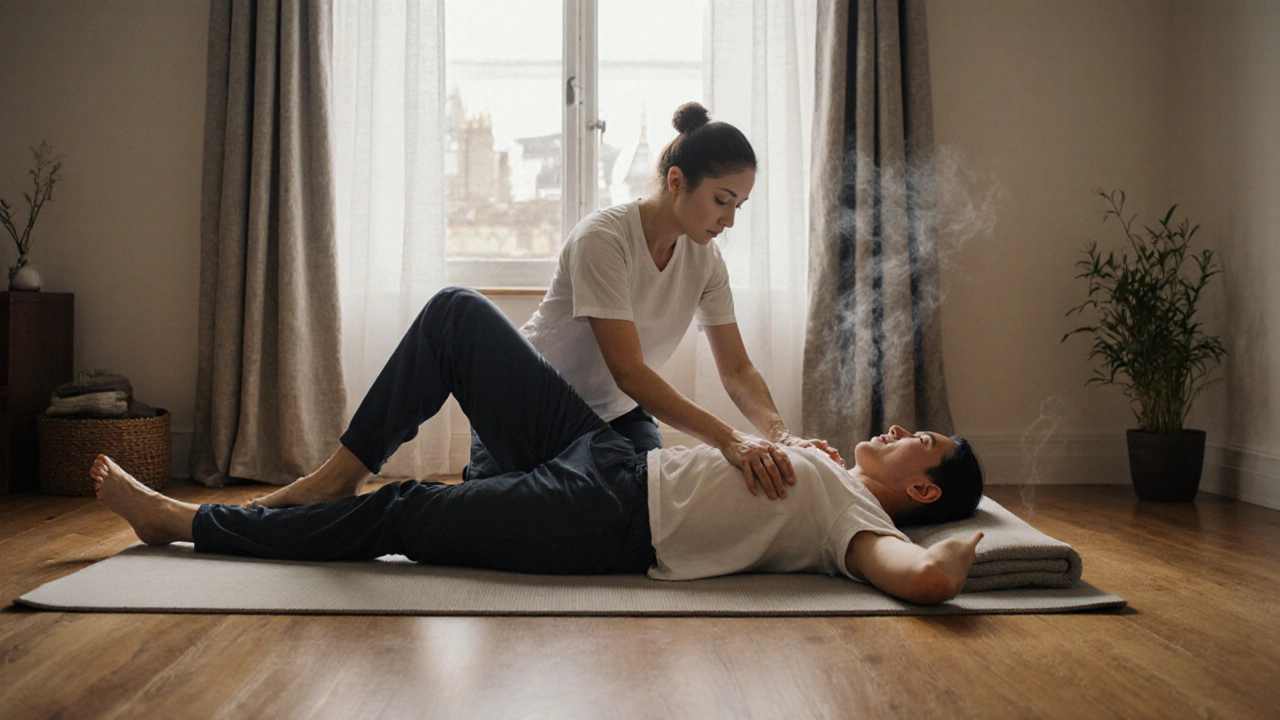
Thai massage, or Nuat Phaen Boran in Thai, is a living tradition. It’s not just hands-on pressure-it’s a blend of acupressure, assisted yoga postures, and energy line work. Practitioners use their thumbs, palms, elbows, knees, and even feet to guide your body through a series of stretches while applying rhythmic pressure along energy lines called sen lines.
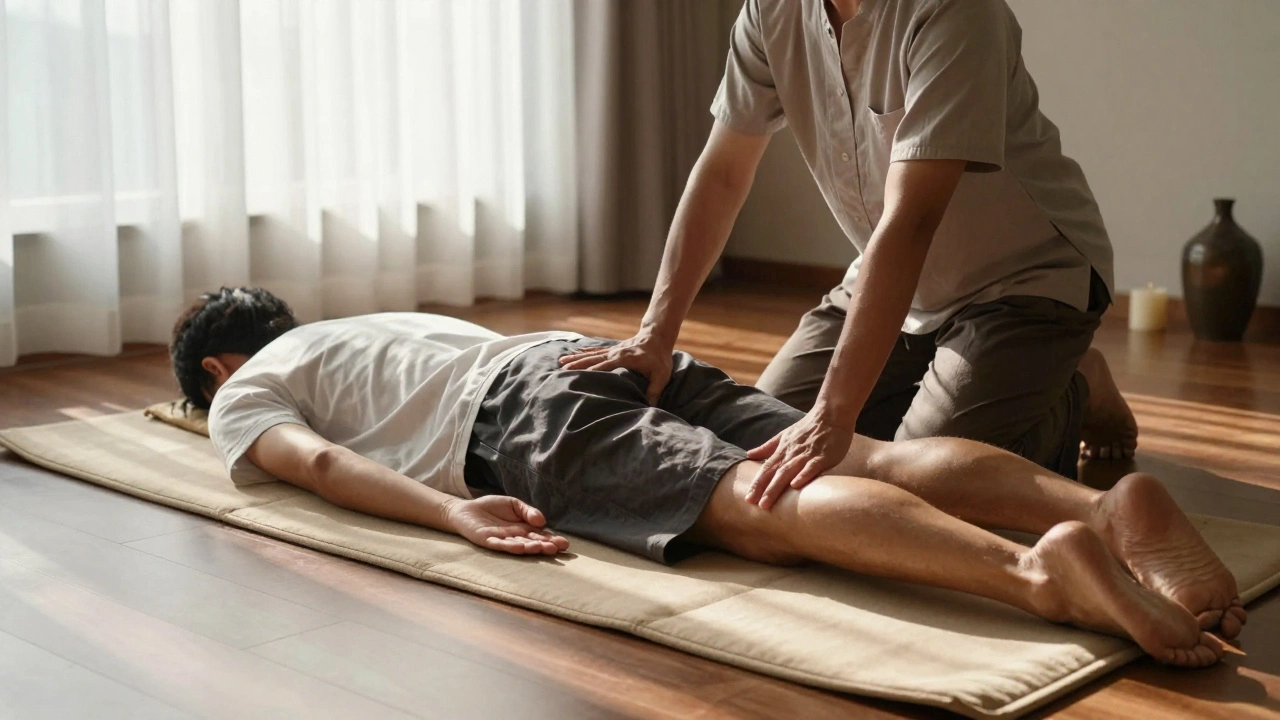
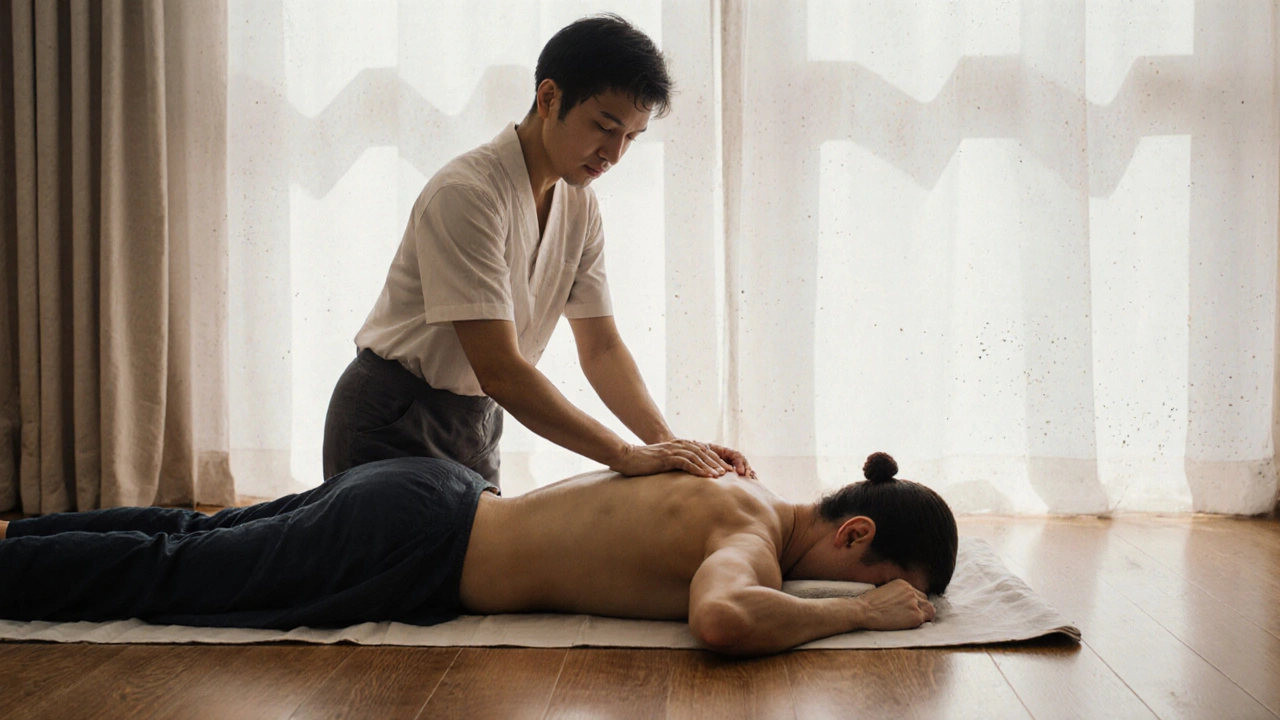
Think of it as yoga you don’t have to do yourself. You lie on a mat on the floor, fully clothed in loose, comfortable clothes, and your therapist moves you like a gentle puppet. No oils. No nudity. Just deep, rhythmic pressure that loosens knots you didn’t know were there.
Why It Works: The Real Benefits
People don’t come back for Thai massage because it feels nice (though it does). They come back because it changes how they move.
- Flexibility improves fast: After just one session, many report being able to touch their toes for the first time in years. It’s not magic-it’s the slow, sustained stretching that gently rewires tight muscles.
- Chronic pain eases: A 2023 study in the Journal of Bodywork and Movement Therapies found that participants with lower back pain saw a 40% reduction in discomfort after six weekly Thai massage sessions.
- Stress melts: Your heart rate drops. Your breathing slows. Your mind stops racing. That’s not placebo-it’s the nervous system shifting from fight-or-flight to rest-and-digest.
- Energy flows better: You might feel a tingling in your hands or feet afterward. That’s your body’s energy channels opening up. It’s why people say they feel "lighter"-not just relaxed, but recharged.
Where to Find Authentic Thai Massage in London
Not every place that says "Thai massage" delivers the real thing. Some just do deep pressure with a little stretching and call it Thai. Here’s how to spot the real deal:
- Look for certified Thai therapists: The best ones trained in Thailand-at schools like Wat Po in Bangkok or traditional Thai healing centers. Ask where they studied. If they say "online course," keep looking.
- Check the setting: Authentic sessions happen on floor mats, not massage tables. You’ll be fully clothed. No candles, no ambient music with whale sounds. Just quiet focus.
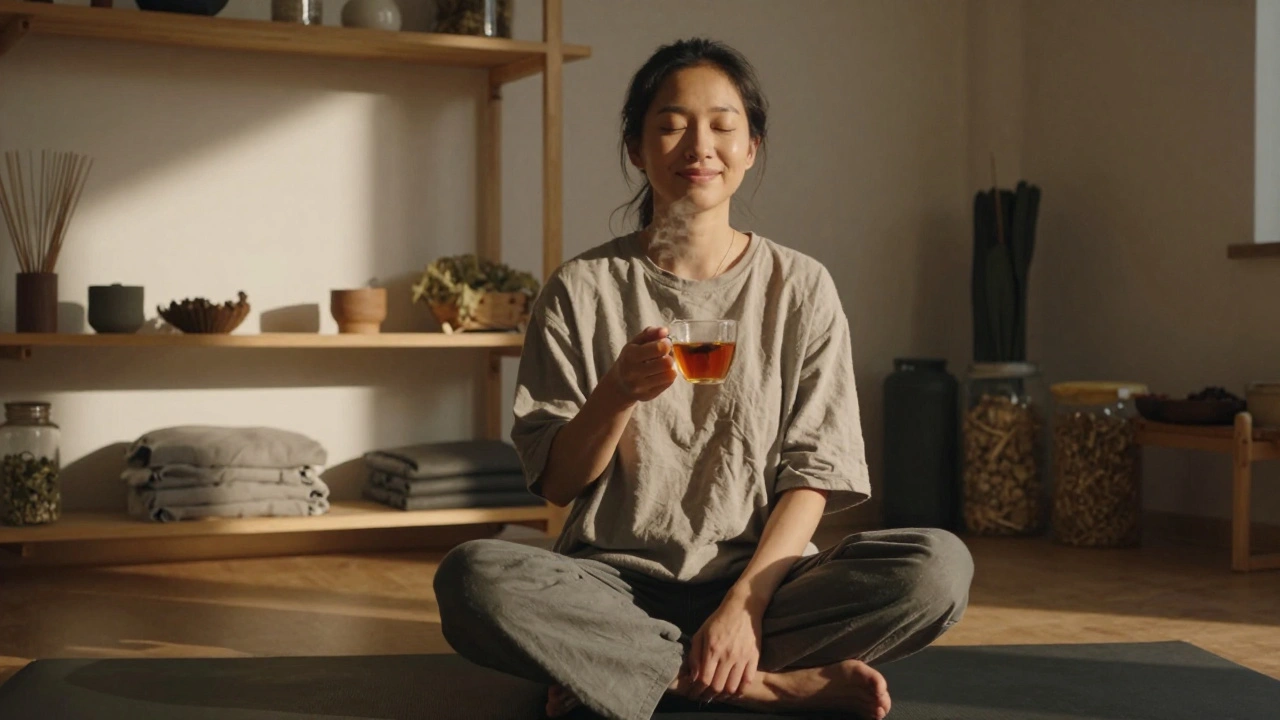
- Neighborhoods to try: In Camden, you’ll find small, family-run studios run by Thai practitioners. In Soho, there are upscale clinics with therapists who’ve trained for over a decade. In East London, look for places that serve Thai herbal tea afterward-it’s a sign they respect the tradition.
What to Expect During Your First Session
You’ll arrive, change into loose pants and a t-shirt (they’ll give you one if you need it), and lie on a thick cotton mat. The therapist will start at your feet, working slowly upward. Don’t be surprised if they press hard-some spots will feel like a deep ache, then melt into relief.
They’ll guide you into stretches you couldn’t do on your own: bending your knee toward your chest, twisting your spine gently, lifting your leg like a yoga pose. You might feel a little awkward at first. That’s normal. The key is to breathe. If something hurts too much, say so. A good therapist will adjust.
Most sessions last 60 or 90 minutes. You’ll leave feeling stretched, slightly sore in the best way, and oddly calm-like you’ve just woken up from a deep nap.
Pricing in London: What You’ll Pay
Prices vary based on location, experience, and session length.
- 60-minute session: £55-£80
- 90-minute session: £80-£120
- High-end clinics (Soho, Mayfair): £120-£160
- Community studios (Hackney, Peckham): £45-£65
Most places offer first-time discounts. Some even have weekly deals-like £50 for a 60-minute session on Tuesdays. Don’t be shy to ask.
Booking is easy: most places take walk-ins, but weekends fill up fast. Book online or call ahead. You’ll usually get a confirmation text with what to wear and what to bring.
Thai Massage vs. Swedish Massage in London
| Feature | Thai Massage | Swedish Massage |
|---|---|---|
| Location | On floor mat | On massage table |
| Clothing | Fully clothed | Undressed under towel |
| Technique | Pressure + assisted stretching | Long strokes, kneading, light pressure |
| Oil Used | No | Yes |
| Energy Work | Yes (sen lines) | No |
| Best For | Stiffness, flexibility, energy blockages | Relaxation, light tension relief |
| After Feel | Light, stretched, energized | Soft, sleepy, calm |
Safety Tips: What You Need to Know
Thai massage is safe for most people-but not all.
- Avoid it if: You have recent injuries, fractures, severe osteoporosis, or are in the first trimester of pregnancy. Always tell your therapist if you’re pregnant, have a pacemaker, or suffer from blood clots.
- Hydrate after: You’ll flush out toxins. Drink water. Don’t reach for a beer right after.
- Don’t rush: Give yourself time to adjust. Some people feel dizzy or lightheaded afterward. Sit quietly for 10 minutes. Breathe.
- Trust your gut: If the therapist is too aggressive, talks too much, or makes you uncomfortable, stop. You’re in control.
Frequently Asked Questions
Is Thai massage painful?
It can feel intense, but it shouldn’t hurt. Good Thai massage is deep and firm, not sharp or bruising. If you feel a sharp pain, speak up. The goal is "comfortable discomfort"-the kind that makes you sigh, not scream.
Do I need to be flexible to try Thai massage?
No. In fact, if you’re stiff, that’s exactly why you should try it. The therapist adapts every stretch to your body. You’re not expected to do anything. They move you. You just breathe.
How often should I get Thai massage?
Once a month keeps stiffness away. If you’re dealing with chronic pain or sit at a desk all day, once every two weeks helps. Some people come weekly for a few months, then switch to maintenance. Listen to your body.
Can Thai massage help with migraines?
Yes. Many clients report fewer headaches after regular sessions. The therapist works on the neck, shoulders, and scalp-areas where tension builds up and triggers pain. It doesn’t cure migraines, but it reduces their frequency and intensity.
Is Thai massage the same as yoga?
It’s like yoga with a partner. You get the stretches, the breathing, the mindfulness-but without having to hold poses yourself. It’s passive yoga. Perfect if you’ve tried yoga and thought, "I just can’t do this."
Ready to feel like yourself again?
London doesn’t stop. But you don’t have to keep running on empty. Thai massage isn’t a luxury-it’s a reset button for your body. Whether you’re a commuter with tight shoulders, a parent who’s forgotten what it feels like to breathe deeply, or just someone tired of feeling "off," this is your chance to heal without pills, without needles, without hype.
Find a quiet studio. Book a session. Show up. Let someone else move you for an hour. You’ll walk out different. Not just relaxed. Reborn.
Similar Posts

Thai Massage in London: A Cultural and Relaxing Experience
Unwind with Authentic Thai Massage in London: Your Guide to True Serenity
Discover authentic Thai massage in London-how it works, where to find real practitioners, what to expect, and how it differs from other massage types. Unwind with a tradition that resets your body and mind.
Experience Tranquility with Thai Massage in London
Discover the calming power of authentic Thai massage in London-how it relieves tension, boosts mobility, and restores calm. Find trusted studios, pricing, what to expect, and how it compares to Swedish massage.
Nadya Gadberry
January 28, 2026 AT 12:49Grace Koski
January 29, 2026 AT 03:26Pearlie Alba
January 30, 2026 AT 08:29Tom Garrett
January 31, 2026 AT 21:46Eva Ch
January 31, 2026 AT 23:12Julie Corbett
February 2, 2026 AT 07:22Gerald Matlakala
February 4, 2026 AT 04:27Vaishnavi Agarwal
February 5, 2026 AT 09:13Kirsten Stubbs
February 6, 2026 AT 14:16Gerald White
February 7, 2026 AT 02:12