
Massage therapists recommend these five simple, daily stretches to improve flexibility, relieve tight muscles, and reduce everyday pain. No equipment needed-just 10 minutes a day.

- Created by: Archer Caldwell
- Completed on: 18 Dec 2025
- Categories: Massage Therapy
You’ve probably felt it-waking up stiff, sitting at a desk all day, or struggling to tie your shoes without hunching over. It’s not just aging. It’s not just laziness. It’s your body screaming for movement. And here’s the truth: no amount of expensive foam rollers or fancy yoga apps will fix what you’re missing-daily stretching done right.
Massage therapists see this every day. Not the people who stretch once a week because they saw a TikTok video. But the ones who move smart, move often, and actually feel the difference. They’ve spent years working on tight shoulders, locked hips, and cranky lower backs. And they know exactly which stretches work-and which ones are just wasting your time.
Why Stretching Isn’t Just for Athletes
Think stretching is only for runners, dancers, or people in spandex? Think again. If you sit at a desk, drive a car, scroll on your phone, or carry groceries, you’re already fighting gravity and muscle imbalance. Your hip flexors shorten. Your chest collapses. Your neck pulls forward. Your hamstrings forget how to lengthen.
Massage therapists don’t just pop joints back in place. They fix the root problem: tight muscles pulling bones out of alignment. And the best tool they use? Simple, consistent stretching. Not 45-minute yoga sessions. Just 10 minutes a day, done right.
Here’s what happens when you make stretching part of your routine:
- Your back pain eases because your hips stop pulling your spine out of shape
- Your shoulders stop aching because your chest opens up
- You sleep better because your nervous system stops being stuck in ‘fight or flight’ mode
- You move without thinking about it-climbing stairs, reaching for a top shelf, even turning your head while reversing your car
It’s not magic. It’s biology. And you don’t need a gym membership to do it.
The 5 Stretches Massage Therapists Actually Recommend
Not every stretch is created equal. Some are flashy but useless. Others are boring but life-changing. These five are the ones massage therapists use with clients who’ve tried everything else-and failed.
1. Doorway Chest Stretch
Ever notice how your shoulders round forward when you’re on your phone? That’s your pectoral muscles tightening. Over time, they pull your shoulders into that hunched posture you hate.
How to do it: Stand in a doorway. Place your forearms on either side of the frame, elbows slightly below shoulder height. Step one foot forward and gently lean into the doorway. Feel the stretch across your chest and front of your shoulders. Hold for 30 seconds. Breathe. Don’t bounce.
Do this 2-3 times a day. Especially after sitting for more than an hour. It’s the single most effective stretch for desk workers.
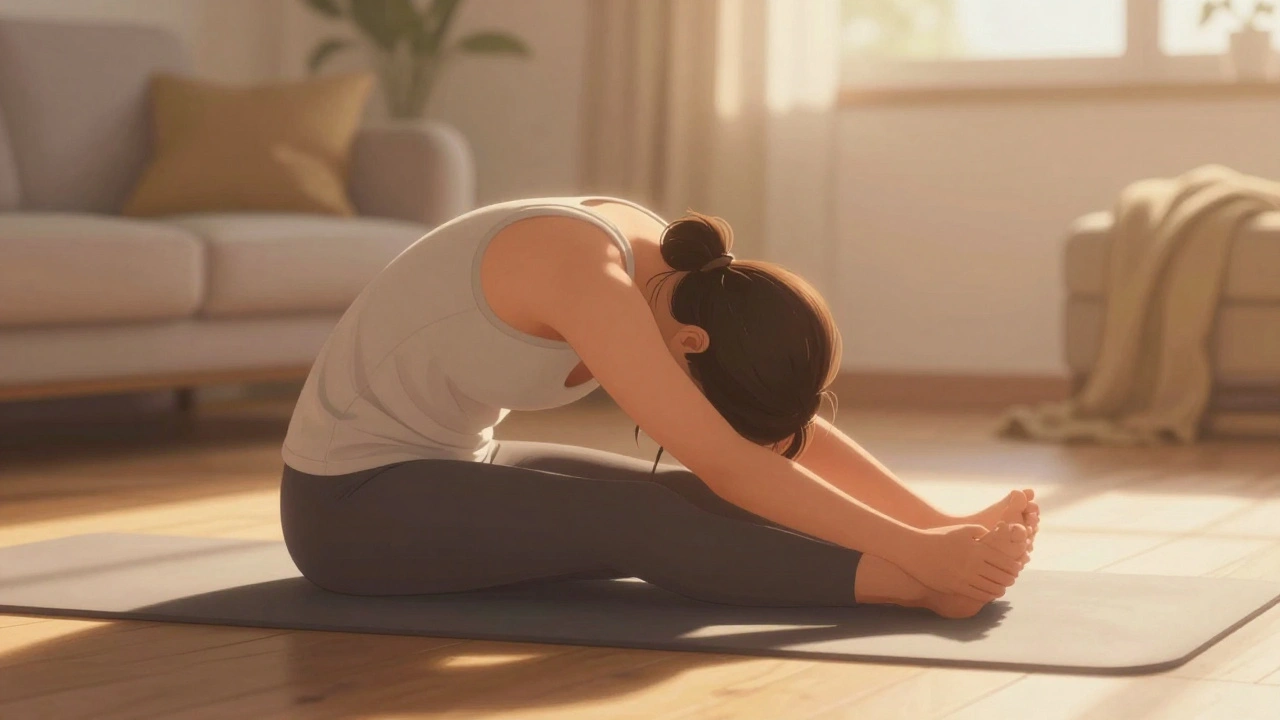
2. Seated Forward Fold (With Bent Knees)
Most people try to touch their toes. And then they give up because it hurts. That’s because they’re trying to stretch hamstrings that haven’t moved in months. Forcing it just makes things worse.
How to do it: Sit on the floor with your legs straight out. Bend your knees slightly. Keep your spine tall. Slowly hinge forward from your hips-not your waist. Let your hands rest on your shins, knees, or even the floor. Don’t chase the floor. Just feel the back of your legs gently pulling. Hold for 45 seconds.
Massage therapists see this stretch as a reset button for lower back tension. Tight hamstrings pull on your pelvis, which tugs on your spine. This one simple move undoes that chain reaction.
3. Figure-Four Stretch (Seated or Lying)
If your glutes feel like concrete, this is your go-to. Tight glutes are the hidden cause of lower back pain, sciatic flare-ups, and even knee issues.
How to do it (seated version): Sit on a chair. Cross your right ankle over your left knee. Gently press your right knee down. Keep your back straight. You’ll feel it deep in your right buttock. Hold for 30 seconds. Switch sides.
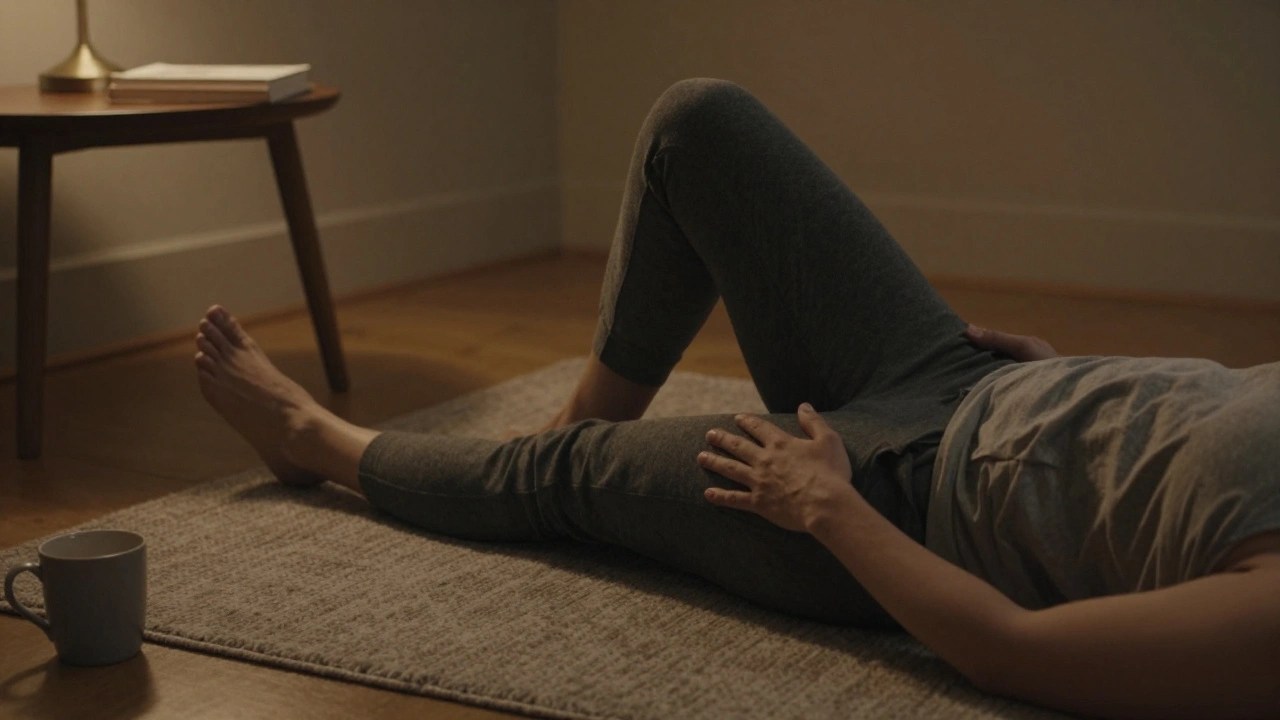
Lying version (for deeper release): Lie on your back. Cross your right ankle over your left thigh. Thread your hands behind your left thigh and pull gently toward your chest. Feel the stretch in your right hip. Hold 45 seconds. Repeat on the other side.
This stretch is the reason so many people feel better after just one massage session. It releases tension that’s been building for years.
4. Cat-Cow Stretch (On All Fours)
This isn’t just a yoga pose. It’s a spinal reset. Your spine was made to move in all directions. Sitting all day turns it into a stiff rod.
How to do it: Get on your hands and knees. Inhale as you drop your belly, lift your head and tailbone (Cow). Exhale as you round your spine, tuck your chin, and squeeze your abs (Cat). Move slowly. Let each breath guide the motion. Do 8-10 rounds.
Massage therapists use this before any deep tissue work. It wakes up the spine, improves circulation, and loosens the entire back. Do it first thing in the morning. Or after lunch. Even two minutes makes a difference.
5. Standing Quad Stretch (With Support)
Most people skip this because they think it’s too easy. But if you’ve ever felt tightness in the front of your thighs-especially after walking or standing all day-this is the one you’ve been ignoring.
How to do it: Stand next to a wall or chair for balance. Bend your right knee and grab your right ankle with your right hand. Gently pull your heel toward your glutes. Keep your knees close together. Don’t arch your lower back. Hold for 30 seconds. Switch legs.
This stretch is especially powerful if you wear heels, commute on public transport, or walk a lot. Tight quads pull your pelvis forward, which creates lower back strain. This stretch breaks that cycle.
When to Stretch (And When Not To)
Stretching cold muscles? Bad idea. You’re asking for injury. Stretching after a workout? Perfect. But you don’t need to wait for the gym.
Best times to stretch:
- First thing in the morning (even before coffee)
- After sitting for more than an hour
- Before bed (helps calm your nervous system)
- After a warm shower or bath (muscles are more pliable)
Never stretch through sharp pain. A gentle pull? Good. A stabbing sensation? Stop. Stretching should feel like release, not punishment.
And here’s the secret: consistency beats intensity. Ten minutes a day, every day, will do more than an hour once a week.
What Massage Therapists Know That You Don’t
They’ve seen hundreds of people try the same stretches-and fail. Why? Because they treat stretching like a chore. It’s not. It’s a ritual.
Massage therapists don’t just stretch. They breathe into it. They notice where the tension lingers. They adjust. They don’t rush. They listen to their bodies.
Try this: Before you start each stretch, take three slow breaths. As you hold it, ask yourself: Where am I holding tension right now? You might be surprised.
And don’t expect instant results. Flexibility isn’t a race. It’s a slow unraveling. You’ll notice small wins first: easier to bend down, less neck pain after driving, sleeping on your side without waking up stiff.
What Not to Do
Here are the top three mistakes people make:
- Bouncing. Ballistic stretching triggers your muscles to tighten up as a defense. Hold still. Let gravity do the work.
- Skipping warm-up. Cold muscles = higher risk of strain. Do a quick walk or arm circles first.
- Comparing yourself. Your body isn’t your friend’s body. Don’t try to touch your toes if your hamstrings are tight. Progress, not perfection.
How This Fits Into Your Life
You don’t need to overhaul your day. Just add these five stretches to existing habits:
- Do the doorway stretch while waiting for your coffee to brew
- Do cat-cow while brushing your teeth
- Do the figure-four stretch while watching your favorite show
- Do the seated forward fold before you get out of bed
It’s not about adding time. It’s about using time you already have.
What Happens After 30 Days
One client, a 52-year-old teacher from Croydon, started doing these stretches every morning. She didn’t tell anyone. Just did them quietly. After 30 days, she said: “I can put on my shoes without leaning on the counter. I didn’t realize how much I’d been struggling until I stopped.”
That’s the power of small, consistent action. You won’t turn into a yogi. But you’ll feel like a version of yourself you forgot existed-lighter, freer, more in control of your own body.
Can I stretch if I have chronic pain?
Yes-but gently. Avoid any stretch that causes sharp or shooting pain. Focus on mild tension only. If you have arthritis, sciatica, or a recent injury, check with your doctor or physiotherapist first. Many of these stretches are safe for chronic conditions when done slowly and without force.
How long should I hold each stretch?
Hold each stretch for 30 to 45 seconds. This gives your muscles time to relax and lengthen. Shorter holds (under 20 seconds) won’t make much difference. Longer holds (over 60 seconds) aren’t necessary for everyday flexibility.
Do I need equipment to do these stretches?
No. All five stretches can be done with just your body and a wall, chair, or floor. A yoga mat is helpful for comfort, but not required. You don’t need bands, foam rollers, or blocks.
Should I stretch before or after exercise?
Dynamic movements like leg swings or arm circles are better before exercise. These five stretches are static-best done after exercise, or separately during the day. They’re designed for recovery and daily mobility, not warm-ups.
Why do I feel more tight after stretching?
That usually means you’re pushing too hard or holding your breath. Stretching should feel like a gentle release, not strain. Try slowing down, breathing deeply, and easing off the intensity. If it still feels tight after a few days, you may need more mobility work or professional help-like a massage therapist.
Flexibility isn’t about touching your toes. It’s about living without pain, without limitation, without constantly adjusting your body just to get through the day. These five stretches are the quiet heroes of everyday movement. Do them. Not because you have to. But because you deserve to move like you used to-and better.
Similar Posts
Massage Therapist Approved Stretches for Everyday Flexibility
Amanda turman
December 19, 2025 AT 16:18i just stretched for 2 mins after reading this and now my lower back feels like it’s been hit by a truck?? like bro i didn’t even do it right did i?? also why does my neck hurt more now?? this is the worst advice ever but also kinda true??
Casey Brown
December 20, 2025 AT 01:09Hey, don’t stress-stretching isn’t about perfection, it’s about showing up. That doorway chest stretch? I do it while my coffee brews too. First week felt weird, second week I noticed I wasn’t slouching like a sad turtle. Third week? I reached for a top shelf without wincing. Small stuff, but it adds up. You got this. No need to overthink it-just breathe into it. And hey, if your neck’s tight, try the cat-cow. It’s like a reset button for your whole spine.
Nathan Poupouv
December 20, 2025 AT 11:21I’m from Japan and we have this thing called ‘hojo undō’-old-school body conditioning. It’s not flashy, just slow, mindful movement. What this post nails is that stretching isn’t performance, it’s maintenance. Like oiling a clock. You don’t do it because it’s exciting-you do it because if you don’t, the gears grind to a halt. I’ve seen guys in their 60s move better than teenagers here because they just kept showing up. No apps. No Instagram posts. Just 10 minutes. Every day. That’s the real secret.
Paul Waller
December 21, 2025 AT 19:32Do the doorway stretch daily. It works.
Nathan Hume
December 22, 2025 AT 18:05This is beautiful. I’ve been doing the figure-four stretch for 3 months now, mostly while watching Netflix. I used to have sciatic pain every time I sat longer than 20 minutes. Now? I can sit through entire movies without shifting. I didn’t even know my glutes were the problem until I read this. Also, breathing into the stretch changed everything. I used to hold my breath like I was waiting for a punchline. Now I exhale slowly-like letting go of a thought I’ve been clinging to. Life’s not about touching your toes. It’s about not needing to bend just to tie your shoes. 🙏
Dennis Collins
December 23, 2025 AT 16:17Bouncing is bad. Warm up first. Don’t compare yourself. And stop overthinking it. Just do it. 10 minutes. Every day. No excuses. You’re not special. Your body doesn’t care about your feelings. It just wants movement. Do the stretches. Or keep being stiff. Your call.