
Discover how lymphatic drainage massage helps your body naturally detox, reduce swelling, and boost immunity. Learn what it is, how it works, and where to find real results in London.
- Created by: Elara Wainwright
- Completed on: 2 Mar 2026
- Categories: Lymphatic Drainage Massage
You’ve probably seen it on Instagram: skin that looks like it’s lit from within-smooth, plump, and glowing. No filter. No filter. Just real, natural radiance. What if I told you the secret isn’t a $200 serum or a six-step routine? It’s something quieter, deeper, and way older than any beauty trend: your lymphatic drainage massage.
Most people think of massage as just relaxation. But lymphatic drainage? That’s your body’s internal cleaning crew at work. And when it’s moving right, your skin doesn’t just look better-it feels better. Tightness fades. Puffiness melts. That dull, tired look? Gone.
What Exactly Is Lymphatic Drainage Massage?
Let’s break this down simply. Your body has a network of tiny vessels-like a plumbing system you never knew you had-that carry fluid, waste, and toxins away from your tissues. That’s the lymphatic system. Unlike your blood, which gets pumped by your heart, lymph doesn’t have a motor. It moves when you move. Or when someone gently guides it.
Lymphatic drainage massage is a super-light, rhythmic technique that uses barely-there pressure-think the weight of a feather-to stimulate this system. It doesn’t dig into muscles. It doesn’t hurt. It feels more like a soft wave of touch, moving in the direction of your lymph nodes. Your neck, collarbone, behind your ears, and under your jaw? Those are the main drainage zones.
Think of it like clearing a clogged sink. If water sits too long, it gets stagnant. Same with lymph. When it’s stuck, fluid builds up. That’s what causes puffiness under your eyes in the morning, or that heavy, swollen feeling in your face after a salty meal. This massage gently redirects it.
Why Your Skin Glows After Lymphatic Drainage
Here’s the real magic: when lymph flows, so does oxygen and nutrients to your skin cells. Waste gets flushed out. Inflammation drops. Collagen production gets a nudge. And your skin? It starts to look like it’s had a full night’s sleep-even if you haven’t.
Let’s get specific:
- Reduces puffiness-especially around the eyes and jawline. No more “I woke up like this” moments.
- Improves texture-your skin feels smoother, not just because it’s hydrated, but because toxins aren’t sitting under the surface.
- Boosts glow-more circulation means more natural radiance. No highlighter needed.
- Helps with acne-when lymph stagnates, it can trap bacteria and inflammation. Drainage helps clear that out from within.
- Calms sensitivity-if your skin reacts to everything, lymphatic massage can help reduce reactivity by lowering overall inflammation.
One client, Maya, started doing this twice a week after years of chronic under-eye puffiness. Within three weeks, she stopped using concealer. "I didn’t even realize how tired my face looked until it was gone," she told me.
What Happens During a Session?
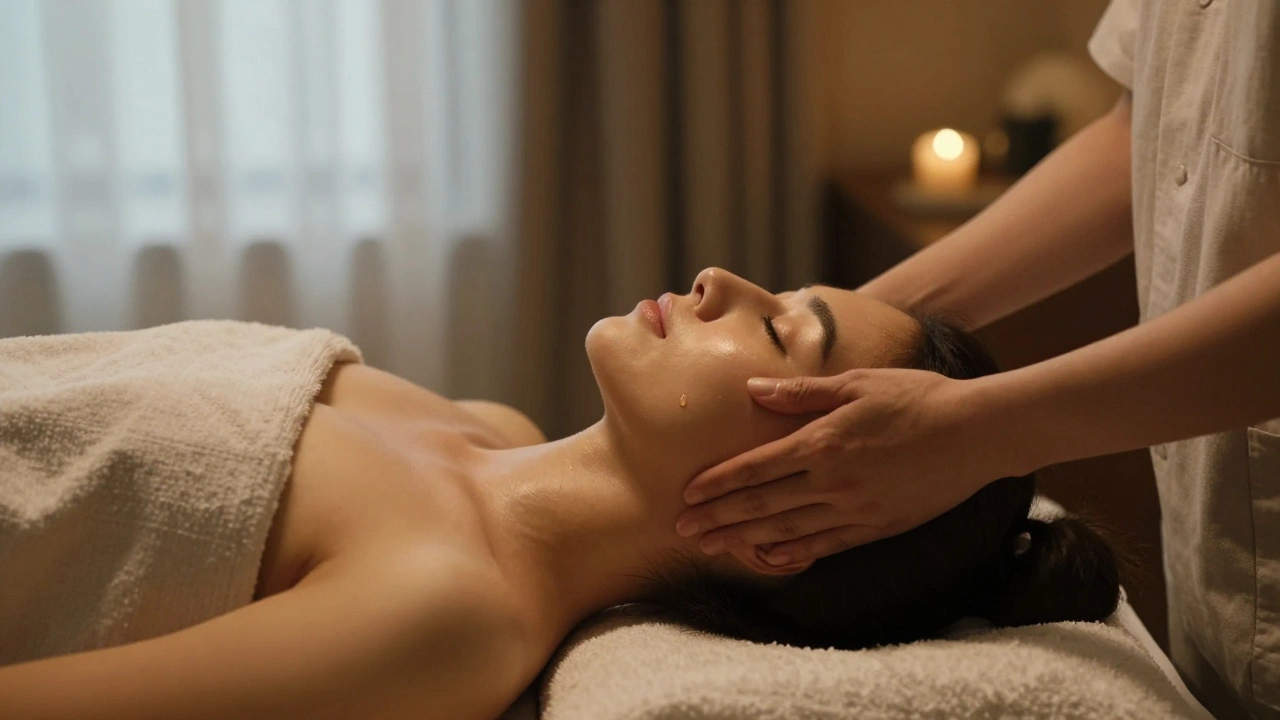
You lie down, usually on your back. The room is quiet. The lights are low. The therapist’s hands are warm. They start at your neck, using the lightest touch possible-just enough to stretch the skin, not pull it. Then they move slowly: behind your ears, along your jaw, across your forehead, down your chest.
It’s not like a deep tissue massage. There’s no kneading. No pressure. It’s more like a slow, flowing dance. Sessions last between 30 and 60 minutes. Most people leave feeling light-headed-in a good way. Like your whole face just took a deep breath.
Afterward, your skin might look slightly flushed. That’s normal. It means the system is waking up. Drink water. Avoid salt. And don’t rush to put on makeup. Give your skin 12 hours to breathe.
How Often Should You Do It?
For maintenance? Once a week is ideal. If you’re dealing with puffiness, post-surgery swelling, or seasonal allergies, twice a week for a month can make a huge difference. Some people do it before big events-a wedding, a job interview, a photoshoot. It’s like a natural facelift, without the needles.
And here’s the thing: you don’t need a professional every time. Once you learn the basics, you can do a simplified version at home. Just two minutes of gentle strokes in the morning can keep things moving. We’ll get to that.
Lymphatic Drainage vs. Other Facial Treatments
Let’s cut through the noise. There are so many facial treatments promising glow. Here’s how lymphatic drainage stacks up:
| Feature | Lymphatic Drainage | Facial Steaming | Microcurrent | LED Light Therapy |
|---|---|---|---|---|
| Primary Goal | Fluid movement, detox | Open pores, hydrate | Muscle toning | Cell repair, reduce redness |
| Pressure Used | Extremely light | None | Low electrical | None |
| Results Timeline | Immediate puffiness reduction | Temporary glow | Builds over weeks | 4-6 sessions for visible change |
| Best For | Puffiness, dullness, inflammation | Blackheads, dry skin | Sagging, loss of definition | Acne, redness, healing |
| At-Home Possible? | Yes, easy | Yes | Yes, expensive devices | Yes |
Lymphatic drainage doesn’t just treat the surface. It targets the root cause: stagnation. That’s why it works when other treatments fall short.
Can You Do It at Home?
Yes. And you don’t need fancy tools. Just clean hands and a little oil-jojoba, rosehip, or even plain coconut oil works.
Here’s a simple 3-minute routine:
- Start at your neck. Gently stroke from your collarbone up toward your jawline, 5 times.
- Move to your jaw. Use your knuckles to glide from your chin toward your ears.
- Under your eyes: use your ring finger (it’s the lightest) and stroke from the inner corner toward your temple.
- Forehead: from the center outward, toward your temples.
- End with a few slow strokes from your nose down to your chin.
Do this every morning before moisturizer. You’ll notice your skin feels lighter. Within a week, your makeup applies smoother. After a month? You might catch yourself looking in the mirror and thinking, "Wait-did I finally get good skin?"

Who Should Avoid It?
It’s safe for almost everyone-but not if you’re dealing with:
- Active infections (like a cold or flu)
- Recent cancer treatment (always check with your oncologist)
- Severe heart conditions
- Deep vein thrombosis (blood clots)
- Uncontrolled high blood pressure
If you’re pregnant, it’s generally fine-but avoid the abdomen and lower back. Always tell your therapist if you’re unsure.
What to Look for in a Therapist
Not all "facial massages" are lymphatic drainage. Some are just relaxing strokes. Look for these signs:
- The therapist uses extremely light pressure-no redness or indentations should remain.
- The technique is slow, rhythmic, and directional (always toward the lymph nodes).
- They focus on the neck and collarbone first-not just the face.
- They ask about your health history. A good therapist cares about your whole body.
In London, clinics like The Lymphatic Studio and Clear Skin Therapy specialize in this. Don’t be afraid to ask: "Can you show me the direction of flow?" If they can’t explain it, keep looking.
Real Results, Real Time
One woman, Sarah, started after her third baby. She had constant puffiness, dark circles, and dry skin. She tried everything: serums, masks, expensive facials. Nothing stuck. She started lymphatic drainage twice a week. After six weeks, she stopped using eye cream. "My skin started doing the work itself," she said.
It’s not magic. It’s biology. When you move the fluid, you remove the blockages. And when the blockages are gone? Your skin reveals what was always there-healthy, glowing, natural.
Can lymphatic drainage massage reduce wrinkles?
Not directly. It doesn’t stimulate collagen like lasers or retinoids. But by reducing puffiness and inflammation, it smooths the skin’s surface, making fine lines less noticeable. Think of it as a natural blurring filter.
How long do the results last?
The immediate puffiness reduction lasts 24-48 hours. For lasting glow, you need consistency. Weekly sessions keep your lymphatic system moving. It’s like brushing your teeth-skip a few days, and things start to build up again.
Is it okay to do lymphatic massage if I have acne?
Yes, and it can help. Stagnant lymph can trap bacteria and contribute to breakouts. Gentle drainage helps flush out toxins and reduces inflammation around active pimples. Avoid pressing directly on open lesions, though.
Does lymphatic drainage help with allergies?
Absolutely. Allergies cause fluid buildup and swelling, especially around the eyes and sinuses. Lymphatic drainage helps clear that congestion, which can reduce stuffiness and puffiness. Many people notice they feel less "heavy" during allergy season.
Can I combine it with other skincare?
Yes. In fact, it makes other products work better. When lymph is flowing, your skin absorbs serums and moisturizers more efficiently. Do the massage first, then apply your products. It’s like prepping the soil before planting.
If you’ve been chasing glow in bottles and tubes, it’s time to look inward. Your skin doesn’t need more products. It needs to move. And lymphatic drainage? It’s the gentlest, most natural way to make that happen.
Similar Posts

Detox Your Body with the Wonders of Lymphatic Drainage Massage
Boost Your Immunity with Lymphatic Drainage Massage: A Simple Guide for Londoners
Discover how lymphatic drainage massage boosts immunity naturally, especially for Londoners dealing with stress, pollution, and frequent colds. Learn how it works, where to find it, and what to expect.
The Impact of Lymphatic Drainage Massage on Overall Health
Lymphatic drainage massage gently moves fluid through your body’s hidden drainage system, reducing swelling, boosting immunity, and improving energy. Learn how it works, who benefits, and where to find it in London.
Ashok kumar
March 3, 2026 AT 01:17Let me tell you something-this whole lymphatic drainage thing is just another capitalist scam dressed up as ancient wisdom! 🤦♂️ People used to live without this nonsense and still had glowing skin-because they didn’t eat processed junk or stress themselves into oblivion! You don’t need a therapist with feather-touch hands-you need to stop drinking soda and sleep 8 hours! This isn’t magic-it’s denial wrapped in rosehip oil!
And don’t get me started on the ‘two-minute routine’-you think rubbing your face like you’re trying to wipe away a bad memory is going to fix systemic inflammation? Wake up! Your lymphatic system isn’t a clogged sink-it’s a complex biological network that doesn’t respond to your Instagram-approved finger-wiggling!
I’ve seen people spend hundreds on oils and ‘guided sessions’ while their gut is screaming for help. The real issue? Poor diet. Lack of movement. Chronic stress. Not ‘stagnant lymph’!
And yes-I’ve tried it. It felt nice. Like a spa for your ego. But the glow? Gone in 48 hours. Just like your willpower after a TikTok detox video.
Stop chasing quick fixes. Start living right. That’s the only ‘drainage’ your body needs.
Amal Benkirane
March 4, 2026 AT 16:19I tried this after my mom had surgery. She was so swollen, couldn’t even wear her glasses. We did the gentle strokes every day-just a few minutes. She cried the first time she saw her face without puffiness. It wasn’t about beauty. It was about comfort.
I don’t know all the science. But I know what I saw. And it mattered.
Kelly O'Leary
March 4, 2026 AT 20:24I’ve been doing this for years in Dublin-mostly for my clients with chronic fatigue and allergies. It’s not a miracle. But it’s one of the few things that doesn’t make people feel worse afterward.
The key is consistency. Not intensity. Gentle is better than forceful.
And yes-you can do it at home. I’ve taught my 70-year-old neighbor and she does it while watching her morning tea. No fancy tools. Just presence.
Kathryn MERCHENT
March 6, 2026 AT 01:15Ugh this is why American skincare is so overrated. In China they’ve had facial gua sha for thousands of years and they don’t need some white lady telling them to stroke their jawline like they’re petting a cat
Also why is everyone acting like this is new? We had this in Korea since the 90s. This is just cultural appropriation with a price tag
And don’t even get me started on the ‘no makeup’ nonsense. My Korean auntie wears full glam and still does lymphatic massage. She’s 65 and looks 40
Daniel Landers
March 7, 2026 AT 05:10Just did this for the first time yesterday 😍 I used coconut oil and followed the routine-felt like my face was breathing for the first time 🤯
My under eyes? Gone. Like poof. No more ‘I didn’t sleep’ look.
Now I’m doing it every morning before coffee ☕️
Also I bought a jade roller and it’s literally the best purchase ever. Best. Decision. Ever. 🙌
Nidhi Gupta
March 8, 2026 AT 05:02OMG I tried this and my skin is literally glowing now like I’m filtered on snapchat 😭
My cousin in Delhi does this every day with a spoon-yes a spoon! She says it’s better than all the fancy tools
And she’s 52 and looks 30 so I’m doing it twice a day now
Also I used mustard oil and it worked better than the rosehip stuff
Why are people paying so much? Just use what’s in your kitchen 😅
Stephen Park
March 9, 2026 AT 14:18There is a fundamental flaw in the premise of this article. It conflates transient physiological changes-namely, interstitial fluid redistribution-with long-term dermatological improvement. The reduction in puffiness is not indicative of cellular regeneration, nor does it correlate with collagen synthesis.
The claim that lymphatic drainage "boosts glow" is biologically imprecise. Glow is a function of epidermal thickness, sebum production, and melanin distribution-not lymph flow.
Furthermore, the suggestion that this technique can mitigate acne is misleading. While localized edema may decrease, the root etiology of acne-namely, sebaceous hyperplasia, Propionibacterium acnes proliferation, and follicular hyperkeratinization-remains unaffected.
One must question the ethical responsibility of promoting a non-evidence-based modality as a panacea. This is pseudoscience dressed in aesthetic language.
James Foster
March 11, 2026 AT 10:49I’m a physical therapist and I’ve been doing this for 15 years. The science is real-lymphatic flow affects tissue oxygenation and inflammation markers. I’ve seen it in post-op patients and athletes.
But here’s the thing: it works best when you’re already doing the basics-sleeping, drinking water, moving your body.
It’s not a replacement. It’s a boost.
And yes, you can do it at home. I have a free 3-minute video on my YouTube channel if anyone wants to learn the right direction. No need to spend $200.
Just be gentle. Slow. Consistent. That’s it.
Amber Oravecz
March 12, 2026 AT 15:50It’s not about the glow. It’s about the quiet. The stillness. The way your face feels like it finally stopped holding its breath.
That’s the real gift.