
Body massage isn't just relaxation-it's essential self-care that reduces stress, eases pain, and improves sleep. Learn why making it a regular habit can transform your daily well-being.
- Created by: Archer Caldwell
- Completed on: 11 Nov 2025
- Categories: Body Massage
You know that heavy feeling in your shoulders after a long day? Or how your lower back tightens up like a coiled spring by Friday afternoon? What if you could melt that tension away-not with another cup of coffee, not with scrolling through your phone for the hundredth time-but with something simple, ancient, and surprisingly powerful: body massage.
What Exactly Is Body Massage?
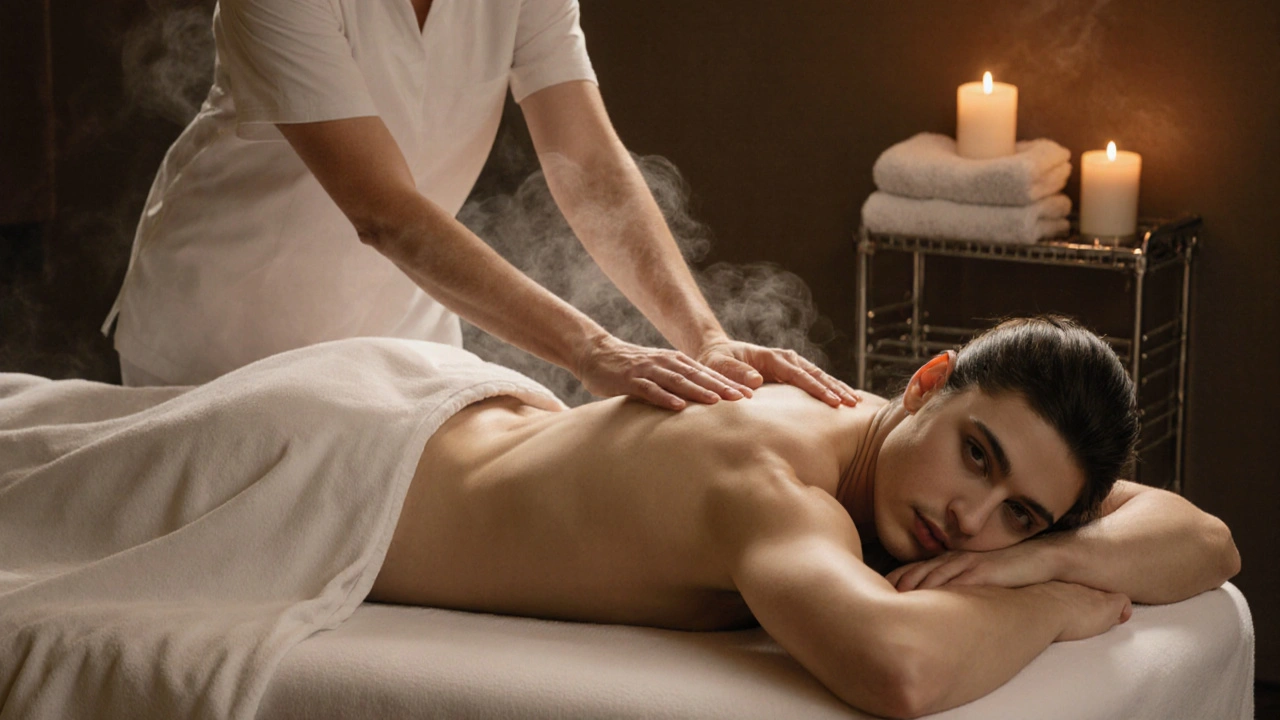
Body massage isn’t just about feeling good for an hour. It’s a hands-on therapy that applies pressure, kneading, and rhythmic strokes to your muscles and soft tissues. It’s not magic, but it might as well be. When a therapist works on your back, legs, arms, or neck, they’re not just rubbing skin-they’re helping your nervous system switch from "fight or flight" to "rest and digest."
This isn’t just spa fluff. Studies from the Journal of Clinical Psychiatry show that regular massage reduces cortisol-the stress hormone-by up to 31%. At the same time, serotonin and dopamine, the feel-good chemicals, go up. That’s why people who get weekly massages often say they sleep better, feel calmer, and handle stress more easily.
Why It Belongs in Your Self-Care Routine
Self-care isn’t bubble baths and scented candles (though those are nice). Real self-care is about consistent, intentional acts that keep your body and mind from burning out. And body massage? It’s one of the few things that does three things at once:
- Releases physical tension you didn’t even realize you were holding
- Resets your nervous system
- Gives you a rare moment of being fully cared for-without having to do anything
Think about it: when was the last time you sat still for 60 minutes with no agenda? No emails, no chores, no kids asking for snacks? Just you, quiet music, and someone’s hands working out knots you’ve been ignoring for weeks? That’s not luxury. That’s repair.
Real Benefits You Can Feel
Here’s what actually changes when you make body massage a habit:
- Less chronic pain: A 2023 review in BMJ Open found that people with lower back pain who got weekly massages for 10 weeks reported 50% less discomfort than those who didn’t.
- Better sleep: Massage increases melatonin production. One study showed participants fell asleep 30% faster after just one session.
- Faster recovery: Athletes and desk workers alike benefit. Massage improves blood flow, which means more oxygen and nutrients reach tired muscles-and waste products like lactic acid get flushed out quicker.
- Lower blood pressure: Regular massage has been shown to reduce systolic pressure by an average of 10 mmHg-similar to the effect of light exercise.
- Improved mood: People who get massages twice a month report fewer symptoms of anxiety and depression, according to research from the University of Miami’s Touch Research Institute.
It’s not about fixing something broken. It’s about preventing burnout before it hits.
Types of Body Massage That Work for Everyday Life
You don’t need to pick a fancy technique to get results. Here are the three most practical types for regular self-care:
- Swedish massage: Gentle, flowing strokes. Perfect if you’re new to massage or just want to unwind. Great for stress relief and circulation.
- Deep tissue massage: Firmer pressure targeting deeper muscle layers. Ideal if you sit all day, carry heavy bags, or have stiff shoulders and tight hips.
- Myofascial release: Focuses on the connective tissue (fascia) that wraps around muscles. Helps with chronic tightness, especially if stretching doesn’t seem to help.
You don’t need to know the difference right away. Most therapists will ask what you’re feeling and adjust on the spot. Start with Swedish. If you like it, try deep tissue next time.

What Happens During a Session?
Here’s what to expect if you’ve never tried it:
- You’ll fill out a quick form-anything from injuries to allergies.
- You’ll undress to your comfort level (usually underwear or a towel). The therapist leaves the room while you get settled.
- You lie on a warm table, covered with sheets. Only the part being worked on is uncovered.
- The therapist uses oil or lotion and starts with light strokes to warm up the muscles.
- They’ll ask you about pressure-"Is this okay?"-and adjust as needed.
- You might feel a little sore the next day, especially if it’s your first deep tissue session. That’s normal.
- You’ll feel relaxed, maybe even a little floaty. Drink water after-you’ll thank yourself later.
No awkwardness. No pressure. Just quiet, focused care.
How Often Should You Get One?
You don’t need to go weekly like a gym membership. But here’s a realistic guide:
- Once a month: Great for maintenance. Keeps tension from building up.
- Every 2-3 weeks: Ideal if you’re dealing with chronic pain, high stress, or physical strain from work or exercise.
- After big events: After a move, a tough project, or even a vacation? A massage helps your body reset.
Start with one. Then decide how you feel. Your body will tell you when it’s ready for the next one.
Costs and Booking
Prices vary by city and therapist experience, but here’s a general idea:
- 60-minute session: $60-$100
- 90-minute session: $90-$150
Some places offer packages-buy 5 sessions, get the 6th free. That’s often the best way to start. Look for licensed therapists through directories like the American Massage Therapy Association or local wellness centers. Avoid places that don’t list credentials. You’re paying for skill, not just time.
Booking is easy: call, use an app, or book online. Most places let you pick your preferred therapist and time. Don’t overthink it. Just book it.
What to Avoid
Not all massages are safe for everyone. Skip it if you have:
- Recent injuries or fractures
- Open wounds or severe skin infections
- Blood clots or are on blood thinners
- Advanced osteoporosis
Always tell your therapist about any health conditions-even if you think it’s irrelevant. A good therapist will know how to adapt.
Also, avoid places that push you toward "special services" or make you uncomfortable. A massage should leave you feeling safe, not uneasy.
Massage vs. Stretching: What’s Better?
People often ask: "Can’t I just stretch instead?"
You can-and you should. But stretching and massage aren’t rivals. They’re teammates.
| Aspect | Body Massage | Stretching |
|---|---|---|
| How it works | External pressure from a therapist | Your own movement |
| Reaches deep layers | Yes-targets muscles and fascia | Only surface muscles |
| Relaxes nervous system | Strong effect | Mild effect |
| Best for | Chronic tension, stress, recovery | Mobility, flexibility, daily movement |
| Time investment | 60-90 minutes per session | 5-15 minutes daily |
Stretching keeps you moving. Massage fixes what stretching can’t reach. Use both.
Frequently Asked Questions
Can body massage help with anxiety?
Yes. Multiple studies show massage reduces cortisol and increases serotonin. People with generalized anxiety who received regular massages reported feeling calmer, sleeping better, and having fewer panic symptoms. It doesn’t replace therapy, but it’s a powerful support tool.
Do I need to talk during the massage?
No. Silence is totally fine-and often preferred. Most therapists will check in once or twice, but if you want quiet, just say so. Many people use massage as a form of meditation.
Is it worth it if I’m not an athlete or in pain?
Absolutely. You don’t need to be injured or exhausted to benefit. Even people with low-stress jobs report feeling more present, less reactive, and more grounded after regular massages. It’s preventative care for your nervous system.
Can I do self-massage instead?
You can use foam rollers, massage balls, or handheld devices-and they help. But they can’t replicate the depth, rhythm, and intuition of a trained therapist. Self-massage is great for maintenance. Professional massage is for deep reset.
How long do the effects last?
The immediate relaxation lasts 24-48 hours. But the long-term benefits-lower stress levels, better sleep, reduced pain-build up over weeks. Think of it like brushing your teeth: one session helps, but consistency changes your health.
Start Small. Stay Consistent.
You don’t need to spend a fortune or take a whole weekend. Just one 60-minute session a month can shift your baseline stress level. That’s less than the cost of two fancy coffees a week.
Body massage isn’t a luxury. It’s a tool-simple, effective, and deeply human. Your body carries your life. Give it the care it deserves.
Book your first session. You won’t regret it.
Similar Posts

Why Body Massage Should Be Part of Your Self-Care Routine
Thai Massage London: Time-Tested Healing for Modern City Wellness
Looking for authentic Thai massage in London? Discover its ancient roots, modern wellness benefits, types available, prices, tips for safe booking, and what to expect.
Thai Massage Essential Oils: Benefits, Popular Choices, and Aromatherapy Secrets
Explore which essential oils are used in Thai massage, how they work, and the unique benefits they deliver for relaxation, pain relief, and wellbeing.
Triston Foo
November 12, 2025 AT 10:35So you're telling me I can pay $80 to have someone touch me and suddenly I'm not a stressed-out zombie? Sign me up. I'll even bring my own lavender oil.
Parker Mullins
November 13, 2025 AT 10:38Massage isn't just about relaxation-it's neurobiological recalibration. The parasympathetic activation induced by sustained somatic pressure downregulates sympathetic tone, effectively resetting the autonomic nervous system's baseline. This isn't spa pseudoscience; it's somatic neuroscience with peer-reviewed backing. The cortisol reduction metrics are robust, and the long-term neurochemical shifts mirror those seen in mindfulness practices. If you're treating it as a luxury, you're missing the point-it's preventative neurology.
Kevin Kuniyoshi
November 13, 2025 AT 20:26While I appreciate the sentiment, I must formally object to the casual tone and lack of clinical precision in this article. The term 'feel-good chemicals' is not scientifically valid nomenclature. One should refer to serotonin and dopamine as monoamine neurotransmitters, not 'feel-good' euphemisms. Furthermore, the assertion that massage is 'ancient' is misleading-it is merely archaic. Modern physiotherapy protocols offer superior, evidence-based alternatives with quantifiable outcomes. I recommend consulting peer-reviewed biomechanical studies before promoting such anecdotal claims.
Aarushi Das
November 14, 2025 AT 19:03Wow. Someone actually wrote a 2,000-word essay to justify spending money on being touched. How utterly bourgeois. Meanwhile, people in developing countries are walking 10 miles to clean water, and you're worrying about your 'fascia'? You don't need a massage-you need perspective. And maybe a therapist who doesn't charge $100/hour to pat your back. Your privilege is showing.
Aaron Brill
November 15, 2025 AT 23:53I tried it once. Felt like a human burrito. Woke up the next day like I’d been hit by a truck. Still worth it.