
Explore the most effective body massage types-from Swedish to deep tissue, Thai, hot stone, and sports massage. Learn how each works, who it’s for, and how to choose the right one for your needs.
- Created by: Archer Caldwell
- Completed on: 13 Feb 2026
- Categories: Deep Tissue Massage
You know that tightness in your shoulders? The one that’s been there for weeks, even after a good night’s sleep? Or the way your chest feels like it’s wrapped in invisible wire when you’re overwhelmed? If you’ve ever felt anxiety settle into your body like a second skin, you’re not alone. And you might be surprised to learn that one of the most effective ways to untangle it isn’t a pill, an app, or even a long talk-it’s a deep tissue massage.
It’s not just about muscle knots. Deep tissue massage works on the deeper layers of your muscles and connective tissue, targeting chronic tension that builds up from stress, poor posture, or constant mental strain. For people living with anxiety, this isn’t just relaxing-it’s therapeutic. Studies show that regular deep tissue sessions can lower cortisol levels (the body’s main stress hormone) by up to 30% within a few weeks. That’s not magic. That’s physiology.
What Is Deep Tissue Massage?
Deep tissue massage isn’t just a stronger version of Swedish massage. It’s a different technique altogether. While Swedish uses long, flowing strokes to promote relaxation, deep tissue uses slower, more focused pressure-often with elbows, knuckles, or forearms-to reach layers of muscle and fascia that are stuck in tension.
This isn’t about pain for pain’s sake. It’s about precision. Therapists target adhesions-tight, sticky spots in the muscle tissue that form from overuse, injury, or emotional stress. These adhesions don’t just hurt. They restrict movement, trap nerves, and even affect breathing. When anxiety keeps you hunched over or clenched, these areas become ground zero for physical discomfort.
Think of it like this: your body remembers stress. Every time you’ve sat at your desk staring at a screen, every time you’ve clenched your jaw during a Zoom call, every time you’ve lain awake worrying-your muscles recorded it. Deep tissue massage helps rewrite that record.
How Deep Tissue Massage Helps with Anxiety
Anxiety doesn’t live just in your mind. It lives in your shoulders, your neck, your lower back. You’ve probably noticed how tense you feel before a big meeting, or how your breathing gets shallow when you’re overwhelmed. That’s your nervous system stuck in fight-or-flight mode.
Deep tissue massage interrupts that cycle. Here’s how:
- Resets the nervous system: The slow, deliberate pressure signals your brain to switch from sympathetic (stress) mode to parasympathetic (rest-and-digest) mode. Your heart rate drops. Your breathing deepens. Your body starts to believe it’s safe again.
- Reduces cortisol: One 2023 study from the University of Miami found that participants who received weekly deep tissue massages for eight weeks showed a 31% drop in cortisol levels. That’s comparable to some medications-without the side effects.
- Breaks the pain-anxiety loop: Chronic pain fuels anxiety. Anxiety worsens muscle tension. Deep tissue massage breaks that cycle by releasing physical tension, which in turn reduces the mental chatter that comes with it.
- Improves body awareness: People with anxiety often feel disconnected from their bodies. Deep tissue massage brings you back into your skin. You start to notice where you’re holding tension-and that awareness alone can be grounding.
One client from Brixton told me, “I came in because my back hurt. I left because I felt calm for the first time in months.” That’s not unusual.
What to Expect During a Deep Tissue Session for Anxiety
It’s not a spa experience. You won’t be surrounded by candles and soft music (though some places do that). This is therapy, not luxury.
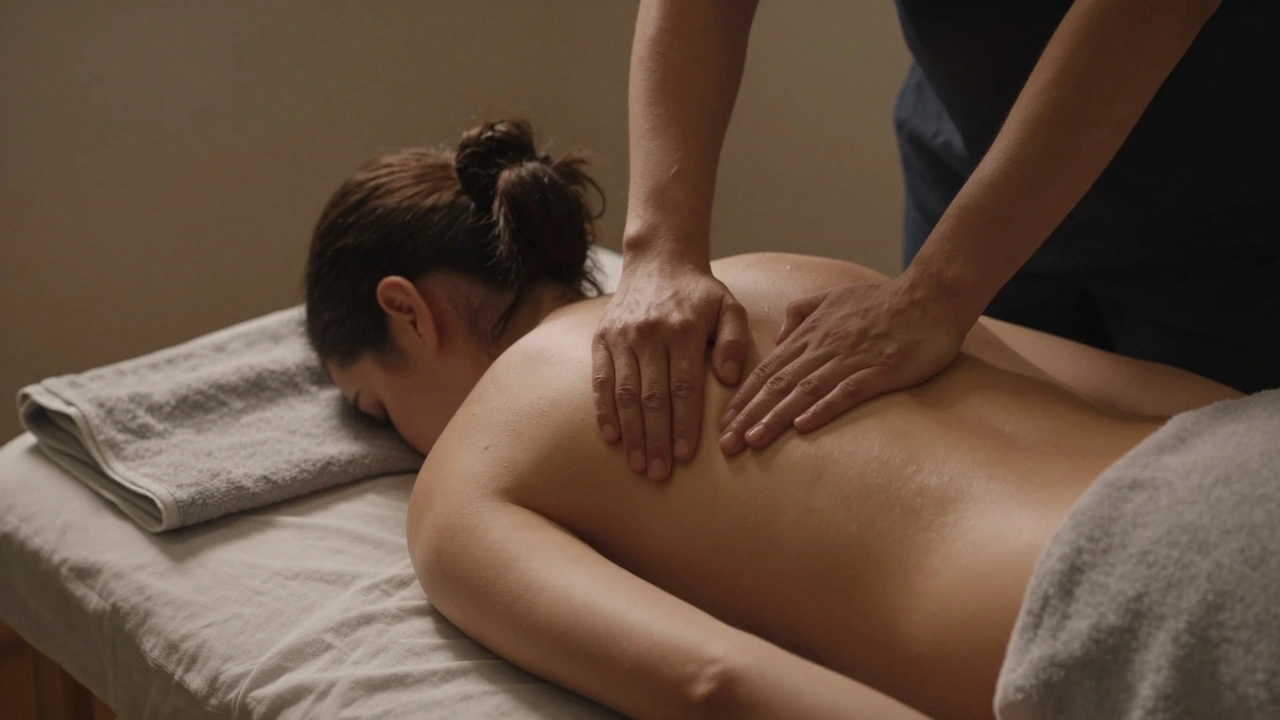
You’ll lie on a firm table, usually face down. The therapist will start with lighter strokes to warm up the muscles, then move into deeper work. You might feel some discomfort-especially around your shoulders, upper back, or hips-but it should never be sharp or unbearable. Good therapists check in constantly: “Is this pressure okay?” “Let me know if it’s too much.”
Expect to feel sore the next day. That’s normal. It’s your muscles releasing what they’ve been holding onto. But after that, you’ll likely notice:
- Better sleep
- Less racing thoughts
- Improved breathing
- A sense of calm that lingers for days
Some people feel emotional during or after a session. That’s okay too. Tension isn’t just physical. It’s tied to stored emotions. Letting go can bring up tears, laughter, or silence. All of it is part of healing.
Deep Tissue vs. Other Massages for Anxiety
| Massage Type | Best For | Pressure Level | Effect on Anxiety |
|---|---|---|---|
| Deep Tissue | Chronic tension, physical stress, trapped emotions | High | Strong, lasting reduction in cortisol and muscle guarding |
| Swedish | General relaxation, mild stress | Light to medium | Short-term calm, less impact on deep tension |
| Hot Stone | Warmth, circulation | Medium | Calming, but doesn’t address deep muscle holding |
| Thai Massage | Flexibility, energy flow | Variable | Good for movement-based anxiety, less focused on tissue release |
| Relaxation Massage | Quick stress reset | Light | Temporary relief, doesn’t resolve root causes |
If your anxiety is tied to physical stiffness, tightness, or chronic pain, deep tissue is the most direct path to relief. Other massages help you feel better for an hour. Deep tissue helps you feel better for days.

Where to Find Deep Tissue Massage in London
You don’t need to go to a fancy spa. Look for clinics or therapists who specialize in therapeutic or clinical massage. These are often run by licensed massage therapists with backgrounds in physiotherapy or sports medicine.
In London, areas like Camden, Islington, and Peckham have several clinics focused on pain and stress relief. Ask if the therapist has experience working with clients who have anxiety. A good one will:
- Start with a consultation
- Adjust pressure based on your feedback
- Use breathing cues to help you relax
- Offer aftercare advice (hydration, light stretching)
Check reviews that mention anxiety relief. Words like “calming,” “grounding,” or “I left feeling lighter” are good signs.
How Often Should You Get It?
For anxiety, consistency matters more than intensity. Start with once every two weeks for a month. That gives your nervous system time to adjust. After that, once a month is often enough to maintain progress.
Some people benefit from weekly sessions during high-stress periods-like before a big project, after a loss, or during seasonal blues. Listen to your body. If you feel more relaxed and less reactive, you’re on the right track.
Safety and What to Avoid
Deep tissue isn’t for everyone. Avoid it if you have:
- Blood clots or are on blood thinners
- Recent injuries or fractures
- Severe osteoporosis
- Active infections or fever
Also, don’t go in with the mindset of “the harder, the better.” That’s a myth. Deep doesn’t mean brutal. If your therapist is using their whole body weight and you’re wincing, they’re not helping-they’re hurting.
Hydrate well before and after. Your muscles release toxins as they loosen up. Drinking water helps flush them out.

Real Results: What People Say
One woman from Hackney started coming after panic attacks began waking her up at night. After six sessions, she stopped needing her rescue inhaler. Not because the anxiety vanished-but because her body stopped bracing for impact.
A man from Ealing, who’d been on anti-anxiety meds for years, reduced his dosage after three months of weekly deep tissue work. His doctor was surprised. “It’s not the medicine,” he said. “It’s the fact that I finally feel safe in my own skin.”
These aren’t outliers. They’re people who stopped treating anxiety as something to manage with pills-and started treating it as something to release from the body.
Frequently Asked Questions
Can deep tissue massage make anxiety worse?
Rarely, but it can happen if the pressure is too intense or the therapist ignores your feedback. Deep tissue should feel challenging but never overwhelming. If you feel panicked or dissociated during a session, speak up. A good therapist will adjust immediately. If they don’t, find someone else.
How long does it take to see results for anxiety?
Most people notice a shift in their stress levels after 2-3 sessions. For lasting change, aim for consistent sessions over 6-8 weeks. The body learns safety slowly. Think of it like building strength-you don’t lift heavy weights once and expect to be a bodybuilder.
Do I need to talk during the session?
No. Silence is fine. In fact, many people find it more helpful. But if you need to say something-about pressure, discomfort, or even how you’re feeling emotionally-go ahead. This is your space. A good therapist will welcome it.
Is deep tissue massage covered by insurance in the UK?
Generally, no. But some private health insurers (like BUPA or Aviva) may cover it if prescribed by a GP for chronic pain or stress-related conditions. Always check with your provider. Some clinics offer payment plans or sliding scales if cost is a barrier.
Can I do deep tissue massage at home?
You can’t fully replicate it at home. Tools like foam rollers or massage guns help with surface tension, but they can’t reach the deep layers the way trained hands can. Think of it like trying to fix a car engine with a screwdriver. You might loosen a bolt, but you won’t rebuild the system. Professional therapy is worth the investment for anxiety.
Ready to Try It?
If anxiety has been living in your muscles, it’s time to let it go. Deep tissue massage isn’t a cure. But it’s one of the most direct ways to help your body remember what calm feels like. You don’t need to be broken to benefit. You just need to be ready to release what you’ve been holding.
Book your first session. Let your body lead the way. You might just find that the thing you’ve been searching for-peace-wasn’t in your mind at all. It was in your shoulders. Waiting to be touched.
Similar Posts


The Ultimate Guide to Different Types of Body Massages
Deep Tissue Massage: A Natural Remedy for Chronic Pain
Struggling with chronic pain can really drain your energy, but deep tissue massage offers real, hands-on relief without relying on medication. This article explains how deep tissue massage works, what makes it different, and why more people are turning to it for pain management. We’ll break down what happens during a session, what benefits you can expect, and key safety tips. Want to know if it’s right for you? Everything you need to make an informed choice is covered here.
Your Path to Serenity: Find the Best Massage Near Me in London
Find the best massage near you in London with expert tips on types, pricing, where to go, and what to expect. Learn how massage therapy reduces stress and improves well-being in the heart of the city.
anne tong
February 14, 2026 AT 11:11It's fascinating how the body holds onto emotional residue like a library of forgotten letters. Every knot in the trapezius, every clenched jaw, every shallow breath-it’s not just physiology, it’s biography. We treat anxiety like a glitch in the software, when really it’s a corrupted file stored in the hardware. Deep tissue massage doesn’t just release tension; it archives release. You’re not fixing a symptom-you’re rewriting a narrative your muscles never got to finish.
And yet, most people still think healing is about talking more. What if the answer isn’t in the words you say, but in the silence your body finally allows itself to keep?
Brent Rockwood
February 16, 2026 AT 04:24Grammar nitpick: ‘adhesions-tight, sticky spots’ should be ‘adhesions-tight, sticky spots’ or ‘adhesions: tight, sticky spots.’ Hyphens aren’t dashes. Just saying. Also, ‘ground zero for physical discomfort’ is a weird metaphor-ground zero implies explosion, not slow buildup. Maybe ‘epicenter’? Or just ‘primary site’?
Anyway, the point stands. This stuff works. I’ve been getting deep tissue for lower back pain since 2021. Anxiety didn’t vanish, but my body stopped screaming. That’s enough.
Sarah Kavanagh
February 16, 2026 AT 14:45I never thought my shoulders could carry so much. I used to blame stress. Then I realized I was storing grief there. My mom passed last year. I didn’t cry. Not once. But after my third massage, I sobbed in the changing room like a kid who finally got hugged. No one said a word. The therapist just handed me a tissue and left the door open.
It’s not about the pressure. It’s about being held without words. That’s the real therapy.
Angie Angela
February 18, 2026 AT 11:01Lol. ‘Lowers cortisol by 30%’? Citation? I’ve seen this exact article reposted three times this month. Also, ‘without side effects’? Ever heard of bruising, nerve damage, or triggering PTSD in people who’ve been touched violently? This reads like a wellness influencer’s ad.
And ‘don’t go in with the mindset of the harder the better’? DUH. Who thinks that? This article is just a list of platitudes with a fancy table.
fred mulder
February 19, 2026 AT 23:01Angie, I hear you. The data isn’t perfectly cited, and yeah, some of this feels like marketing. But I’ve seen it work-real people, real change. My cousin was on SSRIs for 7 years. After 6 months of biweekly deep tissue, she cut her dose in half. Her doctor was stunned. Not because it’s magic-but because the body has its own wisdom.
You don’t have to believe in massage to believe in results. Just watch someone breathe easier after 45 minutes of someone else’s hands holding space for them. That’s not hype. That’s human.
And for the record? Bruising happens. But so does healing. It’s not all or nothing. Sometimes, the most radical thing you can do is let someone touch you without expecting anything in return.
Alice Decogateaux
February 21, 2026 AT 02:32Oh wow, here we go again. Another ‘massage cures anxiety’ fairy tale. What’s next? Crystal healing? Reiki? I bet the author’s therapist also sells essential oils and moon phase calendars.
And ‘stored emotions’? That’s not science, that’s New Age nonsense. Cortisol drops because you’re lying still and breathing-that’s not deep tissue, that’s just resting. Any nap would do that.
Also, ‘I left feeling lighter’? That’s not data. That’s a Yelp review. This whole thing feels like a cult pamphlet written by someone who thinks trauma lives in the gluteus medius.
And don’t get me started on ‘your body remembers stress.’ No, honey, your brain remembers stress. Your body just follows orders. Stop anthropomorphizing your muscles.
Melanie Carp
February 21, 2026 AT 12:33I just want to say thank you for writing this. I’ve been scared to try massage because I thought it’d be too intense, or I’d cry, or someone would judge me. But reading this made me feel seen.
I booked my first session last week. I didn’t cry. But I slept for 11 hours. And for the first time in months, I woke up without my heart racing.
You’re not broken. You’re just holding on too tight. And it’s okay to let go. 💛
Maureen Addison-Smith
February 23, 2026 AT 11:45While the article presents a compelling anecdotal case for the efficacy of deep tissue massage in mitigating anxiety-related somatic symptoms, one must remain cognizant of the distinction between correlation and causation. The reduction in cortisol levels, while statistically significant in the cited study, may be confounded by variables such as environmental relaxation, therapeutic touch, or even the placebo effect inherent in ritualized care.
Moreover, the notion that ‘the body remembers stress’-while poetically resonant-lacks robust neuroscientific grounding. The amygdala and prefrontal cortex are the primary loci of emotional memory, not fascia. That said, the autonomic nervous system modulation via tactile input is empirically supported, and the parasympathetic shift observed is a legitimate physiological phenomenon.
Therefore, while I remain skeptical of metaphysical interpretations, I fully endorse deep tissue massage as a complementary modality within a multidisciplinary approach to anxiety management. It is not a panacea, but it is a tool-one that, when wielded with competence and care, may offer profound relief.
Andre Möller
February 23, 2026 AT 18:32My dad’s a Vietnam vet. He never talked about the war. But for 30 years, he’d wake up at 3 a.m. with his back locked up. He started deep tissue last year. Said it felt like someone was finally unclenching his ribs. He doesn’t cry anymore. Just smiles. Quietly.
That’s all I needed to know.