
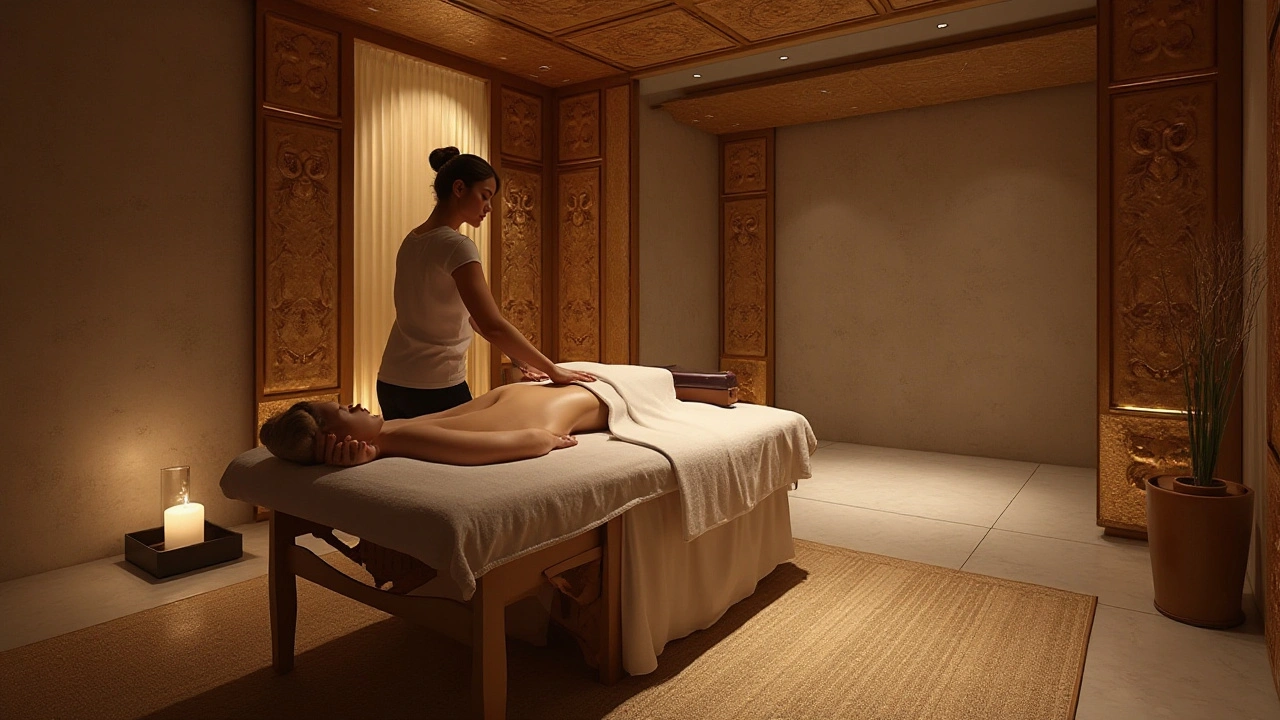
Discover London's hidden gems offering the art of Thai massage, where the mind meets tranquility and the soul surrenders to the caress of skilled hands. These retreats promise an escape from the urban chaos, inviting relaxation and sensual indulgence. Unearth places that weave ancient traditions with modern luxuries. Let every touch guide you to a realm where serenity and sensuality intertwine perfectly.
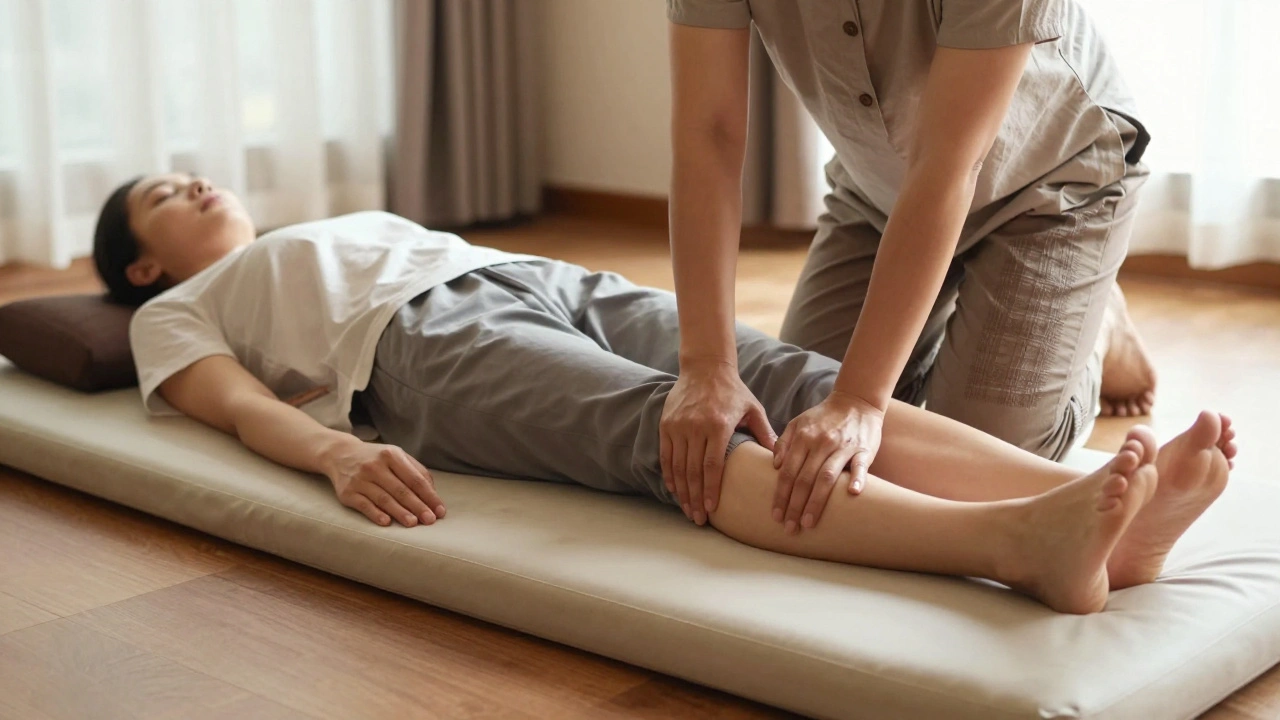
- Created by: Liam Redgate
- Completed on: 14 Feb 2026
- Categories: Thai Massage
You’ve had a long week. Your shoulders are tight, your head feels heavy, and that 8 a.m. meeting still echoes in your ears. You could grab another coffee. Or you could try something that doesn’t just mask the stress-it actually melts it away. Enter Thai massage in London: a full-body experience that feels like a yoga session, a deep tissue therapy, and a nap all rolled into one.
Key Takeaways
- Thai massage in London blends acupressure, stretching, and energy line work-no oils, no clothing removal.
- It’s not just relaxation; it’s structural recalibration for your muscles, joints, and nervous system.
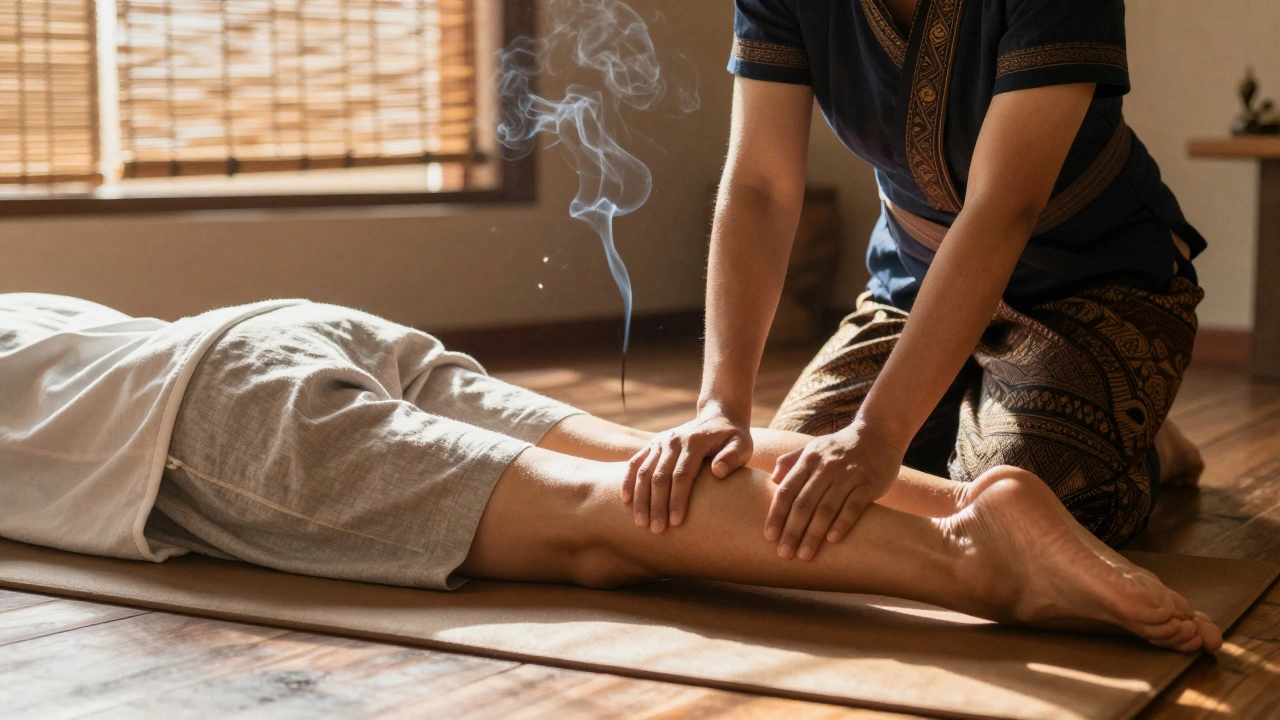
- Authentic sessions happen on a floor mat, not a table, and use your body weight as leverage.
- Top spots in London: Soho, Camden, and Brixton have the most trusted practitioners.
- Expect to pay between £60-£110 for a 90-minute session, depending on location and therapist experience.
What Exactly Is Thai Massage?
Thai massage isn’t what you think. Forget the quiet, dimly lit room with lavender oil and soft music. Thai massage is active, dynamic, and deeply physical. It’s often called "yoga for lazy people" because you lie there while the therapist moves you into stretches you didn’t know you needed.
Originating in Thailand over 2,500 years ago, it combines elements of Ayurvedic medicine, Buddhist spiritual practices, and martial arts. The therapist uses their hands, thumbs, elbows, knees, and even feet to apply pressure along energy lines called "sen." Think of these like meridians in Chinese medicine-but mapped differently, with 72,000 lines in traditional belief (though most modern therapists focus on 10 key ones).
Unlike Swedish or deep tissue massage, you stay fully clothed. No oils. No skin-to-skin contact. That’s part of why it feels so safe and accessible-even if you’re not into being touched.
Why Thai Massage Works in London’s Fast-Paced Life
Londoners are used to hustle. Commutes, back-to-back Zoom calls, standing desks, and carrying bags on the Tube-all of it adds up. Your body starts to lock into patterns: hunched shoulders, tight hips, shallow breathing.
Thai massage doesn’t just rub away tension. It reprograms it. The rhythmic compressions and passive stretches help:
- Release chronic muscle knots that foam rollers can’t touch
- Improve joint mobility, especially in the spine and hips
- Stimulate circulation and lymphatic flow without drugs or machines
- Trigger a parasympathetic nervous system response-your body literally switches from "fight or flight" to "rest and digest"
One regular client from Waterloo told me: "After three sessions, I stopped needing painkillers for my lower back. Not because it was magically fixed-but because my body finally remembered how to move without bracing."
Where to Find Authentic Thai Massage in London
Not every place calling itself "Thai massage" delivers the real deal. Some are just Swedish with a few stretches thrown in. Here’s how to spot the real thing:
- Look for therapists trained in Chiang Mai or Bangkok-many top London practitioners studied at Wat Pho, the birthplace of Thai massage.
- Check if they use a floor mat (not a massage table). Authentic sessions happen on the ground.
- They should wear loose, comfortable clothing-not a spa robe.
- Expect to be guided through movements. You’re not passive; you’re part of the process.
Top neighborhoods for authentic Thai massage:
- Soho: Home to several long-standing clinics with therapists who’ve been practicing for over 15 years.
- Camden: More holistic, often combined with herbal compresses or aromatherapy.
- Brixton: A growing hub with affordable sessions and younger therapists trained in traditional methods.
- Islington: Quiet, high-end studios with private rooms and pre-session consultations.
Pro tip: Avoid places that list "Thai massage" under "romantic couples packages." Real Thai massage is not sensual-it’s therapeutic. If it feels like a spa fantasy, it’s probably not Thai.
What Happens During a Session?
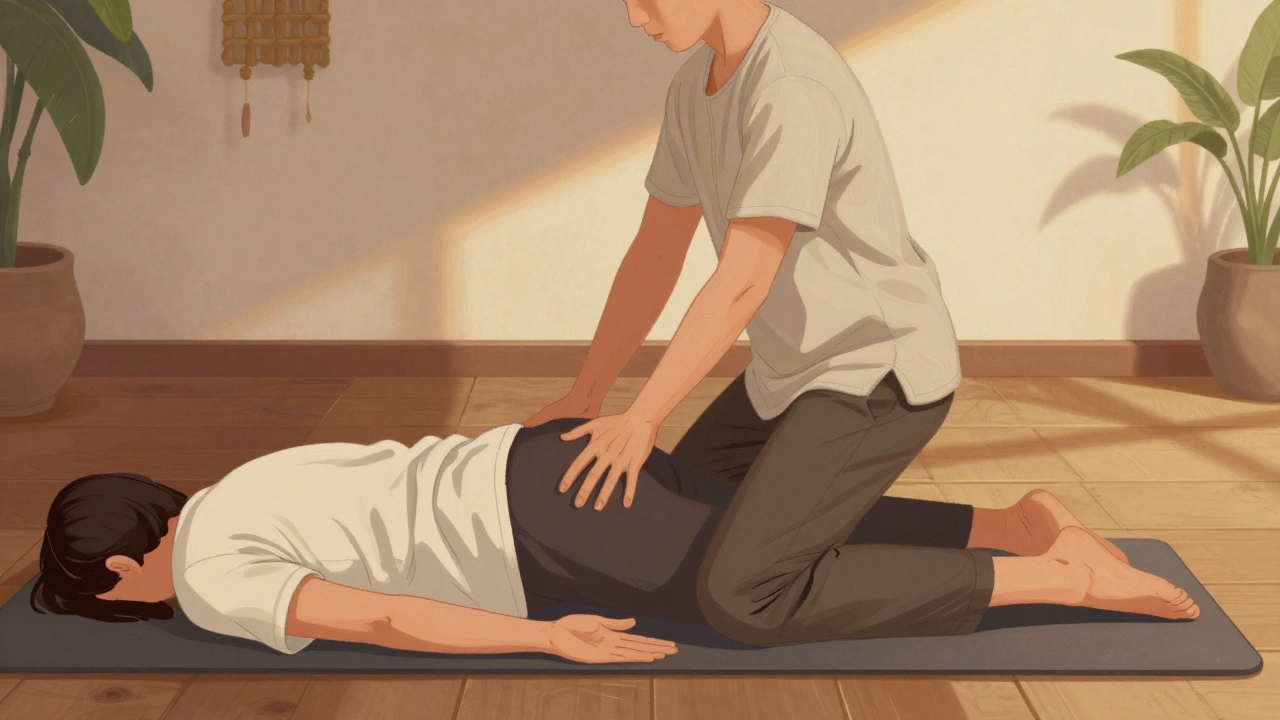
Picture this: You’re lying on a thick, cushioned mat on the floor. The therapist asks you to breathe deeply. Then, without warning, they gently take your leg and guide it into a deep hip opener. You gasp. You laugh. You feel a stretch you didn’t know you’d been holding for years.
A standard 90-minute session flows like this:
- Grounding (5 mins): Quiet breathing, intention setting. No music. Just stillness.
- Compression work (20 mins): Hands, thumbs, and forearms press along energy lines-from feet to head, arms to spine.
- Passive stretching (40 mins): You’re moved like a puppet, but in the best way. Leg swings, spinal twists, shoulder rotations-all done slowly and with control.
- Energy balancing (15 mins): Light tapping, rocking motions, and pressure on key points to release blockages.
- Closing (10 mins): You’re left to rest. No rush. No talking. Just quiet.
Most people feel a little sore the next day. That’s normal. It’s not bruising-it’s your muscles waking up.
How Much Does It Cost in London?
Prices vary based on location, therapist experience, and session length:
| Session Length | Standard Price | High-End Studio | Mobile/Outcall |
|---|---|---|---|
| 60 minutes | £60-£75 | £85-£100 | £90-£110 |
| 90 minutes | £80-£95 | £110-£130 | £120-£140 |
| 120 minutes | £100-£110 | £140-£160 | £150-£180 |
Mobile services (where the therapist comes to you) cost more because of travel time and setup. But if you’re recovering from an injury or just want to skip the commute, it’s worth it.
Many studios offer first-time discounts-often £10-£20 off. Always ask. Also, look for weekly specials: some places offer "Thai Tuesdays" at 20% off.
What to Bring and How to Prepare
- Wear loose, stretchy clothing-yoga pants or sweatpants work best.
- Avoid eating a heavy meal 2 hours before. A light snack is fine.
- Hydrate well before and after. Your body is releasing toxins and needs water to flush them.
- Don’t show up with makeup on. The therapist may press on your face and neck.
- Speak up if something hurts. Thai massage should feel intense, not painful. You should never feel sharp or shooting pain.
Thai Massage vs. Swedish Massage in London
| Feature | Thai Massage | Swedish Massage |
|---|---|---|
| Setting | Floor mat, no oils | Massage table, oils or lotion |
| Clothing | Full clothing | Undressed under towel |
| Pressure | Deep, rhythmic, active | Light to medium, flowing |
| Movement | Therapist moves your body | You stay still |
| Focus | Energy lines, flexibility, joint mobility | Relaxation, circulation, surface tension |
| Best for | Chronic stiffness, athletes, posture issues | Stress relief, light tension, beginners |
If you’ve only ever had Swedish, Thai massage might feel overwhelming at first. But if you’ve been feeling stiff, sluggish, or stuck-Thai is the upgrade your body didn’t know it needed.
Frequently Asked Questions
Is Thai massage painful?
It can be intense, but it shouldn’t hurt. You’ll feel deep pressure and stretching, but sharp pain means the therapist is going too far. Good therapists check in constantly. If you’re new, tell them you’re sensitive. Most will adjust pressure on the fly.
Can I get Thai massage if I’m pregnant?
Yes-but only with a therapist trained in prenatal Thai massage. Standard Thai massage uses deep pressure and twists that aren’t safe during pregnancy. Look for studios that specifically offer prenatal options. Many in Islington and Richmond do.
How often should I get Thai massage?
Once a month is ideal for maintenance. If you’re an athlete, have a desk job, or deal with chronic pain, once every 2-3 weeks helps. Overdoing it can strain your muscles. Think of it like exercise: consistent, not extreme.
Do I need to be flexible to try Thai massage?
No. In fact, if you’re stiff, you’re the perfect candidate. Thai massage is designed for people who can’t touch their toes. The therapist works with your current range-not against it. Over time, you’ll notice more mobility.
Can Thai massage help with sciatica or lower back pain?
Yes, and many Londoners with chronic lower back issues swear by it. Thai massage targets the hip flexors, glutes, and piriformis-common sources of sciatic nerve compression. It doesn’t cure structural problems, but it removes the muscular tension that makes pain worse. Combine it with gentle stretching at home, and results can be dramatic.
Ready to Reset?
Thai massage isn’t a luxury. It’s a reset button for your body. In a city that never sleeps, it’s one of the few things that actually lets your body catch up. You don’t need to be an athlete or a yogi. You just need to be tired-and ready to feel better.
Book your first session this week. Try a studio in Soho or Brixton. Wear comfy clothes. Breathe. Let go. Your body will thank you.
Similar Posts
Sensual Sanctuaries: Top Thai Massage Retreats in London's Bustling Heart
Discover the Ancient Secrets of Thai Massage
Discover the ancient roots of Thai massage, how it differs from other therapies, its proven benefits, and where to find authentic sessions in London. Experience deep healing through movement, breath, and tradition.
Revitalize Your Spirit with Sensual Thai Massage in London
Immerse yourself in the tantalizing world of Thai massage in London, where ancient techniques blend seamlessly with contemporary settings to offer a revitalizing escape. Discover how this healing art not only rejuvenates your body but also enlivens your spirit, leaving you with a sense of serenity and a tingling energy. Explore the sensory experience that goes beyond the physical, tapping into a realm of deep relaxation and unexpected pleasure. Perfect for those seeking a unique way to recharge in the bustling city.
Lippard Babette
February 14, 2026 AT 15:09I tried Thai massage last month in Camden and honestly? Life-changing. I used to think massage was just for relaxation, but this felt like my body got a software update. No more waking up with my shoulders in my ears. The therapist even showed me a few stretches to do at home-now I do them before bed. Seriously, if you’re even slightly curious, just book it. You won’t regret it.
Tarapada Jana
February 15, 2026 AT 19:38How quaint. Another Westerner romanticizing ancient healing traditions like they’re some boutique spa trend. Thai massage isn’t a luxury for overworked office drones-it’s a sacred practice rooted in centuries of spiritual discipline. And yet here we are, treating it like a TikTok fad with "Thai Tuesdays" and discounts. The commodification of culture is exhausting. Next they’ll be selling "Thai massage in a box" with a YouTube tutorial.
Srimon Meka
February 15, 2026 AT 23:55You’re all missing the point. This isn’t about "relaxation" or "stress relief." It’s about reclaiming your body from the modern machine. London’s a concrete jungle where people walk like robots, heads down, spines bent from screens and stress. Thai massage doesn’t pamper you-it reprograms you. That therapist isn’t just stretching your hamstrings-they’re breaking the chains of your sedentary slavery. If you’re not feeling this deeply, you’re not doing it right. Go deeper. Push harder. Let it hurt. That’s how you heal.
Cheryl Ying
February 16, 2026 AT 20:31I went to one of these "authentic" places in Soho and the therapist just sat on my back like a damn yoga instructor who got drunk on incense. I left with bruised ribs and a bill for £110. Where’s the regulation? How do we know these people aren’t just some guy who watched 3 YouTube videos and bought a mat? This whole thing feels like a scam dressed in ethnic aesthetics.
William Driscoll
February 17, 2026 AT 14:56Let’s correct some inaccuracies. First, Thai massage does not use "72,000 energy lines." That’s a myth perpetuated by Western misinterpretations. Traditional Thai medicine recognizes 10 primary sen lines-not 72,000. Second, Wat Pho is not the "birthplace"-it’s a modern institutionalization. The practice originated in rural monastic communities. Third, calling it "yoga for lazy people" is not only inaccurate, it’s culturally reductive. Yoga is an active, self-driven discipline. Thai massage is a passive, therapist-led intervention. Please, if you’re going to write about cultural practices, at least get the basics right.
matthew mcclane
February 18, 2026 AT 01:00Appreciate the depth of this post. I’ve been getting Thai massage for 8 years-first in Chiang Mai, now in Brixton. The real magic isn’t the technique, it’s the intention. The therapist isn’t just moving your body-they’re holding space. You don’t need to be flexible, spiritual, or even into it at first. Just show up. Breathe. Let them do the work. It’s not about fixing you. It’s about remembering you.
Emmanuel Jolly
February 19, 2026 AT 09:41Listen. I’ve seen this before. Westerners take something sacred, slap a price tag on it, and call it "self-care." Thai massage? It’s not about your back pain. It’s about the soul. You think you’re healing your body? No. You’re just trying to escape the emptiness of your life. You think a £110 session will fix your anxiety? Your job? Your broken relationships? Wake up. The real therapy is in confronting your inner void-not in letting someone press their knee into your glutes while chanting mantras you don’t understand.
Krishna Prasad Regmi
February 19, 2026 AT 21:06Just had my 12th session last week. Started because I had chronic sciatica from sitting all day. Now? I run 5Ks. I sleep through the night. I don’t need painkillers. This isn’t magic-it’s consistency. If you’re skeptical, try 3 sessions. Don’t go for the "experience." Go for the discipline. Show up. Be quiet. Let it work. Your body knows what to do. You just have to stop fighting it.
zulfa eliza
February 20, 2026 AT 19:19Wait-so you’re telling me I can get a full-body stretch, energy work, and a nap for under £100? And they don’t even use oils?! I’m booking one RIGHT NOW. I’ve been doing yoga for 5 years and I still can’t touch my toes. This sounds like the cheat code I’ve been looking for. Also, who’s the therapist in Brixton? I need their number. Like, now. I’m serious. I’m telling my whole office.
Lauren de Bruyn
February 21, 2026 AT 16:42So… let me get this straight. You’re recommending a therapy that originated in Thailand, performed by people who may or may not be licensed, in a country where healthcare is privatized, and you’re telling people to spend over £100 on it… while ignoring the fact that the NHS offers physiotherapy for chronic pain at zero cost? This isn’t wellness-it’s capitalism with a saffron scarf. At least have the decency to admit this is a luxury service disguised as ancient wisdom. Some of us can’t afford to "reset" our bodies. We just need to survive.