
Find the best massage near you in London with honest reviews, pricing guides, and tips to choose the right therapist. No fluff-just real relief for tired bodies.
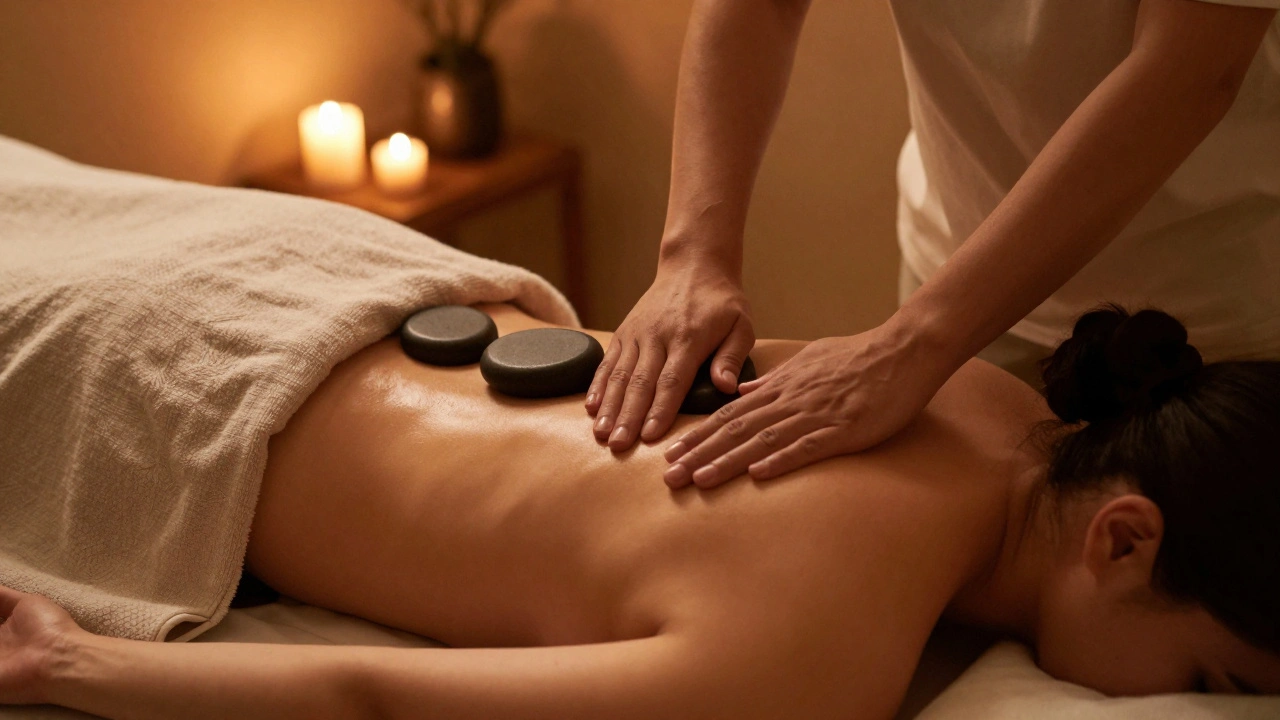
- Created by: Liam Redgate
- Completed on: 9 Feb 2026
- Categories: Massage Therapy
You’ve probably seen both advertised: a massage therapist offering relaxation after a long week, and a physical therapist helping someone walk again after an injury. But are they the same? Can one replace the other? If you’re trying to decide who to see - whether you’re recovering from a sports injury, stuck with chronic back pain, or just need to unwind - this is the clear, no-fluff breakdown you need.
What a Massage Therapist Actually Does
A massage therapist focuses on soft tissues: muscles, tendons, and connective tissue. Their goal? To reduce tension, improve circulation, and promote relaxation. Think of them as your body’s reset button. They don’t fix broken bones or retrain your movement patterns. But they can make you feel so much better, fast.
In London, you’ll find massage therapists working in spas, clinics, and even offering outcall services. Their tools? Hands, forearms, elbows, sometimes oils or heated stones. Techniques vary - Swedish for relaxation, deep tissue for knots, sports massage for athletes. A typical session lasts 60 to 90 minutes. You lie on a table, fully clothed or draped, and they work on specific areas based on your needs.
It’s not magic. But it works. A 2023 study from the Journal of Bodywork and Movement Therapies found that regular massage therapy reduced muscle soreness by 30% in active adults over four weeks. That’s not a fluke. It’s science-backed relief.
What a Physical Therapist Actually Does
A physical therapist (PT) is a licensed healthcare professional trained to restore movement and function after injury, surgery, or illness. They’re not just “massage people.” They’re movement experts. If you’ve had a knee replacement, a stroke, or a torn ACL, your GP will likely refer you to a PT - not a massage therapist.
They use evidence-based methods: joint mobilisation, therapeutic exercises, neuromuscular re-education, ultrasound, electrical stimulation. They assess your gait, strength, range of motion, and posture. Then they design a personalised plan. Maybe you’ll do squats with resistance bands. Maybe you’ll learn how to walk without limping. Maybe you’ll get home exercises to do daily.
In the UK, physical therapists must be registered with the Health and Care Professions Council (HCPC). That means they’ve completed a 3- to 4-year degree, passed national exams, and stay updated on clinical guidelines. They work in hospitals, private clinics, NHS centres, and sometimes even in people’s homes.
Key Differences at a Glance
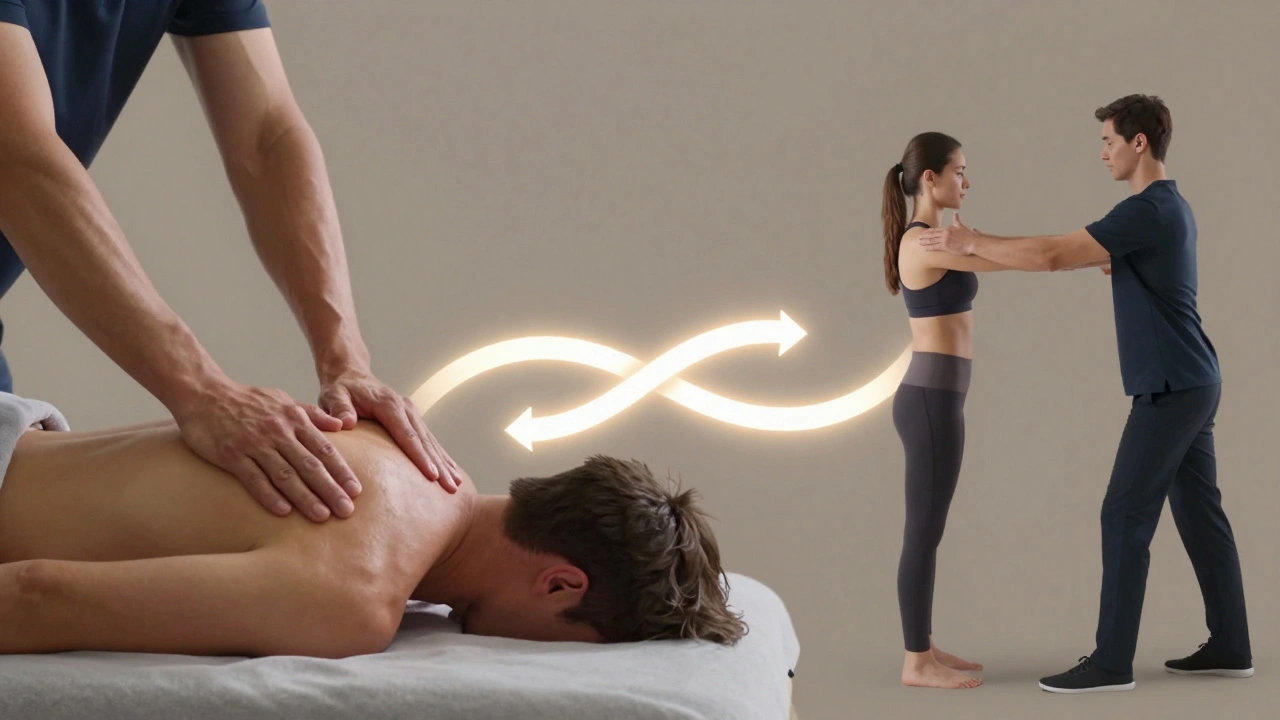
Here’s the simple truth: one treats symptoms. The other treats the root cause.
- A massage therapist helps you feel better now.
- A physical therapist helps you get better for good.
Massage therapy is about comfort. Physical therapy is about recovery. One is a tool. The other is a rehabilitation pathway.
When to See a Massage Therapist
You should book a massage therapist if:
- You have tight shoulders from sitting at a desk all day
- Your muscles feel stiff after a long run or workout
- You’re stressed and need to unwind
- You have recurring tension headaches
- You’re pregnant and need safe, gentle relief (with a prenatal-certified therapist)
Massage therapists are great for maintenance. Think of them like a tune-up for your body. They won’t fix a herniated disc - but they can ease the muscle spasms around it. That makes daily life easier while you wait for other treatment.

When to See a Physical Therapist
You need a physical therapist if:
- You can’t bend your knee after surgery
- You’ve had a fall and now your hip hurts to walk
- Your lower back pain keeps coming back
- You’re recovering from a stroke or nerve injury
- Your doctor says you need rehab
Physical therapists treat dysfunction. They help you move again. They’re part of your healthcare team - not a luxury. In the NHS, you can get referred for free. In private clinics, sessions cost between £60 and £120, depending on location and experience.
Can They Work Together?
Yes - and they often do.
Many athletes, for example, see a physical therapist to fix a hamstring strain. Once the acute phase is over and they’re cleared to move, they go back to their massage therapist to keep muscles loose and prevent scar tissue build-up. A chronic lower back pain patient might see a PT for core strengthening, then get monthly massages to manage muscle tightness.
It’s not either/or. It’s both/and. Massage therapy supports physical therapy. It doesn’t replace it.
Comparison Table: Massage Therapist vs. Physical Therapist in London
| Aspect | Massage Therapist | Physical Therapist |
|---|---|---|
| Training & Certification | Level 3 or 4 diploma (e.g., VTCT or ITEC), not regulated by law | Bachelor’s or Master’s degree, registered with HCPC |
| Primary Focus | Soft tissue relaxation, stress relief | Movement restoration, functional recovery |
| Treatment Methods | Manual manipulation, oils, heat, stretching | Exercise, joint mobilisation, electrotherapy, gait training |
| Session Length | 30-90 minutes | 30-60 minutes (often weekly for 6-12 weeks) |
| Cost (London Private) | £50-£90 per session | £60-£120 per session |
| NHS Availability | Not covered | Yes, with referral |
| Best For | Stress, muscle tension, maintenance | Injury recovery, post-surgery, chronic dysfunction |
What to Expect During a Session
With a massage therapist, you’ll likely fill out a short form about your health, discuss your goals, and then lie down. The room will be warm, quiet, maybe scented with lavender. They’ll work quietly, adjusting pressure as you go. You might feel a little sore the next day - but in a good way.
With a physical therapist, it’s more clinical. You’ll be asked to move - bend, squat, walk, stand on one leg. They’ll measure your range of motion, test your strength, maybe even video you. Then they’ll explain what’s going wrong and show you exercises. You’ll leave with a printed plan. No oils. No candles. Just results.
Pricing and Booking in London
Massage therapists in London typically charge £50-£90 per hour. In areas like Notting Hill or Shoreditch, prices can go higher. Many offer package deals: 5 sessions for £200. Booking is easy - through apps like Treatwell, or directly via clinic websites.
Physical therapy is more expensive: £60-£120 per session. But if you’re referred by your GP, you can get it for free through the NHS - though wait times can be weeks or months. Private clinics like Physio.co or The London Physio offer faster access. Some insurance plans (Bupa, Vitality) cover it too.
Safety Tips
Both are generally safe - if you pick the right person.
For massage: Always ask if they’re certified. Look for VTCT or ITEC qualifications. Avoid anyone who doesn’t ask about your medical history. If you have osteoporosis, blood clots, or are pregnant, tell them upfront.
For physical therapy: Make sure they’re registered with the HCPC. You can check their name here: www.hcpc-uk.org. Don’t let anyone force you into painful movements. If it hurts, speak up. Good PTs adjust to your limits.
FAQ: Your Questions About Massage Therapists and Physical Therapists Answered
Can a massage therapist diagnose a herniated disc?
No. Massage therapists are not trained to diagnose medical conditions. They can feel muscle tension or spasms around a problem area, but they can’t confirm a disc issue. If you suspect a herniated disc, see a doctor or physical therapist. They’ll use imaging like MRI or CT scans to confirm it.
Is physical therapy painful?
It shouldn’t be. Some exercises might feel challenging - like pushing through weakness - but sharp pain is a red flag. A good physical therapist will work within your comfort zone. If you’re in real pain, they’ll adjust. Think of it as discomfort from effort, not injury.
Do I need a referral to see a physical therapist?
Not if you’re going private. In London, you can book a private physical therapist directly. But if you want NHS treatment, you’ll need a referral from your GP. Private clinics are faster, but cost more. Choose based on your urgency and budget.
Can massage therapy help with sciatica?
It can help manage symptoms - especially if tight glutes or piriformis muscle are pressing on the sciatic nerve. Massage can loosen those muscles and reduce pain. But it won’t fix the root cause, like a spinal disc issue. For long-term relief, combine massage with physical therapy exercises.
Which is better for chronic back pain: massage or physical therapy?
For lasting relief, physical therapy wins. Massage gives temporary comfort. But PT teaches you how to move differently, strengthen weak muscles, and correct posture - the real reasons your back hurts. Use massage as a supplement, not the main solution.
Final Thought
They’re not rivals. They’re partners. If you’re stuck in pain, don’t choose one over the other - choose the right one for the job. Need to unwind? Go to a massage therapist. Need to move again? See a physical therapist. And if you’re serious about healing? Do both. Your body will thank you.
Similar Posts


Find Your Oasis: The Best Massage Near Me in London
Best Massage Near Me: The Ultimate Guide to Relaxation
Looking for the best massage near you but not sure where to start? This guide breaks down everything you need to know—from types of massages to what to expect during your first session. You'll get insider tips on how to book, what it should cost, and how to spot a safe, quality spot right in your neighborhood. Plus, find out what sets different massage styles apart and get answers to those questions you’ve probably Googled. No fluff, just straight-up advice you can use today.
Outcall Massage Guide: Relax at Home with the Best Mobile Services
This guide gives you the lowdown on outcall massage—what it is, why it’s awesome, and how to book it safely. You’ll learn about the different types of massages you can get right in your living room and how much you might pay. We’ll walk through how a session actually feels, how to find the best services, and how to keep things safe and comfortable. There’s even a handy comparison table and answers to all your burning questions. Ready to bring the spa to your sofa? This article covers everything you need.
Fred Lucas
February 9, 2026 AT 13:16Let me be perfectly clear: massage therapy is not a legitimate healthcare modality-it’s a luxury spa indulgence dressed up as “wellness.”
Meanwhile, physical therapy is a rigorously evidence-based, clinically validated discipline requiring years of graduate education and national licensure.
To conflate the two is not merely inaccurate-it’s dangerously misleading.
The article’s casual tone suggests that both are equally valid options, which is a gross distortion of medical reality.
There is no peer-reviewed, double-blind study demonstrating that massage therapy alters biomechanics, restores joint function, or reverses neuromuscular pathology.
It relaxes muscles. That’s it.
Physical therapists, by contrast, are trained to diagnose and treat movement dysfunctions using kinetic chain analysis, gait biomechanics, and motor learning principles.
When you say “massage can help with sciatica,” you’re implying equivalence.
It doesn’t.
It masks.
And masking symptoms without addressing root cause is not treatment-it’s temporary palliation.
And yes, I did just correct “re-education” to “neuromuscular re-education” in your original text-because precision matters.
If you’re going to discuss healthcare, at least use the correct terminology.
Also: “VTCT or ITEC” is not equivalent to a bachelor’s degree. That’s like calling a high school chemistry class equivalent to medical school.
Don’t mislead people.
Logan Gibson
February 11, 2026 AT 11:10Wow. So you’re telling me that if I’m in pain, I shouldn’t just get a massage because it’s not ‘real’ therapy? What a load of elitist nonsense.
My back hurts after sitting at my desk for 10 hours-do I really need to wait weeks for an NHS referral and pay £100 to sit in a room doing squats while some guy in a white coat tells me to ‘engage your core’?
I’ll take the guy who knows how to knead out my knots with hot stones and lavender oil any day.
You act like massage therapists are just ‘rubbing people in spas.’
Try telling that to the guy who helped me walk again after my car accident-before I even saw a PT.
And don’t get me started on ‘evidence-based.’
Half the stuff PTs do is just fancy stretching with a machine.
Also, why are you so angry? 😒
Manoj Kumar
February 13, 2026 AT 02:15Incorrect.
Massage therapists are not ‘unregulated’-they are regulated under the UK’s Health and Social Care Act 2008, and many are registered with the Complementary and Natural Healthcare Council (CNHC), which is recognized by NHS England.
Also, your table says ‘not regulated by law’-that is factually false.
Massage therapy is regulated under the Local Government (Miscellaneous Provisions) Act 1982 in England and Wales.
And you cite ‘VTCT or ITEC’ as if they’re inferior-but those are Ofqual-regulated qualifications, equivalent to A-levels and higher.
Meanwhile, physical therapists often lack training in soft tissue dynamics, which is why many patients relapse after PT.
Also, you claim massage ‘only masks symptoms’-but neurophysiological studies show massage reduces cytokine production and modulates pain via gate control theory.
So your argument is both outdated and misinformed.
And you used ‘re-education’ without the hyphen.
That’s grammatically incorrect.
Fix it.
ervin andriana taufik
February 14, 2026 AT 20:31Y’all are overthinking this 😅
Massage = feel good now 🧘♂️
PT = fix it for real 💪
Why not both? 🤷♂️
My buddy broke his ankle-PT for 3 months, then monthly massage to keep the scar tissue from turning his calf into concrete.
Best combo ever.
Also, if you’re mad about grammar, go write a book. 😎
Homer Simpson
February 15, 2026 AT 19:04I’ve had both-twice.
First time, I went to a PT after a torn meniscus.
They gave me exercises, a brace, and a 12-week plan.
It worked.
But I was stiff as a board.
So I went to a massage therapist.
She found knots I didn’t even know existed.
After three sessions, I could finally sit cross-legged again.
Neither one did it alone.
They complement each other.
It’s not about which one is ‘better’-it’s about what your body needs right now.
Some days, you need to move.
Other days, you just need to melt.
Both are valid.
Both matter.
And if you’re arguing about credentials instead of helping people… maybe take a step back.
Ed Malaker
February 17, 2026 AT 04:08Simple truth: if you’re in pain, try massage first-it’s cheaper, faster, and often helps.
If it doesn’t fix it, then see a PT.
No need to turn it into a battle.
People just want to feel better.