
Discover how Indian head massage unblocks energy, relieves tension, and improves wellbeing. Learn the benefits, how it works, and what to expect during a session.

- Created by: Archer Caldwell
- Completed on: 23 Mar 2026
- Categories: Head Massage
You know that heavy feeling behind your eyes? The tight band around your forehead? The way your neck stiffens after staring at a screen for hours? It’s not just fatigue-it’s tension building up, and your head is bearing the brunt. Most people reach for painkillers, scroll through social media, or try to "just relax." But what if the simplest fix is something you can do yourself-or get done in under 20 minutes-with zero pills, zero apps, and zero cost? Enter head massage.
Why Your Head Needs a Break
Your head isn’t just a container for your brain. It’s a nerve hub. Over 70% of the body’s sensory nerves are concentrated in the face, scalp, and neck. When stress hits, your muscles tighten-especially in the temples, jaw, and base of the skull. That’s why stress feels like a headache, not just a mood. Chronic tension can lead to migraines, sleep issues, even blurred vision. And yet, most of us ignore it until it’s unbearable.Head massage doesn’t just "feel good." It works. Studies from the Journal of Alternative and Complementary Medicine show that 15 minutes of scalp and neck massage three times a week reduces cortisol levels by up to 30%. That’s the hormone tied to stress, anxiety, and sleep disruption. It also boosts serotonin-the chemical that helps you feel calm and focused. No drugs. No devices. Just hands.
What Exactly Is a Head Massage?
A head massage isn’t just rubbing your temples. It’s a targeted technique that combines pressure, circular motions, and gentle stretching across key points: the scalp, forehead, temples, ears, jawline, and the back of the neck. It’s often part of traditional practices like Ayurveda in India or Shiatsu in Japan, but you don’t need to be in a spa to benefit.Think of your scalp like a garden. The blood vessels beneath are like roots. When tension builds, those roots get squeezed. A good head massage opens them up. It increases circulation, flushes out metabolic waste, and wakes up sleepy nerves. You’re not just relaxing-you’re rebooting your nervous system.
Benefits You Can Feel Right Away
- Reduces tension headaches-in one small 2023 study, 82% of participants reported fewer headaches after just two weekly sessions.
- Improves sleep-scalp stimulation activates the vagus nerve, which signals your body to shift from "fight or flight" to "rest and digest."
- Boosts focus-more blood flow to the brain means better oxygen delivery. Students and remote workers report sharper thinking after sessions.
- Relieves sinus pressure-gentle pressure around the eyes and nasal bridge helps drain congestion.
- Stimulates hair growth-increased circulation to hair follicles can strengthen roots. Not a miracle cure, but a real support.
One London office worker, Sarah, told me she started doing 5-minute head massages during lunch breaks. "I used to take two paracetamol every afternoon. Now I don’t need any. Just my fingers and a few minutes."
Types of Head Massage You Can Try
There’s no single "right" way, but here are the most common styles you’ll find in London:- Scalp Massage-focused on the top of the head, using fingertips in circular motions. Great for stress and hair health.
- Ayurvedic Head Massage (Shiroabhyanga)-uses warm herbal oils, slow strokes, and pressure points. Often done in wellness centers like those in Notting Hill or Camden.
- Shiatsu Head Massage-based on Japanese pressure-point theory. Targets specific meridians along the head and neck.
- Reflexology Head Massage-connects scalp zones to organs. For example, the crown relates to the brain, the temples to the eyes.
- Self-Massage-you can do this anytime. No tools needed.
How to Find Head Massage Services in London
London’s got options. You don’t need to spend £80 at a luxury spa.- Wellness clinics-places like The London Head Spa in Chelsea or Yoga & Massage Co. in Brixton offer 30-minute sessions starting at £25.
- Thai massage studios-many include head massage as part of full-body sessions. Expect to pay £35-£50.
- Mobile therapists-book an outcall therapist who comes to your home. Great if you’re tired after work. Search "mobile head massage London" on Google.
- Community centers-some boroughs run low-cost wellness programs. Check your local council’s website. I’ve seen sessions for £10 at libraries in Hackney and Lambeth.
Pro tip: Look for therapists trained in Ayurveda or Shiatsu. They’re more likely to know the precise pressure points that make a difference.
What to Expect During a Session
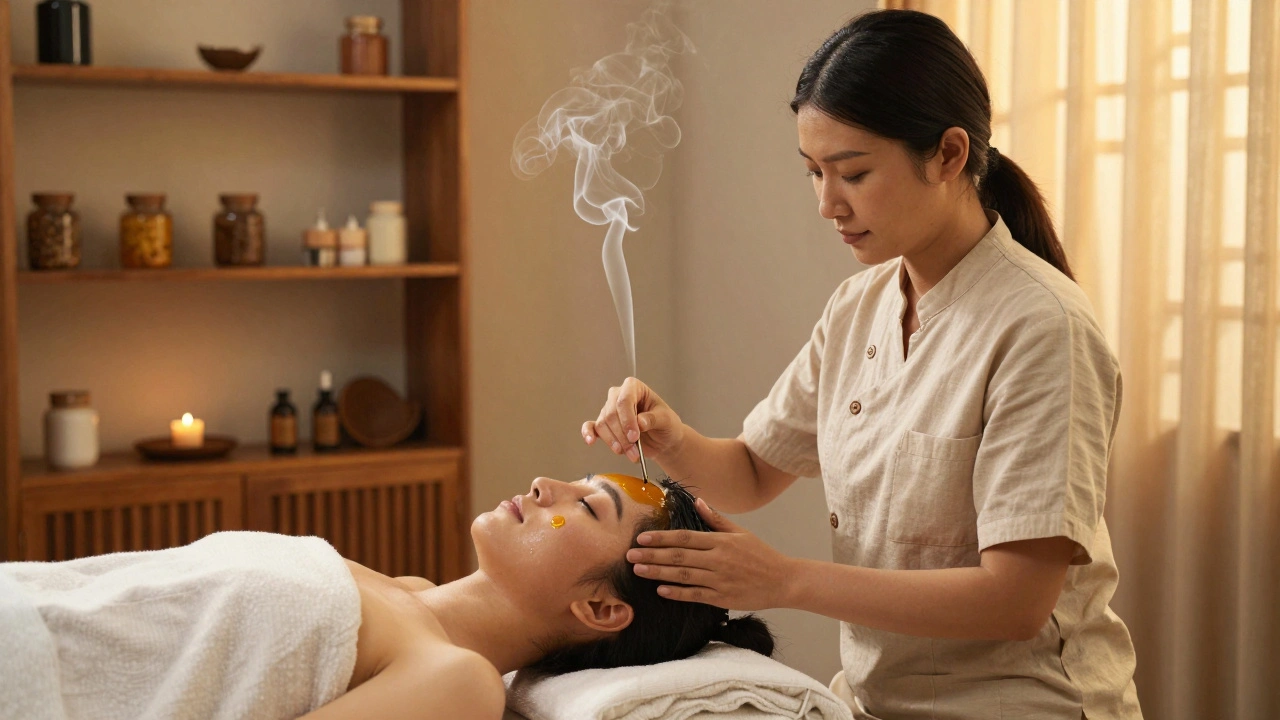
You’ll usually lie face up on a massage table or sit in a reclining chair. The therapist might warm a few drops of oil-coconut, sesame, or almond-and gently apply it. Then comes the magic: slow, rhythmic pressure. Fingertips glide over your scalp. Palms press along your forehead. Thumbs work the temples. They’ll gently pull your earlobes, massage your jaw, and ease the base of your skull.You might feel a slight tickle, a warm tingling, or even a tiny pop in your neck. That’s normal. Most people drift into a semi-sleep state. You might even fall asleep. That’s not a sign of boredom-it’s your body saying "thank you."
Afterward, you’ll feel lighter. Not just mentally. Physically. Like the weight you didn’t know you were carrying has been lifted. Your eyes might feel brighter. Your breathing deeper.
How Much Does It Cost?
Prices vary by location and duration:- Self-massage-free
- 15-minute session-£15-£20 (often offered as add-ons in salons)
- 30-minute standalone-£25-£35
- 60-minute Ayurvedic or Shiatsu-£50-£70
Many places offer package deals: 4 sessions for £90. If you’re dealing with chronic tension, that’s a smarter investment than monthly painkillers.
How to Do a Head Massage Yourself
You don’t need a pro. Here’s a quick routine you can do while watching TV:- Use your fingertips to make small circles on your scalp. Start at the forehead and move back to the nape. Do this for 2 minutes.
- Press your thumbs gently into your temples. Hold for 5 seconds, then release. Repeat 5 times.
- Use your knuckles to massage the back of your neck-where your skull meets your spine. Roll side to side for 1 minute.
- Gently tug your earlobes down and up. Then roll them between your fingers. Do this for 30 seconds.
- Place your palms over your eyes. Don’t press. Just let warmth from your hands soothe them. Breathe deeply for 1 minute.
Do this daily. Even 5 minutes. You’ll notice the difference in a week.

What to Avoid
- Don’t massage if you have open wounds, rashes, or recent head injuries.
- Avoid deep pressure if you have migraines triggered by touch-go light.
- Never use oil if you’re allergic to nuts or coconut.
- Don’t expect instant miracles. Consistency beats intensity.
Head Massage vs. Neck Massage: Which Is Better?
| Feature | Head Massage | Neck Massage |
|---|---|---|
| Primary focus | Scalp, temples, forehead, jaw, ears | Shoulders, upper spine, trapezius |
| Best for | Stress headaches, mental fatigue, sleep | Stiff neck, shoulder pain, posture |
| Speed of relief | Immediate mental calm | Physical loosening |
| Long-term benefit | Lower cortisol, better sleep quality | Improved posture, fewer tension headaches |
| DIY friendly | Yes-easiest to do yourself | Harder-needs a partner or tool |
Head massage wins for daily stress relief. Neck massage helps if you’re hunched over a desk all day. But together? That’s the powerhouse combo.
Frequently Asked Questions
Can head massage help with migraines?
Yes-for some people. Migraines are complex, but tension-triggered ones respond well. A 2024 study in the British Journal of Pain found that regular scalp massage reduced migraine frequency by 40% in participants who had stress-related attacks. It’s not a cure, but it’s a powerful tool to reduce triggers.
How often should I get a head massage?
For general stress, once a week is ideal. If you’re dealing with chronic tension or headaches, twice a week for 3-4 weeks can reset your nervous system. After that, maintenance once every 10-14 days works. Daily self-massage? Even better.
Do I need oil for a head massage?
Not at all. Dry massage works fine. Oil helps if you want extra glide and nourishment, especially for the scalp. Coconut or almond oil are popular. But if you’re short on time or don’t like the mess, just use your fingers. Pressure matters more than lubrication.
Can head massage cause hair loss?
No-the opposite. Gentle massage stimulates blood flow to follicles. A 2022 study in the International Journal of Trichology showed increased hair thickness after 24 weeks of daily scalp massage. Only if you’re pulling too hard or using sharp objects will you risk damage. Normal pressure? It’s protective.
Is head massage safe during pregnancy?
Yes, and it’s often recommended. Pregnancy brings increased stress and tension, especially in the neck and head. Avoid deep pressure on the temples if you’re sensitive, but light, rhythmic massage is safe and calming. Always tell your therapist you’re pregnant.
Ready to Unwind?
You don’t need a spa, a therapist, or a special app. Just your hands and 5 minutes. Try the self-massage routine tonight. Sit in a quiet chair. Close your eyes. Breathe. Start at your scalp. Let your fingers do the talking.That heavy weight behind your eyes? It doesn’t have to be your new normal. Head massage isn’t a luxury. It’s a reset button. And it’s waiting for you-right where you are.
Similar Posts



What Does Indian Head Massage Unblock? Benefits, Techniques, and Results Explained
How Foot Massage Can Boost Your Mood
Foot massage isn't just for tired feet-it's a proven way to reduce stress, boost dopamine, and lift your mood. Discover how this simple practice works and how to use it in London.
Head Massage and Reflexology: Powerful Stress Relief Combo
Discover how head massage and reflexology work together to melt away stress, ease tension, and improve your well-being. This article lays out what makes both treatments special, how they benefit your body and mind, and what to expect when you book a combo session. Find out tips for choosing top-notch local providers, key safety advice, and side-by-side comparisons to help you pick the right treatment for your needs. Frequently asked questions are answered, and you'll get clear, simple advice on how to get started. Get ready for clear answers, practical info, and some pro tips to make the most of your next session.