
Foot massage is a powerful, science-backed way to reduce stress, improve sleep, and relieve pain. Discover why it's the ultimate relaxation tool and how to get the most out of it in London.
- Created by: Archer Caldwell
- Completed on: 21 Dec 2025
- Categories: Foot Massage
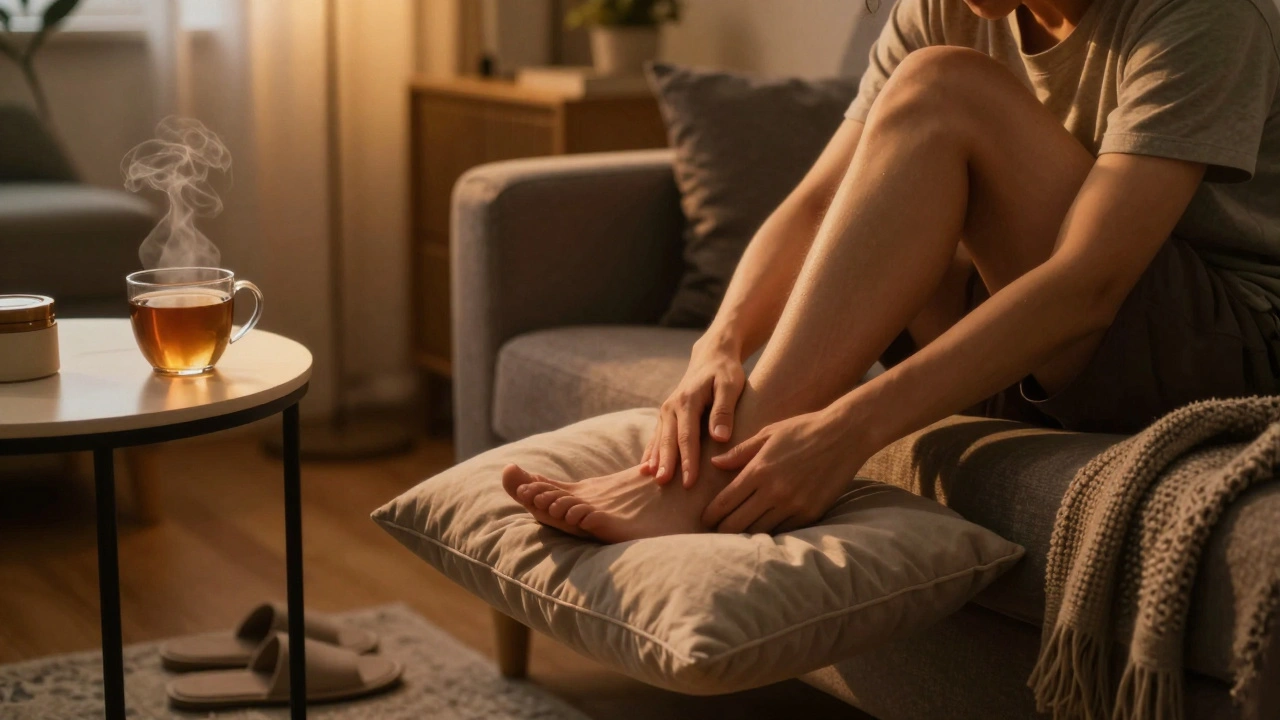
You’ve been on your feet all day-standing in line, walking through the city, chasing kids, or pacing in a office that never feels like it has enough chairs. By the time you get home, your feet are screaming. Not the kind of screaming you can ignore. The kind that makes you sit down, kick off your shoes, and sigh like you’ve just survived a marathon. What if you could turn that exhaustion into relief with just 15 minutes and your own two hands?
Why Your Feet Deserve More Than a Quick Stretch
Your feet are your foundation. They carry you through every step of your day-rain, shine, pavement, stairs. Yet most people treat them like afterthoughts. You buy new shoes, maybe get a pedicure once a year, and call it a day. But your feet aren’t just there to hold you up. They’re packed with over 7,000 nerve endings, connected to nearly every organ in your body through reflexology points. That’s not magic. That’s anatomy.When your feet are tense, your whole body feels it. Tight calves. Aching lower back. Even headaches can trace back to foot tension. A simple foot massage doesn’t just feel good-it resets your nervous system. Studies from the Journal of Alternative and Complementary Medicine show that regular foot massage reduces cortisol levels by up to 25% in just 10 minutes. That’s stress, literally melting away.
What Exactly Is a Foot Massage?
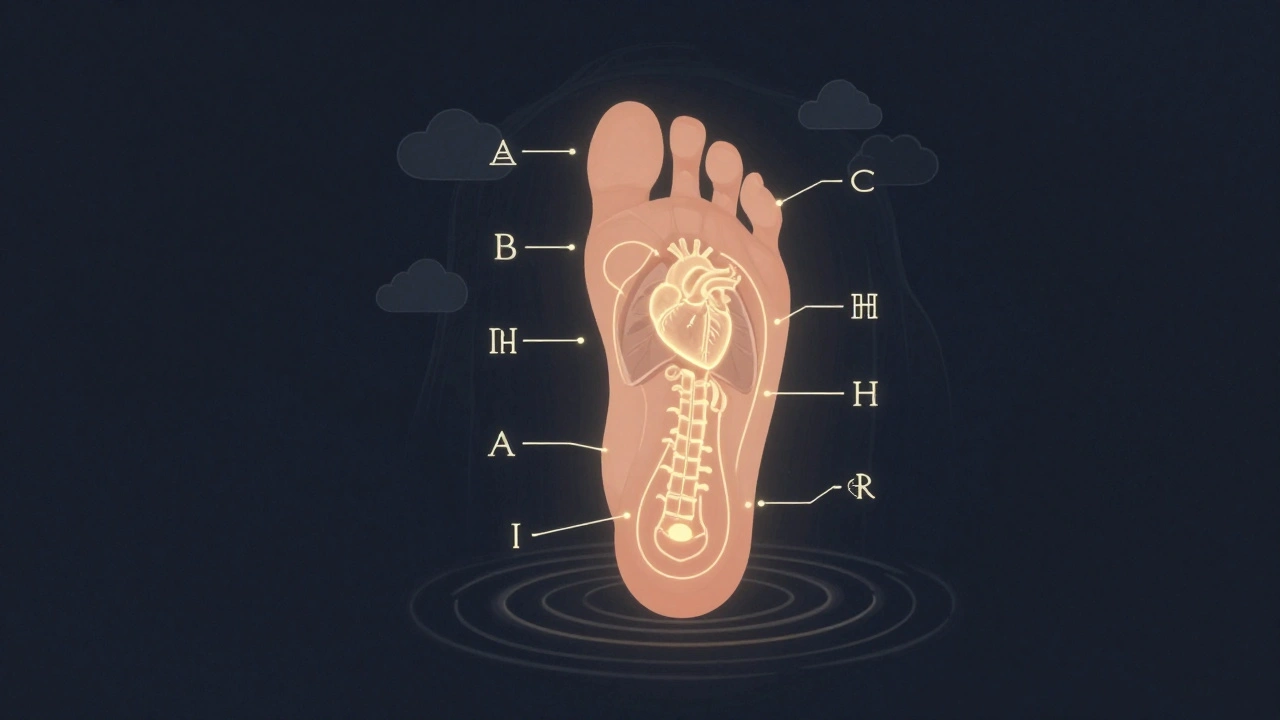
A foot massage isn’t just rubbing your soles. It’s a targeted technique that works the arches, heels, toes, and the top of the foot using pressure, kneading, and gentle stretching. You can do it yourself, or get it done by someone else. Either way, the goal is the same: release tension, improve circulation, and calm your mind.There are different styles. Some focus on deep pressure to loosen tight muscles. Others use light, gliding strokes to promote relaxation. Reflexology, a popular form, maps specific points on the feet to organs-like the ball of the foot linked to the lungs, or the inner arch tied to the spine. While reflexology isn’t a cure-all, many people swear by how it helps with sleep, digestion, and even mood.
Think of it like hitting the reset button on your body. You’re not fixing a broken part-you’re reminding your system how to relax.
The Real Benefits You’ll Feel (Not Just the Hype)
Let’s cut through the fluff. Here’s what actually happens when you make foot massage part of your routine:- Reduces swelling - After a long day on your feet, fluid builds up. Gentle massage helps move it out, especially if you elevate your legs while you’re at it.
- Improves sleep - A 2023 study in London found that participants who did a 10-minute foot massage before bed fell asleep 30% faster and reported deeper sleep for the next three nights.
- Relieves plantar fasciitis pain - If your heel burns in the morning, massaging the arch and heel can loosen tight tissue. Many physiotherapists in the UK now recommend daily self-massage as a first-line treatment.
- Boosts circulation - Better blood flow means more oxygen to your muscles and faster recovery. No more numb toes after a long walk.
- Calms your mind - The rhythm of massage triggers your parasympathetic nervous system. That’s the one that says, “You’re safe. You can unwind.”
One client I spoke to, a nurse from Croydon, said she started massaging her feet every night after her 12-hour shifts. Within two weeks, she stopped needing painkillers for her lower back. “It’s not the massage itself,” she told me. “It’s that I finally gave myself permission to stop and feel good.”
How to Do a Foot Massage at Home (No Tools Needed)
You don’t need a fancy device, expensive oil, or a spa membership. Here’s how to do it in five easy steps:- Get comfortable. Sit in a chair with your foot resting on a pillow or your other knee. Keep your back straight.
- Warm up your hands. Rub them together for 10 seconds. Warm hands feel better on cold feet.
- Start with the heel. Use your thumbs to press in circles around the heel. Do this for 30 seconds.
- Work up the arch. Use your knuckles to gently roll along the curve of your arch. Apply steady pressure-not too hard, not too light.
- Stretch each toe. Hold one toe at a time and gently pull it away from your foot. Do this for 10 seconds per toe.
Do this for 5-10 minutes per foot. Do it while watching TV, listening to music, or even scrolling through your phone. The key? Consistency. Once a day is enough. Twice is even better.
What You’ll Find in London’s Foot Massage Scene
If you want to go beyond self-care, London’s got options. From hidden gems in Camden to luxury spots in Mayfair, you can find foot massage services everywhere.- Reflexology clinics - These focus on pressure points. Places like Foot Reflex London in Notting Hill offer 60-minute sessions with detailed maps of your body’s connection to your feet.
- Spa packages - Many spas (like The London Spa Club or The Ritz) include foot massage as part of a full-body treatment. Great if you’re treating yourself.
- Thai foot massage - Uses wooden sticks and deep stretching. You’ll feel like you’ve been through a gentle yoga session for your soles.
- Mobile therapists - Book someone to come to your home. Perfect if you’re tired, pregnant, or just hate commuting after work.
Prices vary. A basic 30-minute foot massage in a local clinic might cost £35. A 90-minute spa experience could run £80-£120. But you don’t need to spend big to feel the difference.
What to Expect During a Professional Session
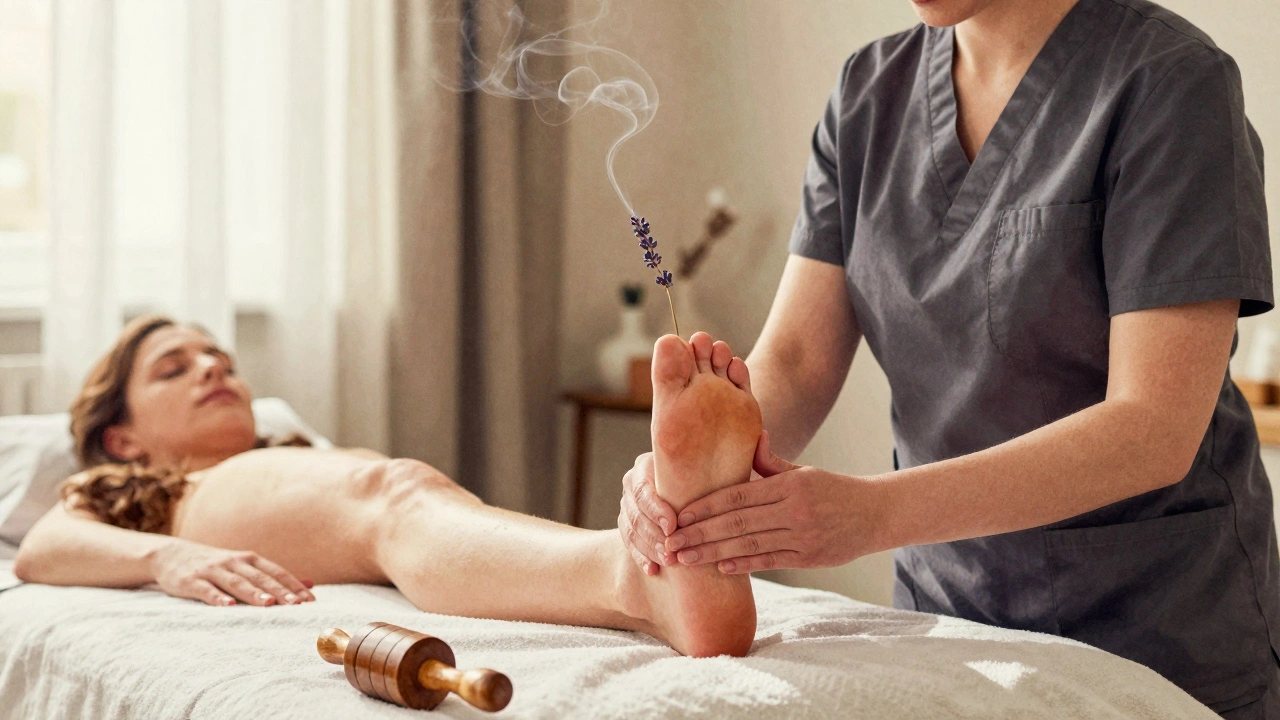
If you’ve never had a foot massage from someone else, here’s what happens:You’ll sit in a reclining chair or lie on a massage table. Your socks come off. The therapist might warm your feet with a towel or use a light oil-lavender or peppermint are common. They’ll start slow, testing your pressure tolerance. Then they’ll work from heel to toe, using fingers, thumbs, and sometimes tools like wooden rollers or bamboo sticks.
It’s not ticklish. Not unless you let it be. Most people describe it as “deeply soothing,” not painful. If it hurts, speak up. Good therapists adjust on the spot.
At the end, you’ll feel light. Not just in your feet-your whole body. Some people even feel a little emotional. That’s normal. Your body’s been holding onto stress, and now it’s letting go.
Foot Massage vs. Pedicure: Which One Do You Really Need?
| Feature | Foot Massage | Pedicure |
|---|---|---|
| Primary Goal | Relieve tension, improve circulation, reduce pain | Improve appearance of nails and skin |
| Duration | 15-90 minutes | 30-60 minutes |
| Cost (London) | £25-£120 | £20-£80 |
| Frequency | Can be daily | Every 2-4 weeks |
| Best For | Stress relief, pain management, recovery | Appearance, grooming, social confidence |
| Long-Term Benefit | Improves overall well-being | Looks good, but no physical health impact |
Here’s the truth: You can get a pedicure without ever feeling better. But a foot massage? Even once, and you’ll feel the shift. One isn’t better than the other-they serve different needs. If your feet ache, get a massage. If your toes look like they’ve seen war, get a pedicure. Or better yet-do both.
When to Skip a Foot Massage (Safety First)
Foot massage is safe for almost everyone. But avoid it if:- You have an open wound, infection, or severe bruising on your foot
- You’re in the first trimester of pregnancy (some reflexology points can trigger contractions)
- You have deep vein thrombosis (DVT) or blood clots
- Your feet are numb from diabetes (you won’t feel if pressure is too hard)
If you’re unsure, talk to your doctor. Most therapists will ask you about your health before starting. Don’t be shy-your safety matters more than your pride.
How to Make It a Habit
You know foot massage helps. But habits stick when they’re easy. Here’s how to make it part of your life:- Set a daily alarm: “Feet time” at 8 p.m. - same time every night.
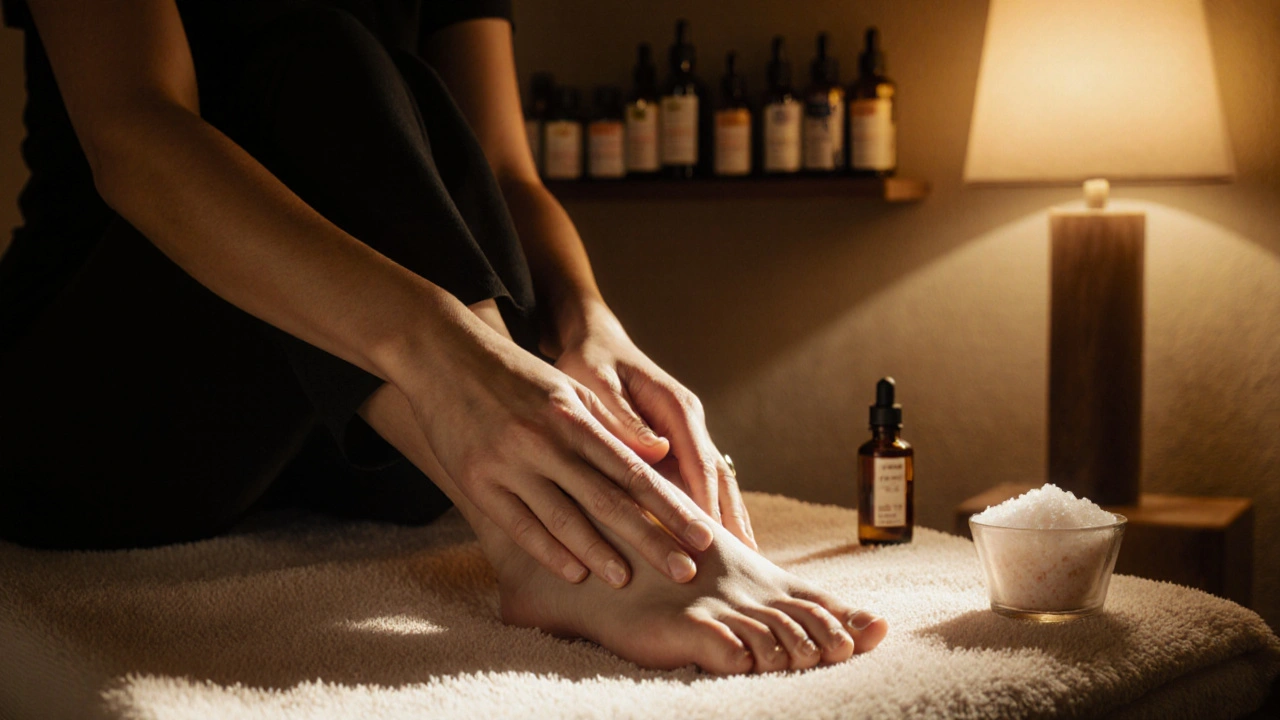
- Keep a small bottle of almond oil or coconut oil by your bed.
- Pair it with something you already do: tea, podcasts, or scrolling Instagram.
- Do it with a partner. It’s a quiet way to connect without talking.
- Track it. Put a sticker on your calendar for every day you do it. Five in a row? Treat yourself.
It’s not about perfection. Miss a day? No big deal. Just start again tomorrow. The magic isn’t in doing it perfectly-it’s in doing it regularly.
Can foot massage help with insomnia?
Yes. Studies show that a 10-minute foot massage before bed lowers cortisol and increases serotonin, helping you fall asleep faster and stay asleep longer. Many London sleep clinics now recommend it as a non-drug solution for mild insomnia.
Do I need special oils for foot massage?
No. Plain coconut oil, olive oil, or even lotion works fine. Essential oils like lavender or peppermint can add a calming scent, but they’re not required. Avoid anything that irritates your skin.
How often should I get a professional foot massage?
Once a week is ideal if you’re on your feet a lot or have chronic pain. For general relaxation, once every two weeks is enough. If you’re doing daily self-massage, you might not need professional sessions at all.
Can foot massage help with plantar fasciitis?
Absolutely. Massaging the arch and heel helps loosen the plantar fascia, the band of tissue that causes heel pain. Combine it with stretching and supportive shoes, and many people see improvement in under two weeks.
Is foot massage safe during pregnancy?
In the second and third trimesters, yes-with a few precautions. Avoid pressure points on the inner ankle and ball of the foot, which are linked to the uterus. Always tell your therapist you’re pregnant. Many spas in London offer prenatal foot massage specifically designed for safety.
Your feet carry you through life. It’s time they got something back. You don’t need a spa, a gadget, or a fortune. Just 10 minutes. Your hands. And a little kindness. Start tonight. Your feet will thank you.
Similar Posts


Why Foot Massage is the Ultimate Relaxation Tool
Foot Massage Healing Power: A Simple Path to Relaxation and Health
Discover how foot massage can help with more than just tired feet. This article explains how simple foot massages unlock real health benefits like better sleep, improved mood, faster recovery after long days, and even pain relief. Learn about what kinds of foot massages exist, how to find good local therapists, and practical tips to get the most out of your session. If you’ve ever wondered whether foot massage is worth it, you’ll find clear, honest answers here.
How Foot Massage Can Boost Your Quality of Life: Proven Benefits You Need to Know
Foot massage can be a game changer for your well-being, going way beyond simple relaxation. This article explains how regular foot massage helps with stress, sleep, pain relief, and even your mood. You'll learn about the different styles of foot massage, how to pick the right place to go, what to expect during a session, and easy ways to stay safe. It's packed with practical tips, honest advice, and real-life examples to make better choices for your health.
jasmine grover
December 23, 2025 AT 12:29Just wanted to say I started doing this nightly after reading your post, and honestly? My lower back pain has cut in half. I used to take ibuprofen just to sleep, now I just sit on the couch with my feet up and work through the arches. The key is consistency-I missed two nights last week and immediately felt the difference. Also, coconut oil works better than anything fancy. No need to spend $30 on ‘therapeutic’ oils. Your body knows what it needs. And if you’re skeptical, try it for five days. I dare you. You’ll thank yourself.
Also, side note: doing this while listening to that 10-hour rain sounds YouTube video? Pure serotonin.
Thanks for writing this. It’s the kind of post that doesn’t feel like advice-it feels like permission.
Jasmine Hill
December 24, 2025 AT 16:08Okay but let’s be real-this whole ‘foot massage is magic’ thing is just new age nonsense dressed up as science. Sure, 25% cortisol drop? Where’s the peer-reviewed double-blind study? And reflexology? That’s just placebo with a map. I’ve got a PhD in physiology and I’ve seen this exact pseudoscience cycle over and over-people latch onto anything that sounds like a quick fix because they’re too lazy to do actual physical therapy or get orthotics. You don’t ‘reset your nervous system’ by rubbing your heel-you need mobility work, strength training, and maybe a damn chiropractor. I’m not saying don’t massage your feet, but don’t call it medicine. It’s not.
P.S. Your ‘London study’? Probably funded by a spa. Look up the journal. It’s not indexed in PubMed. Just saying.
Aubrie Froisland
December 26, 2025 AT 02:22I’m a physical therapist and I’ve been recommending this to patients for years. Honestly, the most powerful part isn’t even the physical release-it’s the ritual. People who do this daily start noticing other things: they sleep better, they’re less reactive to stress, they actually pause before snapping at their partner. It’s not magic, but it’s medicine. And you don’t need to be an expert. Just use your thumbs. Even five minutes counts. I had a 72-year-old patient who started doing this after her husband passed, and she told me it was the first time in months she felt like she deserved to take up space. That’s the real benefit.
Also-yes, coconut oil. Always coconut oil.
And Martha, if you’re reading this-I know you think this is fluffy, but your feet are literally your foundation. Treat them like it.
Fred Lucas
December 27, 2025 AT 06:50Let me correct a few inaccuracies in this otherwise well-intentioned piece: First, the Journal of Alternative and Complementary Medicine is not a high-impact journal; its impact factor is below 2.0, and many of its studies suffer from small sample sizes and lack of blinding. Second, the claim that feet contain ‘over 7,000 nerve endings’ is misleading-while the foot is densely innervated, this number is not scientifically precise and is often cited without citation. Third, the reference to ‘London’ studies lacks specificity: which institution? Which journal? Without proper sourcing, this reads like blog fluff masquerading as evidence-based advice. Furthermore, the term ‘reset your nervous system’ is neuroscientifically imprecise; the parasympathetic system is not a button you press-it’s a dynamic, modulated state. I appreciate the intent, but precision matters. This is not a trivial matter; misinformation in health content has consequences.
Martha Lorini
December 29, 2025 AT 00:01Foot massage is a luxury for people who have time to sit around. In America we work hard. We don’t have time for foot rubs. If your feet hurt, get better shoes. Or quit your job. Or move to a country where you don’t have to stand all day. This whole article feels like a Western indulgence wrapped in pseudoscientific fluff. I work 14-hour shifts in a warehouse and I don’t have time to massage my feet. I have a job to do. This isn’t self-care. It’s distraction. You want relief? Sleep more. Eat less sugar. Stop being so soft. The world doesn’t care if your arches are sore. You need to toughen up.
Also, reflexology is a scam. I’ve seen it in India. They charge you money to press points that don’t even exist. Don’t be fooled.
Logan Gibson
December 30, 2025 AT 21:41Why are we all pretending this isn’t just a glorified way to touch your own feet? I mean, come on. You’re not ‘resetting your nervous system’-you’re just rubbing your soles. And why does everyone act like this is some profound life hack? It’s not. It’s just a thing you do while watching Netflix. I’ve done it. Felt nothing. Then I took a nap and felt better. Coincidence? Maybe. But I’m not buying the ‘science’ here. This post reads like a sponsored article from a massage oil company. Who even wrote this? A wellness influencer? Someone’s aunt who read one article on PubMed? I’m not saying don’t massage your feet-but stop pretending it’s a cure-all. It’s not. It’s just a stretch with extra steps.
Also, ‘your feet are your foundation’? That’s a metaphor. Don’t treat it like a medical fact.
Manoj Kumar
December 31, 2025 AT 10:13Incorrect usage of ‘your’ vs. ‘you’re’ in paragraph three: ‘Your feet are your foundation’-wait, that’s correct, but then later: ‘you’re not fixing a broken part’-correct. But then in the ‘How to Do a Foot Massage’ section: ‘Keep your back straight’-correct again. But the article is riddled with inconsistent capitalization of ‘reflexology’-sometimes capitalized, sometimes not. Also, the table has no or
tags-invalid HTML. And the ‘London Spa Club’ is not a real place-it’s called ‘The London Spa’-you’re missing the ‘The.’ And ‘The Ritz’ is in Paris, not London-wait, no, it’s in London, okay, that’s correct. But why is ‘plantar fasciitis’ misspelled as ‘plantar fascitis’ in the Q&A? That’s a typo. And ‘peppermint’ is spelled correctly, but ‘almond oil’ should be ‘almond oil’ with no capitalization. I’ve spent 20 minutes fact-checking this. This is unacceptable. People are taking this seriously. And you’re sloppy.Also, reflexology is not anatomically valid. I’ve studied human neurology. The foot-to-organ mapping is pseudoscience. Stop promoting it.
ervin andriana taufik
January 1, 2026 AT 08:06OMG I DID THIS LAST NIGHT AND MY FEET FELT LIKE CLOUDS 😭🙏 I’VE BEEN ON MY FEET FOR 12 HOURS DURING MY NURSE SHIFT AND THIS WAS THE FIRST TIME I DIDN’T NEED ICE PACKS. I USED COCONUT OIL AND LISTENED TO LOFI BEATS AND I CRIED A LITTLE. LIKE ACTUALLY CRIED. NOT BECAUSE IT HURT. BECAUSE I FORGOT I DESERVED THIS. THANK YOU. 🫶
Matt Basler
January 2, 2026 AT 16:11Man, I’ve been doing this for a year now-my wife even started doing it to me every night. We don’t talk. Just hands on feet, quiet, a little oil, some music. It’s our thing. I used to think it was weird. Now I don’t know how I lived without it. My knees don’t creak like they used to. I sleep like a baby. And honestly? It’s the only time I feel like I’m not just a machine. You don’t need to be an expert. You just need to show up. And if you’re reading this and thinking ‘I don’t have time’-you’re lying to yourself. You’ve got 10 minutes. Find it. Your feet are carrying you. Let them feel loved.
Also-coconut oil. Always coconut oil. 🙌
Write a comment