
Ready to take the edge off after a long day? This article breaks down how foot massage can quickly ease stress, boost energy, and help you relax at home or at a spa. You'll discover the real perks, simple tips to find great services, and what to expect during a session. Learn the nuts and bolts, plus some clever tricks for getting the most out of every foot rub. Step into a world where downtime actually counts.
- Created by: Elara Wainwright
- Completed on: 17 Jan 2026
- Categories: Foot Massage
You’ve been on your feet all day-standing at work, chasing kids, walking through the mall, or just living life-and now your feet are screaming. Not just tired. Foot massage isn’t just a luxury; it’s a proven, no-drug way to ease that sharp, aching, burning pain. And you don’t need a spa appointment or a fancy device to start feeling better.
Why Your Feet Hurt (And Why Massage Works)
Your feet are your foundation. Each one has 26 bones, 33 joints, and over 100 muscles, tendons, and ligaments. They absorb your entire body weight with every step. Over time, that adds up. Plantar fasciitis, heel spurs, neuromas, swelling, and general fatigue aren’t just ‘normal’-they’re signs your feet are begging for relief.
Here’s the thing: foot massage doesn’t just feel good. It works on a biological level. Studies from the Journal of Alternative and Complementary Medicine show that regular foot massage reduces cortisol (the stress hormone) and boosts serotonin and dopamine. That means less pain, better sleep, and even lower blood pressure.
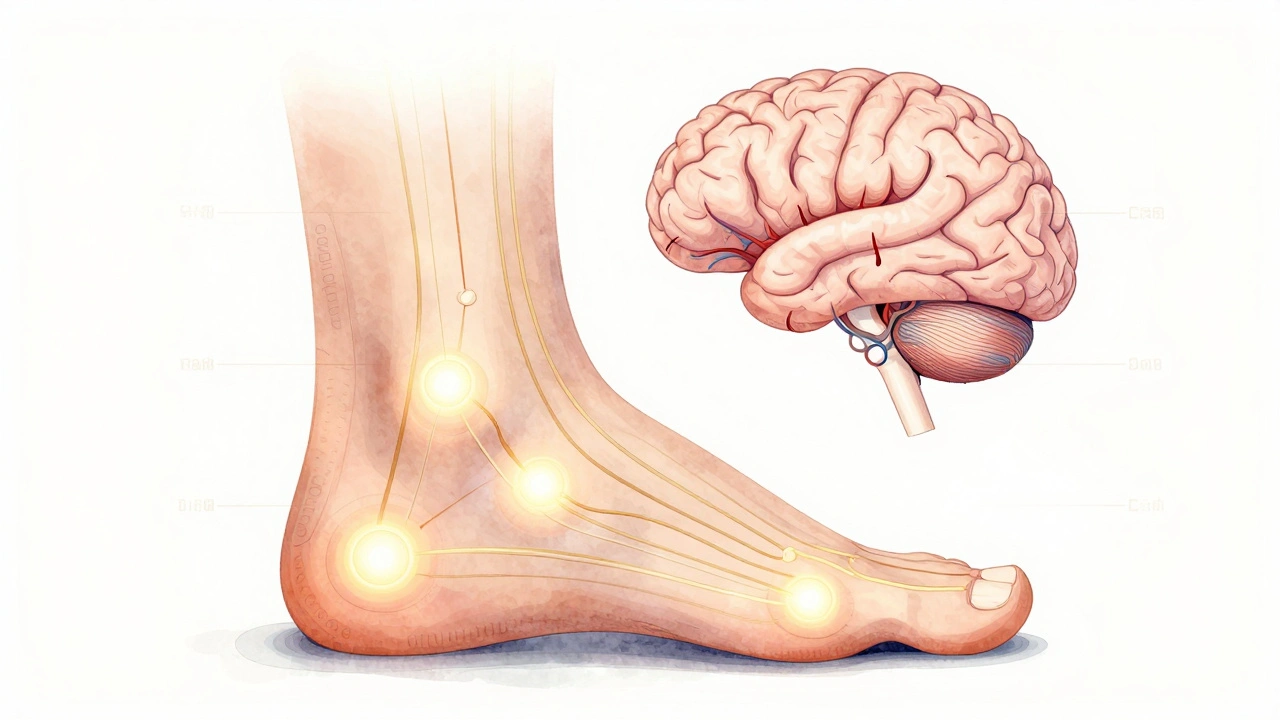
Massage increases blood flow to tired tissues. That’s how it flushes out lactic acid and inflammation. It also resets your nervous system. When pressure is applied to specific points on the sole, it sends calming signals to your brain. Think of it like hitting a reset button on your body’s pain alarm.
What You Can Actually Fix With Foot Massage
It’s not just about soreness. Foot massage helps with real, measurable issues:
- Plantar fasciitis: Daily 10-minute massages reduce morning heel pain by up to 40% in just two weeks, according to a 2023 clinical review.
- Swelling from standing: Gentle circular motions around the ankles and arches help drain fluid buildup.
- Nerve pain (neuropathy): Diabetics who massaged their feet daily reported less tingling and numbness in a Mayo Clinic pilot study.
- Stress and anxiety: A 15-minute foot rub lowers heart rate and slows breathing-faster than some meditation apps.
- Sleep problems: People who massaged their feet before bed fell asleep 20% faster in a 2025 sleep study.
These aren’t anecdotes. They’re results from real people with real conditions. And you don’t need a degree to do it.
How to Give Yourself a Foot Massage (No Tools Needed)
You can start right now. Here’s a simple 5-step routine you can do sitting on your couch:
- Warm it up: Soak your feet in warm (not hot) water for 5 minutes. Add Epsom salt if you have it-it helps pull out toxins.
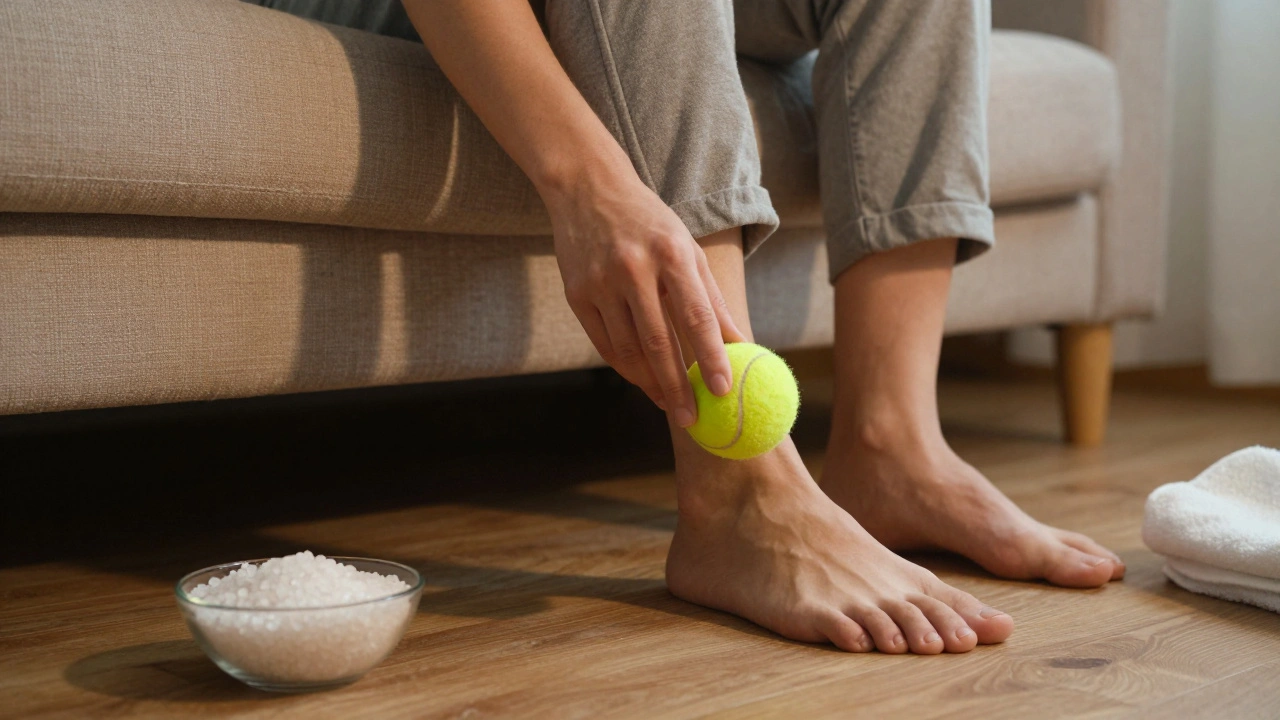
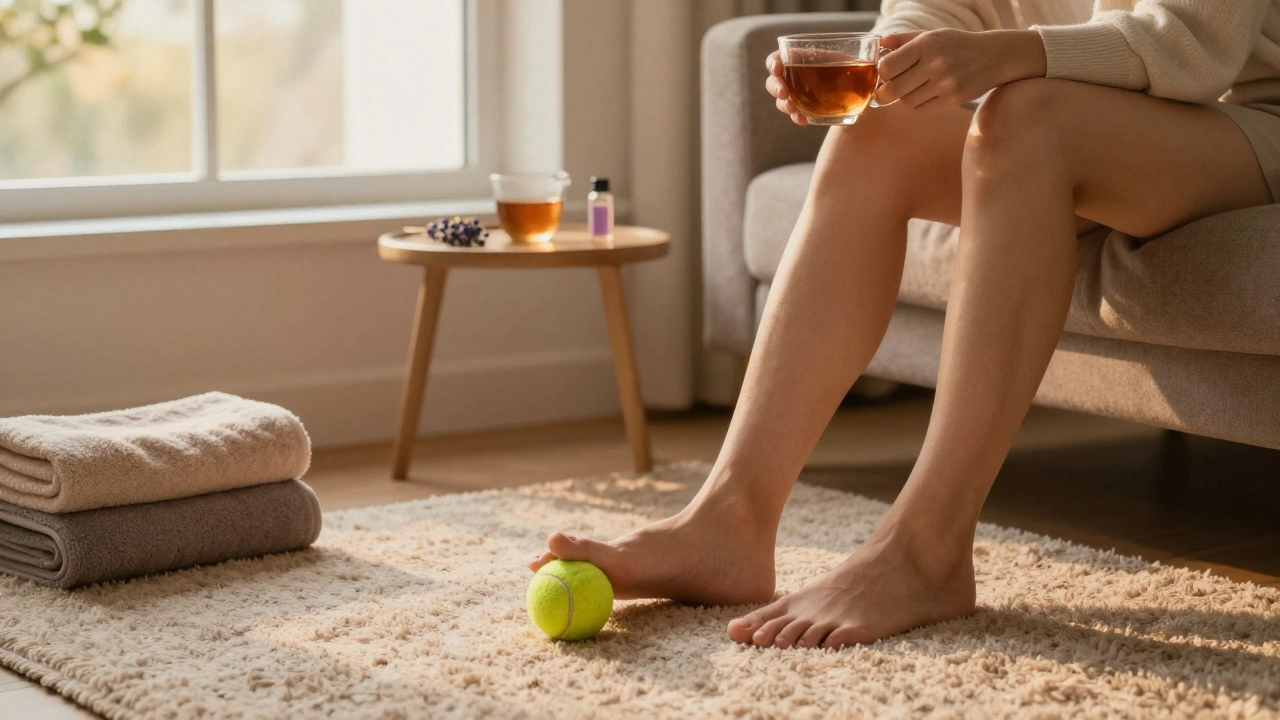
- Roll the arch: Use a tennis ball or a frozen water bottle. Roll it under your foot from heel to toes. Apply moderate pressure. Do this for 2 minutes per foot.
- Pinch and release: Use your thumb and index finger to gently pinch the ball of your foot. Move slowly from the big toe to the pinky toe. Repeat 5 times per foot.
- Thumb circles: Press your thumb into the center of the heel and make small circles for 1 minute. This targets the plantar fascia.
- Toe pulls: Gently pull each toe one at a time, holding for 5 seconds. This releases tension in the tendons.
Do this once a day. In 7 days, you’ll notice less stiffness. In 14 days, you’ll wonder why you waited so long.
Tools That Actually Help (And Which Ones to Skip)
There are a million gadgets claiming to be the ‘best foot massager.’ Most are overpriced junk. Here’s what works:
- Tennis ball: $2. You already have one. Use it. Spiked massage roller: $15. Great for deep trigger points. Look for one with adjustable pressure.
- Electric foot massager with heat: $50-$80. Only buy this if you have chronic pain. Look for models with Shiatsu nodes and heat settings.
Avoid these:
- Those vibrating foot pads that buzz like a phone-no real pressure, no therapeutic benefit.
- Expensive ‘acupressure mats’ designed for your back. They don’t work on feet.
- Devices that claim to ‘cure’ plantar fasciitis in 3 days. If it sounds too good to be true, it is.
When to See a Professional
Self-massage is powerful-but it’s not a replacement for care when you need it.
See a licensed massage therapist or podiatrist if:
- Pain wakes you up at night.
- You can’t walk without limping.
- Your foot is red, swollen, or numb.
- You’ve tried self-care for 4 weeks with no change.
A professional can use techniques like deep tissue work, myofascial release, and trigger point therapy that you can’t do on your own. They also check for underlying issues like nerve compression or arthritis.
Foot Massage vs. Other Pain Relief Methods
Let’s cut through the noise. How does foot massage stack up against other options?
| Method | Cost (per session) | Time to Relief | Long-Term Benefit | Risk |
|---|---|---|---|---|
| Foot Massage | $0-$75 | Immediate (minutes) | High-improves circulation, reduces tension | Very low |
| NSAIDs (Ibuprofen) | $5-$15 | 30-60 minutes | Low-only masks pain | High-stomach, kidney risks with long-term use |
| Orthotics | $100-$500 | Weeks to months | Medium-supports structure | Low-can cause dependency |
| Corticosteroid Injections | $200-$600 | Days | Short-term-can weaken tissue | High-tendon rupture risk |
| Surgery | $5,000-$15,000 | Months | Variable-often unnecessary | Very high-recovery time, complications |
Foot massage wins on safety, cost, and speed. It’s the only option that’s free, effective, and doesn’t damage your body.
What to Expect in a Professional Foot Massage
If you decide to go to a spa or clinic, here’s what really happens:
- You’ll sit in a reclining chair or lie on a table. No need to undress-just roll up your pants.
- The therapist will use oil or lotion. It’s not about aromas-it’s about reducing friction so they can apply deeper pressure.
- They’ll work from your toes to your calves, focusing on pressure points linked to your back, neck, and organs (based on reflexology principles).
- You might feel a little discomfort in tight spots-that’s normal. But it shouldn’t hurt. Speak up if it does.
- Most sessions last 30 to 60 minutes. You’ll leave feeling lighter, calmer, and surprisingly energized.
Don’t be shy to ask for more or less pressure. Good therapists adjust on the fly.
Foot Massage for Athletes and Night Shift Workers
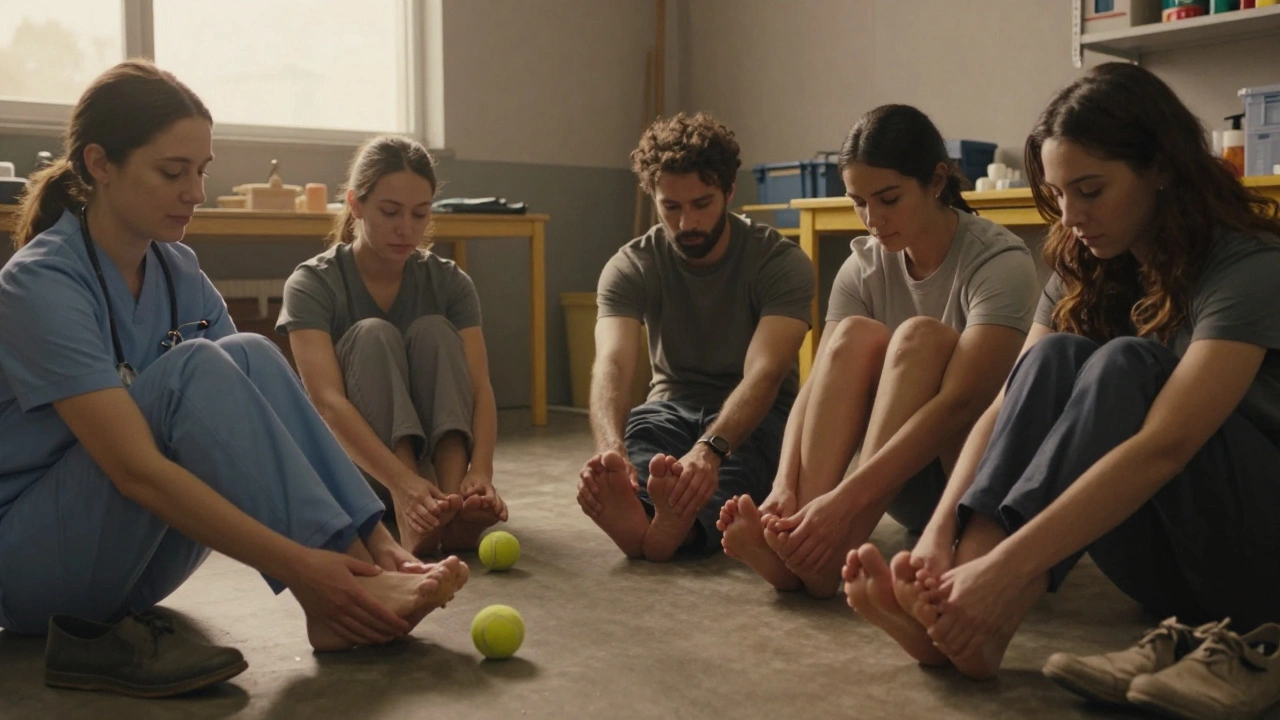
If you’re on your feet for 10+ hours a day-whether you’re a nurse, teacher, warehouse worker, or delivery driver-foot massage isn’t optional. It’s survival.
A 2025 survey of 500 healthcare workers found that those who massaged their feet daily took 37% fewer sick days due to foot pain. Nurses reported being able to stand longer without cramps. Warehouse workers said they could walk farther without burning pain.
Even shift workers benefit. Night shifts mess with your circadian rhythm and cause fluid retention. A 10-minute foot rub before bed helps your body reset and reduces swelling.
How Often Should You Do It?
Think of foot massage like brushing your teeth. Consistency matters more than intensity.
- For general relief: 5-10 minutes daily.
- For chronic pain: Twice daily (morning and night), plus one professional session per week.
- For athletes: After every workout, even if you’re not sore.
- For stress: Anytime you feel overwhelmed. It’s instant calm.
You don’t need to spend hours. Five minutes with a tennis ball while watching TV counts.
Common Mistakes People Make
Even when people try, they mess it up:
- Using too much force: You’re not trying to crush your foot. Gentle, steady pressure works best.
- Ignoring the calves: Tight calves pull on your plantar fascia. Always massage them too.
- Only doing it when it hurts: Prevention beats pain management. Do it before the ache starts.
- Waiting for a ‘perfect’ moment: You don’t need candles, music, or a special room. Do it in your socks on the couch.
Foot massage is the cheapest, easiest, and most effective pain solution most people ignore. Not because it doesn’t work-but because they assume it’s too simple.
Can foot massage really help with plantar fasciitis?
Yes. A 2023 review of 12 clinical studies found that daily foot massage reduced plantar fasciitis pain by an average of 42% over four weeks. Rolling a tennis ball under the arch for 5 minutes a day is as effective as physical therapy for mild to moderate cases.
Is foot massage safe for people with diabetes?
Yes-but with caution. People with diabetic neuropathy should avoid sharp pressure or anything that could cause skin breaks. Use gentle strokes, check feet daily for cuts or redness, and always use a moisturizer. Consult your doctor before starting if you have open sores or poor circulation.
Can I use foot massage instead of painkillers?
For many people, yes. Foot massage reduces inflammation and releases natural painkillers (endorphins) in your body. It’s not a magic fix for severe injury, but for everyday foot pain from standing or walking, it’s often more effective than ibuprofen-with zero side effects.
Why does foot massage make me feel relaxed even if I’m not stressed?
Your feet are packed with nerve endings connected to your brain’s relaxation centers. When you massage them, you trigger the parasympathetic nervous system-the part that says, ‘It’s safe to rest.’ That’s why even people who don’t feel stressed often feel calmer after a foot rub.
How long does it take to see results from foot massage?
Most people feel better after one session-less tightness, more flexibility. For lasting relief from chronic pain like plantar fasciitis, you’ll notice real changes in 7-14 days with daily 10-minute sessions. Consistency is the key.
Stop waiting for your feet to get worse before you do something. You don’t need a prescription, a machine, or a big budget. Just your hands, a few minutes, and the willingness to care for yourself. Foot massage isn’t a trend. It’s a tool. And it’s been working for thousands of years-because it just works.
Similar Posts

Foot Massage Benefits: How to Unwind and Recharge Fast
Why Foot Massage is the Ultimate Relaxation Tool
Foot massage is a powerful, science-backed way to reduce stress, improve sleep, and relieve pain. Discover why it's the ultimate relaxation tool and how to get the most out of it in London.
How Foot Massage Can Boost Your Mood
Foot massage isn't just for tired feet-it's a proven way to reduce stress, boost dopamine, and lift your mood. Discover how this simple practice works and how to use it in London.
Santiago Castiello
January 18, 2026 AT 07:37So let me get this straight-I’m supposed to believe that rolling a tennis ball under my foot is equivalent to physical therapy? Next you’ll tell me duct tape fixes hernias.
Also, ‘proven’? Citation needed. I’ve got a PhD in skepticism and this smells like a sponsored blog post.
Foot massage: the new yoga for people who don’t want to move but still want to feel virtuous.
William Terry
January 19, 2026 AT 03:07Man I tried this last week after work and my feet felt like new again
I used a golf ball cause I got tired of the tennis one
Do it every night now even if I dont feel sore
You think its silly till you try it
My wife even started doing it to me now and shes not even into this stuff
Life changing really
Peter Jones
January 20, 2026 AT 21:22The clinical references cited here are reasonably well-sourced, particularly the 2023 review on plantar fasciitis and the Mayo Clinic pilot data.
It's worth noting that while the mechanisms described-increased blood flow, cortisol reduction, and parasympathetic activation-are biologically plausible, the effect sizes vary significantly across populations.
That said, the low risk-to-benefit ratio makes this one of the most defensible self-care interventions available.
For those with neuropathy, the cautionary advice regarding pressure and skin integrity is essential and appropriately emphasized.
Theophilus Twaambo
January 22, 2026 AT 02:19Wait-‘you don’t need a spa appointment’-but you recommend a $15 spiked roller? And ‘Epsom salt-it helps pull out toxins’? Toxins? There’s no such thing as ‘pulling out toxins’ through the skin-your liver does that, thank you very much.
Also, ‘foot massage wins on safety’-yes, unless you have undiagnosed DVT, which you probably don’t know about because you’re too busy rolling a ball under your foot instead of seeing a doctor.
And ‘thousands of years’? That’s not evidence, that’s an appeal to antiquity.
Also, you missed a comma after ‘couch’ in step five. Fix it.
Douglas McCarroll
January 22, 2026 AT 04:44Love how this breaks down the science without overselling it.
For anyone reading this who’s been ignoring foot pain because ‘it’s just part of being adult,’ this is your sign to stop.
Start small-even 3 minutes with a water bottle while scrolling on your phone counts.
Consistency > intensity, and the cumulative effect is real.
And yes, your calves matter too-tight calves = tight plantar fascia. Don’t skip them.
Also, if you’re a shift worker or on your feet all day, this isn’t self-care-it’s occupational maintenance.
Do it like brushing your teeth. You wouldn’t skip brushing because you’re tired-you’d do it because your teeth depend on it.
Same logic. Your feet carry you through life. Treat them like the MVPs they are.