
Curious about Thai massage in London? Get a real look at what makes this ancient practice so popular in the city, from its cultural roots to the relaxing benefits you can expect. Find out how modern Londoners are mixing tradition and wellness, what types of Thai massage are available, and how to choose the right spot for your next session. We’ll also break down what actually happens during a visit and what you’ll pay—no hidden surprises. Whether you’re looking for stress relief or just a new way to unwind, there’s something here for everyone.
- Created by: Liam Redgate
- Completed on: 1 Dec 2025
- Categories: Thai Massage
You’ve had a long day. Your shoulders are tight, your mind is buzzing, and you just want to feel human again. What if you could tap into a 2,500-year-old healing tradition-right here in London-without booking a flight to Bangkok? That’s the power of Thai massage in modern London.
What Exactly Is Thai Massage?
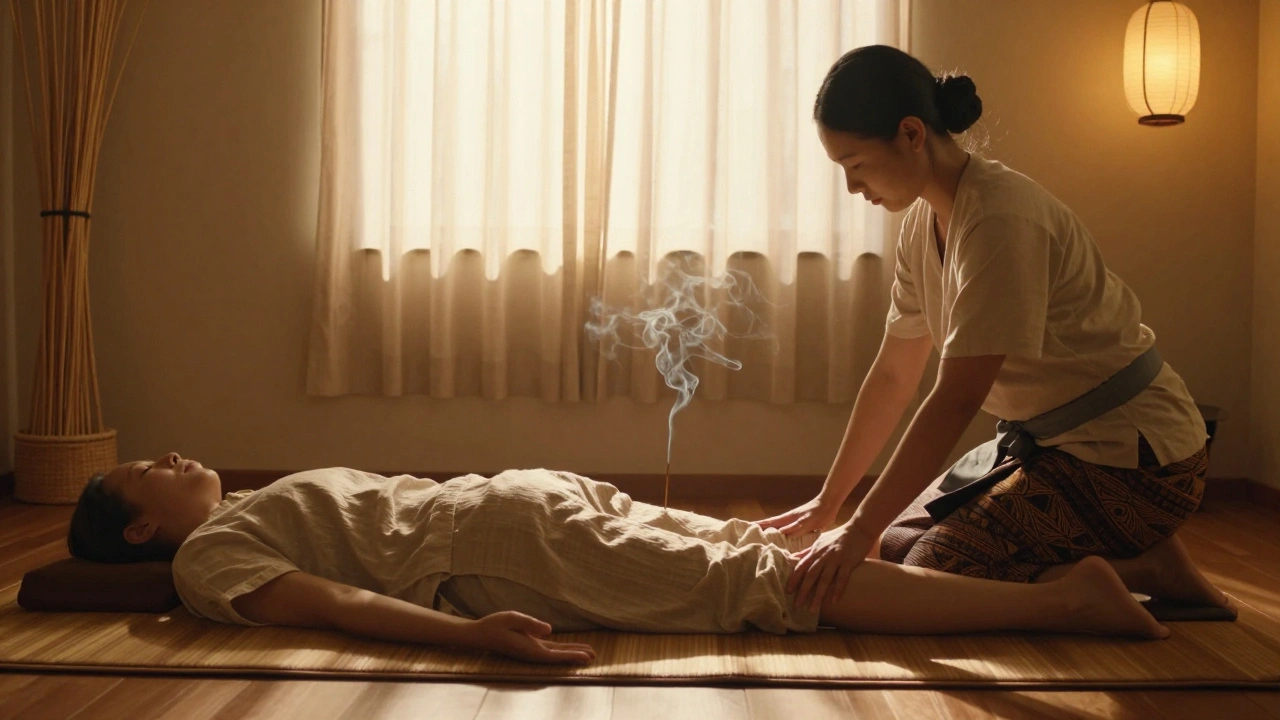
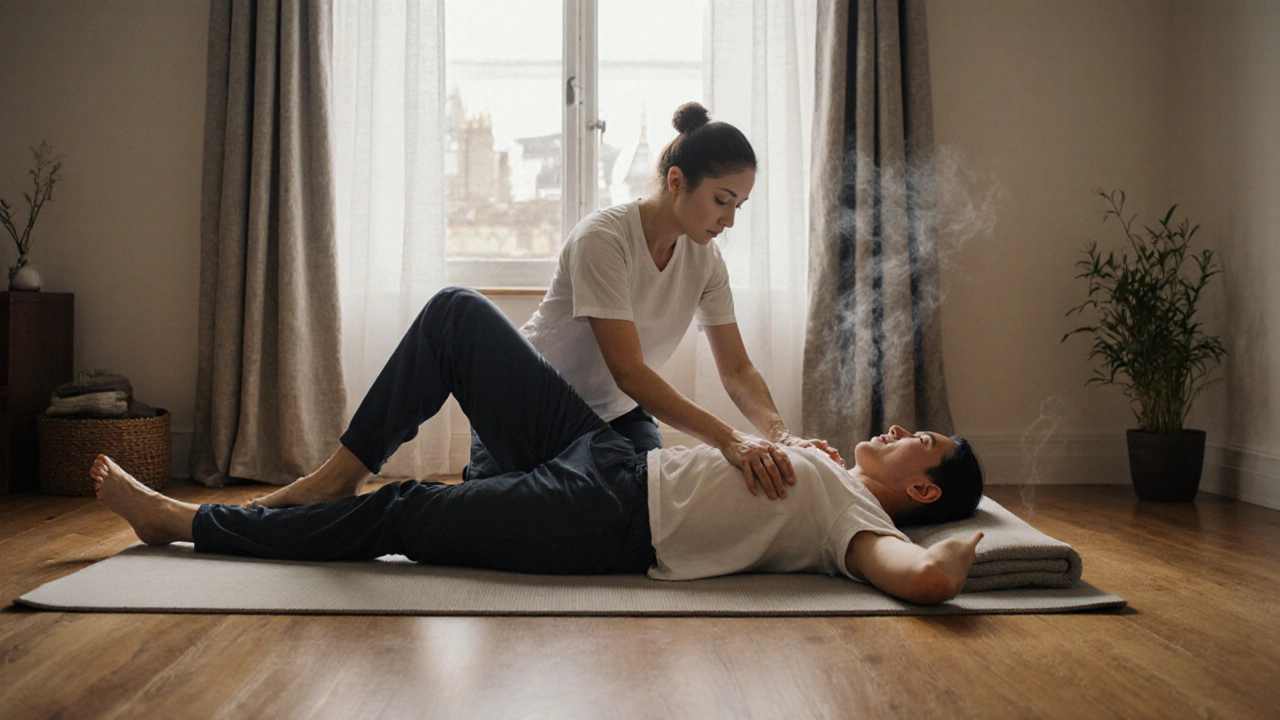
Thai massage isn’t just another massage. It’s a living practice that blends acupressure, assisted yoga postures, and energy line work. Unlike Swedish or deep tissue, you stay fully clothed. No oils. No draping. Just you, a mat on the floor, and a therapist using their hands, thumbs, elbows, knees, and even feet to guide your body through a sequence of stretches and pressure points.
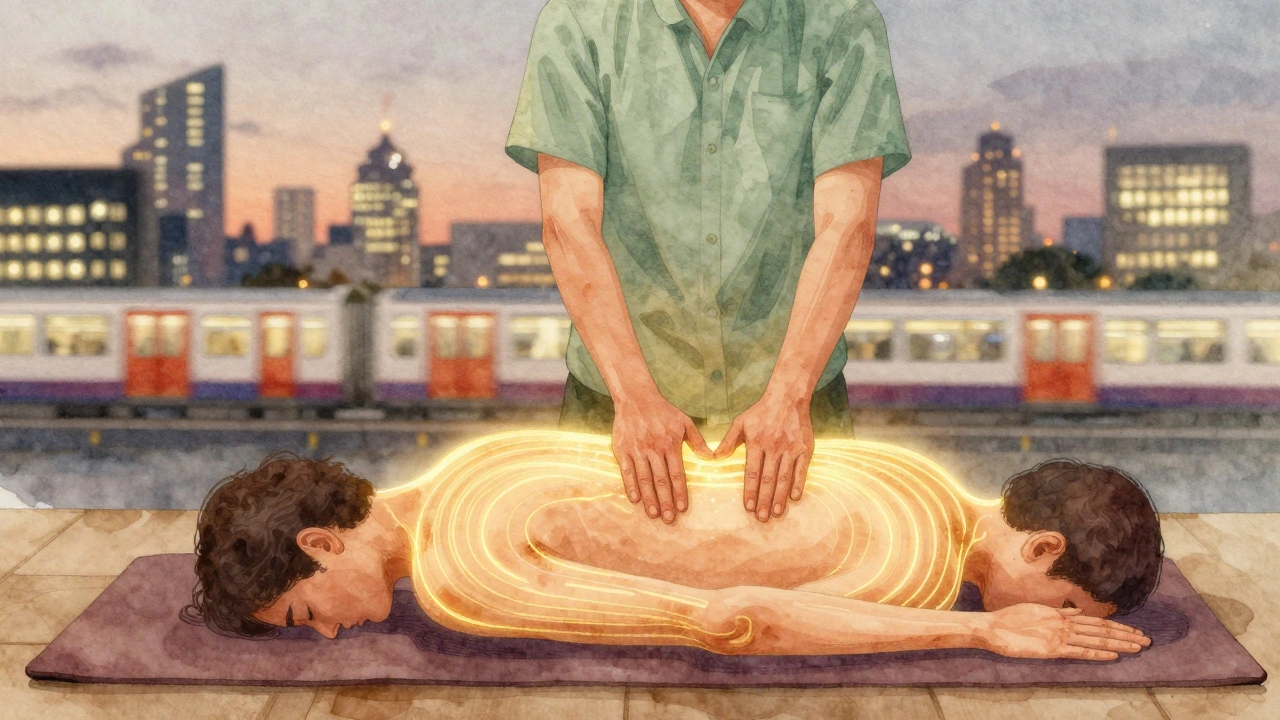
This isn’t relaxation-it’s active restoration. The Thai word for it, nuad boran, means "ancient rubbing." It’s rooted in Ayurvedic medicine, Buddhist spiritual practices, and traditional Chinese medicine. The goal? To unblock energy lines called sen lines, which flow through the body like rivers. When they’re clogged, you feel stiff, tired, or off-balance. Thai massage clears those rivers.
Why It Works in London’s Fast-Paced World
London moves fast. You’re commuting on packed tubes, staring at screens for 10 hours, and rushing between meetings. Your body isn’t built for this. Chronic tension builds in your neck, lower back, hips. Thai massage doesn’t just soothe it-it fixes the root cause.
Studies from the Journal of Bodywork and Movement Therapies show Thai massage reduces cortisol levels by up to 25% after one session. That’s stress reduction you can feel. People in London who’ve tried it say things like: "I haven’t slept this well in months." Or: "I actually stood up straighter after one session."
It’s not magic. It’s biomechanics. The therapist applies rhythmic pressure along your legs, arms, and spine while gently stretching you into positions you haven’t held since you were a kid. You’ll feel your hips open, your spine realign, your breath deepen. By the end, your body doesn’t just feel looser-it feels reset.
Where to Find Authentic Thai Massage in London
Not every place calling itself "Thai massage" is the real deal. Some shops slap on a bamboo mat and call it a day. True Thai massage comes from trained practitioners who learned in Thailand-often from lineage schools in Chiang Mai or Bangkok.
In London, you’ll find the most authentic sessions in these areas:
- Soho: Home to several long-standing Thai massage studios run by Thai-born therapists. Look for places with photos of their teachers in Thailand.
- Camden: A hub for holistic wellness. Several therapists here trained at Wat Pho, the temple school in Bangkok that standardized modern Thai massage.
- Notting Hill: Quiet, intimate studios with a focus on healing rather than speed. Many offer 90-minute sessions that include herbal compresses.
- Shoreditch: Trendy but grounded. You’ll find younger therapists blending traditional techniques with modern anatomy knowledge.
Ask: "Did you train in Thailand?" and "Which school?" If they say "yes" and mention Wat Pho, Chiang Mai University, or the Thai Traditional Medical School, you’re on the right track.
What Happens During a Session
Imagine lying on a firm mat, wearing loose cotton pants and a T-shirt. The room is warm, quiet, scented with lemongrass or jasmine. The therapist starts at your feet.
They press firmly along the inside of your calf-your first sen line. Then they guide your leg into a gentle hip opener. You don’t move. They do. Slowly. With control. No sudden jerks. It’s like being stretched by someone who knows exactly how far to go.
They’ll use their elbows on your upper back. Knees to open your chest. Feet to gently rock your spine. You might feel a deep ache-it’s not pain, but the kind of sensation you get when a knot finally releases. You’ll breathe through it. You’ll start to relax.
By the end, you’re lying still, feeling heavy, warm, and strangely light. It’s not sleepy. It’s awake. Like your body just remembered how to be at peace.
How Much Does It Cost in London?
Prices vary by location, therapist experience, and session length. Here’s what you’ll pay in 2025:
- 60 minutes: £55-£75 (standard studio, trained therapist)
- 90 minutes: £85-£110 (includes herbal compress, foot soak, or oil massage)
- 120 minutes: £120-£150 (full-body ritual, often with meditation or tea)
Higher-end places in Mayfair or Knightsbridge charge up to £180, but you’re paying for ambiance, not better technique. The best value? Smaller studios in Camden or Peckham, where therapists trained in Thailand charge £70 for 90 minutes-and they’ll remember your name next time.
Bookings are usually done online. Most places don’t take walk-ins. Call ahead if you want a female therapist or need a quieter room.
Thai Massage vs. Swedish Massage in London
| Feature | Thai Massage | Swedish Massage |
|---|---|---|
| What you wear | Clothes (loose cotton) | Naked under towel |
| Technique | Stretching, acupressure, energy lines | Gliding strokes, kneading, light pressure |
| Oil used | No | Yes |
| Intensity | Medium to deep, active | Light to medium, passive |
| Best for | Tight hips, back pain, posture, energy flow | Relaxation, surface tension, stress relief |
| Session length | 60-120 mins | 60-90 mins |
| After effects | Lighter, more aligned, energized | Relaxed, sleepy, calm |
Thai massage is for people who want to feel changed. Swedish is for people who want to feel soothed. Both are good. But only one makes you stand taller the next day.
What to Avoid
Not every "Thai massage" is safe. Here’s what to watch out for:
- Too much pressure: If it hurts to the point of tears, it’s not deep-it’s wrong. Thai massage should feel intense, not painful.
- Oil and towels: If they bring out oil or ask you to undress, it’s not traditional Thai massage. That’s Swedish or aromatherapy.
- Quick sessions: A 30-minute "Thai massage" is a gimmick. Real sessions take at least 60 minutes to be effective.
- No training history: If they can’t tell you where they learned, walk away.
Also, avoid it if you’re pregnant (unless you find a specialist), have recent fractures, or suffer from severe osteoporosis. Always mention health conditions before your session.
Frequently Asked Questions
Is Thai massage painful?
It can feel intense, especially if you’re stiff, but it shouldn’t hurt. A good therapist works with your body’s rhythm, not against it. If you feel sharp pain, speak up. The goal is release, not punishment.
How often should I get Thai massage?
Once a month is ideal for maintenance. If you sit at a desk all day or have chronic pain, once every two weeks helps. Many Londoners book every 10 days during busy seasons-like after holidays or before big projects.
Can Thai massage help with sciatica?
Yes. Thai massage targets the piriformis muscle and releases tension along the sciatic nerve pathway. Many people with sciatica report reduced pain after 3-4 sessions. It’s not a cure, but it’s one of the most effective non-invasive tools.
Do I need to be flexible to try Thai massage?
No. In fact, if you’re stiff, you’re the perfect candidate. The therapist adjusts every stretch to your range. You’re not expected to do anything. They move you. You just breathe.
Is Thai massage the same as yoga?
It’s like yoga with a partner. The stretches are similar, but you’re not doing the work. The therapist guides your body into positions you couldn’t reach alone. It’s passive yoga-perfect for people who find it hard to move on their own.
Ready to Feel Different?
You don’t need to travel across the world to feel what thousands of Thais have trusted for centuries. In London, the ancient art of Thai massage is alive-not as a trend, but as a tool for real, lasting relief.
Book your first session. Wear something loose. Don’t eat right before. Breathe. Let them move you. And when you walk out, notice how your shoulders aren’t up by your ears anymore. That’s not magic. That’s 2,500 years of wisdom, right here in your city.
Similar Posts

Thai Massage in London: A Cultural and Relaxing Experience
Benefits of Thai Massage in London for Busy Professionals
Busy professionals in London can significantly benefit from Thai massage, a holistic approach to relaxation and wellness. Offering both physical and mental relief, Thai massage helps alleviate stress, improve flexibility, and enhance overall well-being. Discover various types of Thai massages available in London and find practical tips for finding the right service for you. Embrace a healthier, more relaxed lifestyle by incorporating regular Thai massage sessions into your routine.
Experience Tranquility with Thai Massage in London
Discover the calming power of authentic Thai massage in London-how it relieves tension, boosts mobility, and restores calm. Find trusted studios, pricing, what to expect, and how it compares to Swedish massage.
CIaran Vaudequin
December 1, 2025 AT 22:07Been to three of these places in Soho. Two were just guys in flip-flops doing half-assed stretches while blasting BTS. The third? Guy literally fell asleep halfway through my session. Paying £80 for a nap isn't my idea of ancient wisdom.
Fernando M
December 2, 2025 AT 02:50Oh wow, so this is what happens when yoga gets a visa and moves to London? Next they’ll sell you ‘authentic’ acupuncture from a guy who learned it from a YouTube video in 2017. 🤡
adam chance
December 2, 2025 AT 23:52Okay, let’s unpack this because I’ve studied somatic therapy and Thai medical lineage systems, and honestly? This article is 70% vibes, 30% truth. First off-yes, sen lines are real, but they’re not meridians, they’re fascial planes with cultural baggage. Wat Pho’s standardized form? That was a 1950s government tourism project. The real stuff? You find it in rural Isaan villages, not Camden cafes with $110 herbal compresses. Also, cortisol reduction? That’s placebo + deep touch + breathing. Any massage does that. Don’t let marketing fool you into thinking this is some mystical energy magic. It’s just really good stretching with cultural branding.
Rachel Glum
December 3, 2025 AT 11:29I came here as a stressed-out software engineer with chronic lower back pain. After one session, I cried-not from pain, but because I remembered what it felt like to breathe fully. I’ve been going every two weeks for a year now. My posture? Better. My sleep? Deeper. My anxiety? Quieter. This isn’t spa nonsense. It’s somatic reprogramming. If you’re skeptical, try it once. No expectations. Just breathe. You’ll know.
jeremy noble
December 4, 2025 AT 22:55Just got back from my 90-min at the Camden studio-trained at Wat Pho, legit. The therapist used his *foot* to open my hip flexors. I swear I heard my fascia sigh. The lemongrass steam compress? Chef’s kiss. Also, they gave me a free cup of Thai iced tea with tamarind. That’s the kind of holistic care you don’t get at a chain spa. Pro tip: ask for Pim, she’s a wizard with the sacrum. And yes, you DO need to wear loose cotton-no underwear, no bra, just flow. It’s not sexy, it’s sacred. 🙏
Deborah Billingsley
December 6, 2025 AT 17:00OMG YES!!! 🙌 I went last week and now I’m obsessed!! I didn’t think I could handle it but the therapist was SO gentle and I felt like a new person!! My neck hasn’t been this loose since I was 18!! Also I cried like a baby in the best way 😭💖 #ThaiMassageIsLife #BodyReset #WorthEveryPenny
mary glynn
December 6, 2025 AT 18:57Right, so let me get this straight-some Irish guy in London is telling us how Thai massage is ‘authentic’? We’ve got actual Thai people in Dublin doing this for £40 and you’re paying £150 in Notting Hill for someone who took a 3-week course? This is cultural tourism at its worst.
Kirsten Miller
December 8, 2025 AT 01:29Interesting. But I’m curious-how do the sen lines correspond to modern neuroanatomy? Are they mapped to peripheral nerve pathways? Or are they purely phenomenological constructs? And if they’re energy channels, then what’s the empirical mechanism for their ‘unblocking’? I’ve read the Thai Traditional Medical School’s 1988 curriculum, and they explicitly describe sen as metaphysical, not physiological-so why does this article conflate biomechanics with chi? Also, the cortisol study cited-was it double-blind? Controlled for placebo? I’d love to see the full paper.
Hamza Shahid
December 9, 2025 AT 02:43Everyone here is acting like this is revolutionary. I got a 30-minute Thai-style stretch from a guy in a gym in Queens for £25. He didn’t even know what ‘sen’ meant. You’re all paying for aesthetics. The ‘ancient art’ is just a marketing gimmick for people who want to feel spiritual without meditating. Also, ‘no oils’? So what? My Swedish massage had no oils either-it was deep tissue. Stop romanticizing poor Thai laborers who can’t afford to open their own clinics in Bangkok and now have to sell ‘authenticity’ to rich Londoners.