
Aromatherapy massage combines skilled touch with calming essential oils to reduce stress, improve sleep, and ease muscle tension. Discover how this holistic therapy delivers real wellness benefits backed by science and real user experiences.
- Created by: Liam Redgate
- Completed on: 24 Dec 2025
- Categories: Aromatherapy Massage
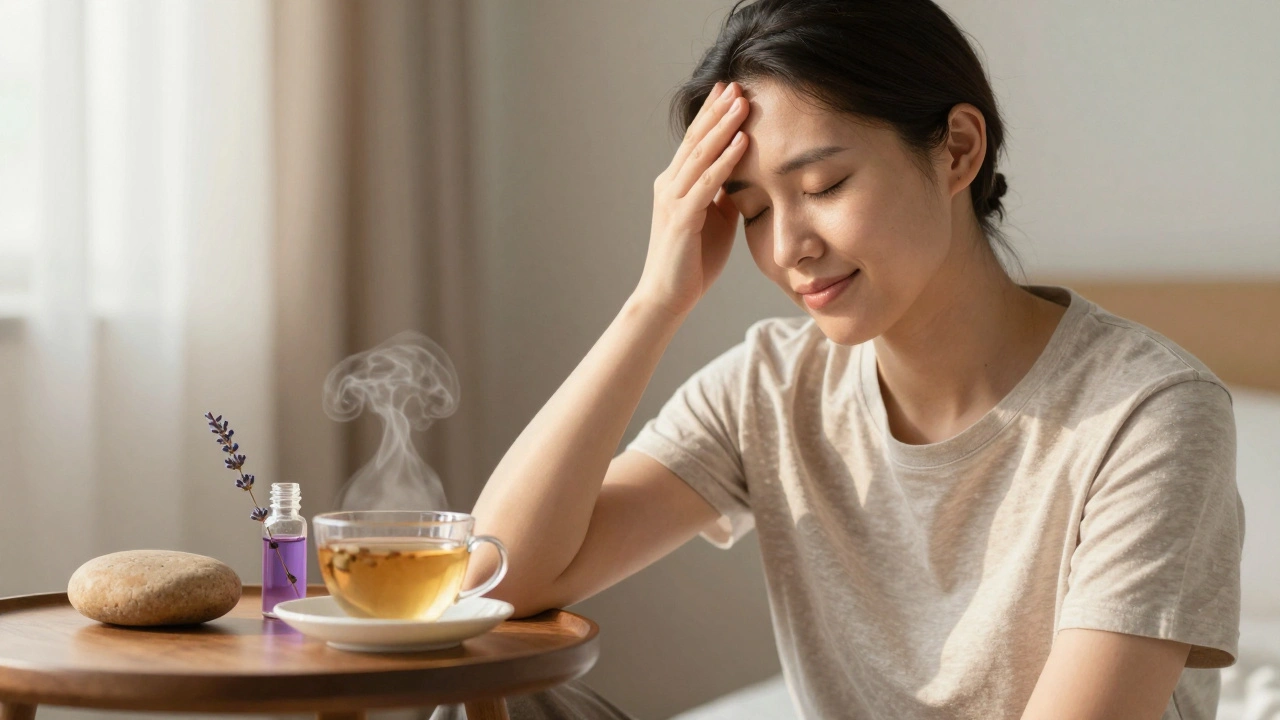
You’ve been staring at a screen for hours. Your shoulders are tight. A dull throb is building behind your eyes. Coffee isn’t helping. Painkillers make you feel sluggish. What if the answer isn’t another pill-but a quiet room, warm hands, and the scent of lavender drifting through the air?
Aromatherapy massage isn’t just spa fluff. It’s a proven, science-backed way to ease tension headaches and migraines without drugs. And it’s not magic-it’s biology.
What Exactly Is Aromatherapy Massage?
Aromatherapy massage is a blend of two powerful therapies: massage and essential oils. The massage part works on your muscles, tendons, and nervous system. The essential oils? They’re absorbed through your skin and inhaled, triggering responses in your brain that calm stress, reduce inflammation, and block pain signals.
Think of it like this: your headache isn’t just in your head. It’s rooted in tight neck muscles, shallow breathing, and a nervous system stuck in overdrive. Aromatherapy massage hits all three.
Common oils used include lavender (calming), peppermint (cooling and pain-relieving), eucalyptus (clears sinuses), and rosemary (boosts circulation). These aren’t just smells-they’re bioactive compounds. Studies show lavender oil, for example, can reduce migraine intensity by up to 50% in clinical trials.
Why It Works for Headaches (The Science Behind It)
Headaches often start with muscle tension in the neck and scalp. Stress tightens those muscles. Tight muscles pinch nerves. Nerves send pain signals. Your brain interprets that as a headache.
Aromatherapy massage breaks that cycle:
- Massage releases muscle knots, improves blood flow, and triggers endorphins-your body’s natural painkillers.
- Lavender oil activates GABA receptors in the brain, the same pathway targeted by anti-anxiety meds, but without the side effects.
- Peppermint oil contains menthol, which cools the skin and blocks pain receptors. Applied to the temples, it’s like an ice pack that also smells amazing.
- Deep breathing during the massage slows your heart rate and lowers cortisol, the stress hormone that fuels chronic headaches.
A 2012 study published in European Neurology found that patients who received lavender oil massage during a migraine attack reported significantly less pain after 15 minutes than those who didn’t. Another trial in 2020 showed peppermint oil applied topically was as effective as acetaminophen for tension headaches-but with no stomach upset.
Types of Aromatherapy Massage for Headaches
Not all massages are created equal when it comes to headaches. Here are the most effective styles:
- Swedish Aromatherapy Massage - Gentle, flowing strokes. Best for stress-related headaches. Uses lavender, chamomile, or bergamot oils to calm the nervous system.
- Head and Neck Focused Massage - Targets the scalp, temples, jaw, and upper trapezius muscles. Often includes a mix of peppermint and eucalyptus to reduce inflammation and open sinuses.
- Reflexology with Aromatherapy - Pressure points on the feet and hands linked to the head are stimulated while essential oils are inhaled. Great for people who can’t lie face down.
- Hot Stone Aromatherapy Massage - Warm stones placed along the spine and neck help muscles relax deeper. Paired with rosemary or cypress oil, it’s ideal for chronic tension.
Most therapists will customize the blend based on your headache type. If yours comes with nausea, they’ll avoid citrus oils. If it’s sinus-related, they’ll lean into eucalyptus and tea tree.
What to Expect During Your First Session
You walk into a quiet room. Soft lighting. A faint, earthy scent in the air. The therapist asks about your headache pattern-how often, where it hurts, what triggers it. They don’t just guess. They listen.
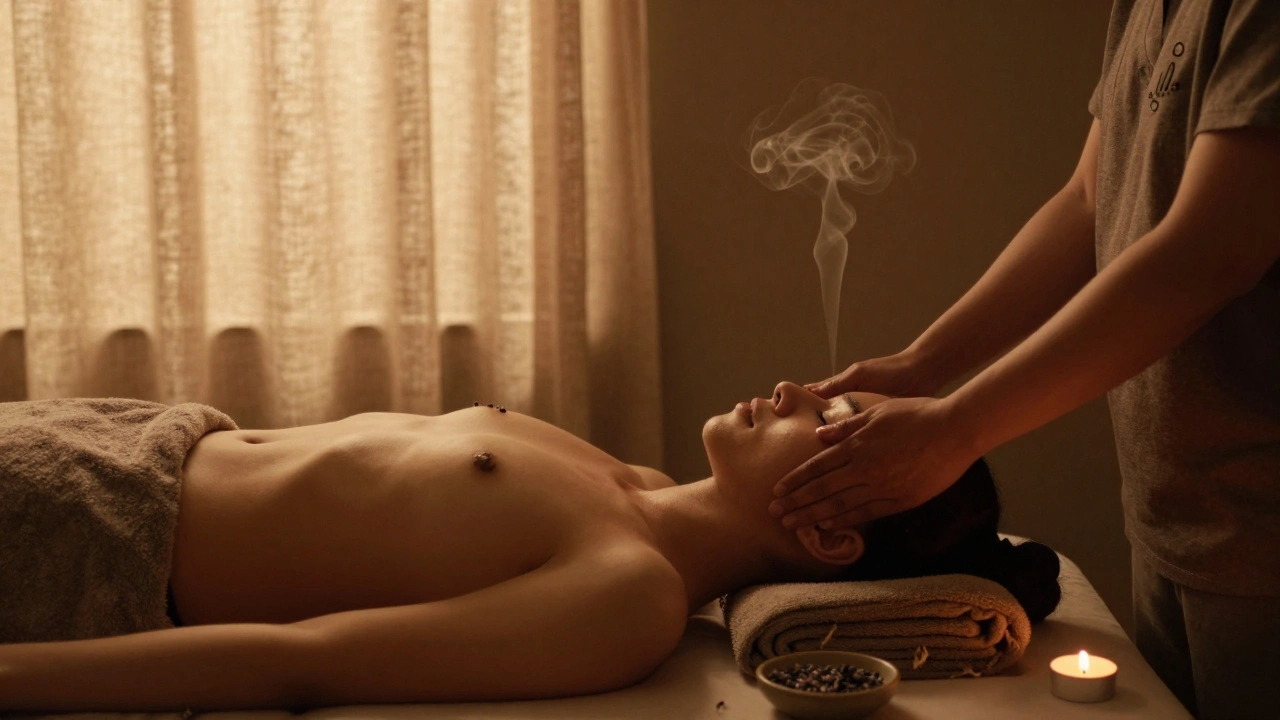
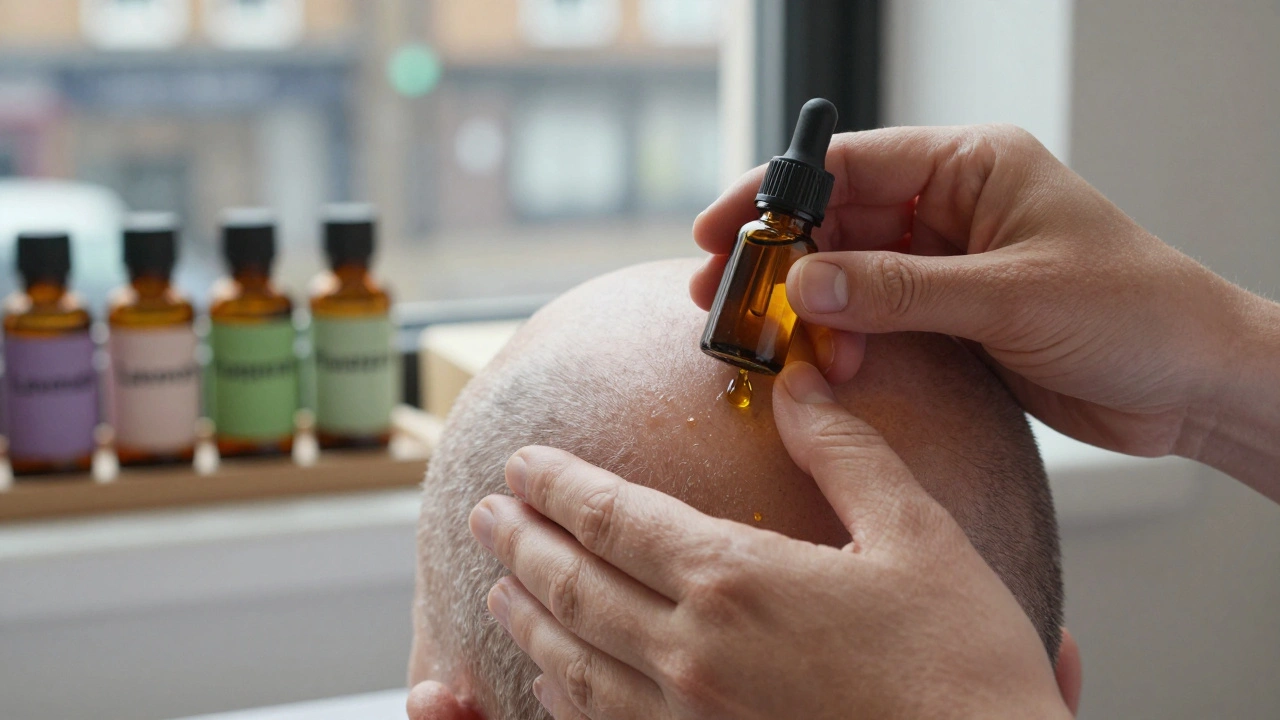
You lie on a warm table. They warm a few drops of oil between their palms-lavender and peppermint, maybe. Then, they start. Slow, circular motions on your temples. Gentle pressure along your jawline. Fingers gliding from the base of your skull down your neck. Each stroke is deliberate. Each breath you take pulls in the scent of the oil.
Within minutes, your shoulders drop. Your breathing slows. The sharp edge of the pain softens. You don’t fall asleep, but you feel like you could. After 45-60 minutes, you sit up slowly. The headache? It’s not gone-but it’s 60% lighter. And you feel… calm. Not just relaxed. Actually calm.
How to Find a Good Aromatherapy Massage Therapist
Not every massage therapist knows how to use essential oils safely. Look for someone with:
- Certification in aromatherapy (from a recognized body like the National Association for Holistic Aromatherapy or Aromahead Institute)
- Experience working with headache or migraine clients
- Transparency about oil sources and dilution ratios (essential oils are powerful-they shouldn’t be used straight on skin)
Check reviews for phrases like “helped my migraines” or “felt like my brain finally stopped screaming.” Avoid places that use synthetic fragrances or don’t mention oils at all.
Many wellness centers in London, like those in Notting Hill or Camden, offer specialized headache relief sessions. Ask if they do a “tension headache protocol”-that’s a good sign they know what they’re doing.
Pricing and How to Book
Expect to pay between £60 and £90 for a 60-minute aromatherapy massage focused on headaches. Some clinics offer 45-minute sessions for £45-£65 if you’re short on time.
Booking is simple:
- Search “aromatherapy massage for headaches [your area]”
- Look for therapists who mention migraines, tension headaches, or stress relief in their service descriptions
- Call or message them. Ask: “Do you use essential oils specifically for headache relief?”
- Book a first session. Most offer a 10-15 minute consultation for free to tailor the treatment.
Some spas offer package deals-three sessions for £160. If you get headaches weekly, that’s a smart investment.
Safety Tips: What to Watch Out For
Aromatherapy is natural, but it’s not risk-free.
- Never apply undiluted oils to skin. They can burn. Always ask what carrier oil (like jojoba or sweet almond) they use to dilute them.
- Avoid citrus oils (lemon, orange) if you’re prone to nausea or have sensitive skin-they can trigger photosensitivity.
- Check for allergies. If you’re allergic to pollen, test a drop of oil on your inner wrist 24 hours before your session.
- Don’t do this if you’re pregnant without consulting your doctor. Some oils (like rosemary, clary sage) can stimulate contractions.
- Stop if you feel dizzy or nauseous. That’s a sign the oil blend isn’t right for you.
Most people feel great. But listen to your body. This isn’t a one-size-fits-all treatment.
Aromatherapy Massage vs. Traditional Massage for Headaches
| Feature | Aromatherapy Massage | Traditional Massage |
|---|---|---|
| Primary Mechanism | Physical relaxation + scent-driven brain response | Physical relaxation only |
| Best For | Stress-induced, tension, and migraine headaches | Muscle tension without emotional triggers |
| Oil Use | Essential oils (lavender, peppermint, etc.) | None or unscented lotion |
| Brain Impact | Reduces cortisol, activates calming pathways | Only releases endorphins |
| Duration of Relief | Often lasts 2-4 days | Usually 6-24 hours |
| Side Effects | Minimal if oils are used properly | None |
The key difference? Aromatherapy doesn’t just relax your body-it soothes your mind. That’s why it works better for people whose headaches are tied to anxiety, sleep loss, or mental overload.
Frequently Asked Questions
Can I do aromatherapy massage at home for headaches?
Yes, but with limits. You can mix 2 drops of lavender oil with 1 teaspoon of coconut oil and gently massage your temples and neck. Do this 2-3 times a day. But don’t replace professional sessions if your headaches are frequent or severe. A therapist knows where to apply pressure and which blends work best for your pattern.
How many sessions do I need to see results?
Most people feel better after one session. But if you get headaches 2-3 times a week, aim for weekly sessions for 3-4 weeks. Then, drop to every other week. Think of it like physical therapy for your nervous system. Consistency builds resilience.
Are essential oils safe for kids with headaches?
Children under 12 should avoid most essential oils unless guided by a pediatric aromatherapist. For older kids, diluted lavender oil on the feet or back of the neck is usually safe. Never use peppermint near the face of young children-it can trigger breathing issues.
Can aromatherapy massage replace my headache medication?
It can reduce how often you need them-but don’t stop meds without talking to your doctor. Many people use aromatherapy as a preventive tool: if they feel a headache coming on, they get a massage instead of popping a pill. Over time, they cut their medication use by half.
What if I don’t like the smell of lavender?
No problem. Therapists have dozens of options. Roman chamomile, frankincense, or even a blend of orange and ginger can be just as effective. The goal is to find what calms your nervous system-not what smells nice to everyone.
Ready to Try It?
Your next headache doesn’t have to come with a pill bottle. Aromatherapy massage gives you back control-without chemicals, without side effects, without waiting. It’s not a cure. But it’s one of the few natural tools that actually changes how your brain processes pain.
Book that session. Breathe deep. Let your shoulders drop. And for the first time in weeks, let your headache just… fade.
Similar Posts
Why Aromatherapy Massage is the Wellness Boost You Need
Aromatherapy Massage: Boost Your Immune System Naturally
Discover how aromatherapy massage can lend your immune system a helping hand. This article breaks down how scented oils and expert hands work together to support your health. You’ll get clear tips, learn the science, and find out what to expect from a session. Whether you’re curious or ready to book, you’ll walk away knowing exactly why this self-care ritual is more than just pampering. Real talk, real benefits—no fluff.
Aromatherapy Massage for Headaches: Natural Relief That Actually Works
Aromatherapy massage uses essential oils and targeted touch to relieve tension headaches naturally. Learn how lavender and peppermint oils reduce pain, what to expect in a session, and how to find a qualified therapist.
Kevin Poston
December 26, 2025 AT 09:18This is exactly what I needed to read today. I’ve been getting tension headaches every day since my work went fully remote, and I’ve been too skeptical to try anything beyond ibuprofen. But the science here? It makes sense. I’m booking a session this week.
Scott Randall
December 28, 2025 AT 03:23Lavender oil reduces migraine intensity by up to 50%? Citation needed. Also, ‘bioactive compounds’ isn’t a magic phrase-it’s just chemistry.
Thiago Gonçalves
December 29, 2025 AT 23:46Love this! 🙌 I’ve been doing peppermint oil on my temples for months now-game changer. No more lunchtime headaches. You’re not just relaxing, you’re resetting your nervous system. Try it, you’ll thank me later!
Kyle Levy
December 31, 2025 AT 03:20Of course it works-because everything that’s ‘natural’ is automatically better than pharmaceuticals, right? Let’s not ignore the placebo effect here. Also, you didn’t mention that lavender oil can trigger asthma in sensitive individuals. Thanks for the unqualified endorsement, doc.
Tim Orrell
January 1, 2026 AT 00:39The nervous system is the real culprit here not the headache itself the brain interprets tension as pain because evolution wired us to respond to threat not to tolerate discomfort aromatherapy works because it interrupts the feedback loop not because oils are magical
anjan tiwari
January 1, 2026 AT 14:27USA people always think natural = better. In India we just take paracetamol and drink chai. Works better and cheaper. 😎
Jazzmen McCray
January 3, 2026 AT 11:34Man I used to roll my eyes at this stuff until I tried it after a 3-day migraine. Felt like someone turned down the volume in my skull. No more pills for me. Just a few drops of lavender and a 10-minute scalp rub. Life changed.
Anjali Ragi
January 3, 2026 AT 16:46Essential oils are just a front for Big Aromatherapy™. Did you know the FDA doesn’t regulate them? They’re using your fear of pills to sell overpriced plant juice. And lavender? It’s a sedative. They’re drugging you with ‘calm’. 🧠🌿
Griffin Treanor
January 4, 2026 AT 11:20You’re not treating the headache you’re treating the symptom of a society that’s forgotten how to breathe. The real cure is silence. No screens. No noise. No oils. Just stillness. But we’ve turned healing into a consumer product. And that’s the real tragedy.
Kevin Poston
January 6, 2026 AT 06:26Actually, I just got back from my session. It was incredible. The therapist used a blend of lavender and frankincense. I didn’t even realize how tense I was until my jaw unlocked. I’m already planning my next one. Thanks for the nudge, everyone.